Cuba's austerity turn is being framed as a structural fix. The bill lands on the vulnerable
Havana has rolled out a new package of social-policy adjustments on national television. The government insists the poor are being protected — but the math on pensions and salaries is harder to read than the talking points.
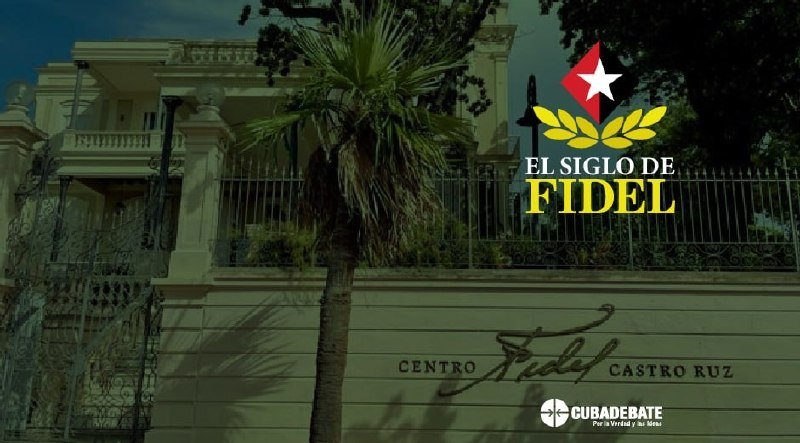
Havana staged a careful hour of television on the afternoon of 3 July 2026. Deputy Prime Minister Eduardo Martínez opened the Mesa Redonda round table with the line Cubans were clearly meant to take away: that the defence of the Revolution's social policies would not be renounced. Within minutes, the room turned to the harder question of what the government now proposes to do for the vulnerable, for pensions, and for salaries, against a backdrop of deteriorating social indicators and a tightening external blockade (Cubadebate, 2026-07-03).
The framing is deliberate. Cuba's leadership is trying to present a structural adjustment as a continuation of social protection rather than a break from it. That framing will be tested in kitchens and pharmacy queues long before it is tested in Havana's policy circles.
What the government actually announced
The presentation, led by Martínez, centred on three audiences: vulnerable groups, pensioners, and salaried workers. According to the official summary carried by Cubadebate, the round table opened by reaffirming the constitutional commitment to social policy, then moved to the question of which segments of the population need targeted attention and how. The Vice Prime Minister framed the package as a continuation rather than a retreat — the phrase "from the very triumph of the Revolution" was used to anchor the measures in a continuity narrative that predates the current crisis (Cubadebate, 2026-07-03).
The government did not publish a full white paper on 3 July. What it did publish, in real time on social media, was a set of talking points and a clear rhetorical posture: that the social safety net is being defended, not dismantled, and that the pressure on it comes from outside Cuba's borders.
The blockade frame and the inconvenient timeline
Cubadebate's own framing of the deteriorating social indicators is instructive. The official account acknowledges that the worst deterioration began in 2018 and 2019, and attributes the worsening to more than 240 measures introduced during the first Trump administration — a tightening of the US embargo regime rather than a failure of domestic policy (Cubadebate, 2026-07-04).
That timeline is harder to read than the talking points admit. 2018 and 2019 were also the years in which Cuba's then-President Miguel Díaz-Canel's government rolled out the unification of the dual currency system, the opening of private-sector licenses under the MSMEs framework, and a series of internal price and wage adjustments. The external blockade argument is not wrong — the 240-plus measures did happen — but presenting the country's economic troubles as a story with a single external villain obscures the contribution of domestic policy choices to the contraction of real incomes and the visible deterioration of services. A more honest reading treats the two pressures as compounding rather than substituting.
What "attention to the vulnerable" actually buys
The phrase most repeated by Martínez — atención a los vulnerables — is also the most under-specified. Cuban state communications routinely use "vulnerability" as a container category for single-parent households, the elderly without family support, people with disabilities, and households headed by low-income workers in state-sector jobs. Without published targeting criteria, unit costs, and coverage rates, it is impossible for an outside reader to know whether the announced package is a marginal expansion of existing programmes or a structural re-pricing of who gets what.
The same opacity applies to pensions and salaries. The government is signalling that pensions and wages will be addressed, but the Mesa Redonda format is not a budget document. Cubans who tuned in on 3 July heard the political case for the package; they did not hear the actuarial case for it.
What remains contested
Two things are genuinely uncertain on the evidence available. First, whether the announced measures represent net new spending or a reallocation from programmes that already exist. Second, whether the targeting is sufficient to offset the cumulative income loss of the 2018–2024 period, during which the informal-market dollarisation of the Cuban economy accelerated and the real value of state wages collapsed.
There is also a question the government has not directly answered: if the social contract is being defended, who is paying for it in the short term, and over what horizon the package is meant to hold. The official communication names the blockade as the cause and the vulnerable as the priority. It does not name a fiscal path.
Havana is asking Cubans to read the next twelve months through the lens of social protection. The question is whether the numbers, when they eventually appear, will bear that reading out.
This article reflects how Monexus framed the Cuban government's 3 July 2026 round-table presentation: as a government-led policy communication with a stated continuity frame, set against an external blockade narrative the publication does not treat as the sole cause of the country's economic contraction.
Wire provenance
This editorial synthesis draws on the following public wire/social posts:
- https://t.me/cuba_debate/12345
- https://t.me/cuba_debate/12346
- https://t.me/cuba_debate/12347