Egypt and Cape Verde puncture the script: a knockout stage that refuses the form guide
Two unfancied nations reached the last 16 of World Cup 2026 inside 24 hours, exposing how thin the margin is between pedigree and panic in the expanded knockout field.
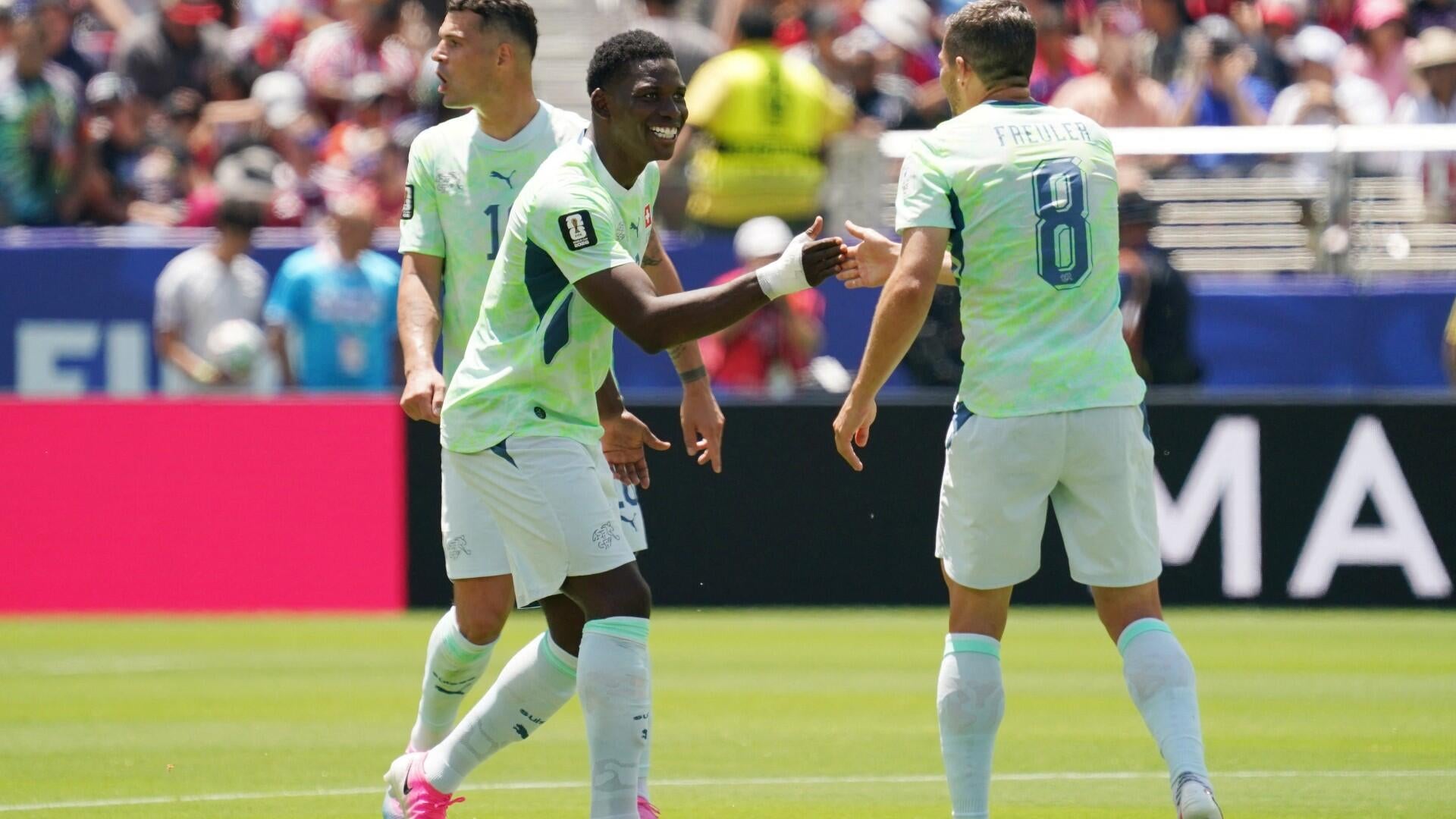
Two results inside twelve hours have reset the optics of World Cup 2026. On 3 July 2026, Egypt eliminated Australia on penalties to reach the last 16 for the first time in their knockout history; hours earlier, Cape Verde had taken Argentina to the same lottery after a 0–0 draw in the round of 32. The pair of outcomes, separated by a continent and a tournament bracket, share a single lesson: the expanded 48-team field has compressed the distance between favourite and fall-guy.
The Egypt-Australia shootout, reported live by the Guardian and confirmed by BBC Sport at 21:45 UTC on 3 July 2026, ended Australia's tournament in the most disorganised fashion the liveblog captured — a chaotic sequence of missed kicks from the Socceroos that the Guardian's minute-by-minute reporter described, with characteristic understatement, as "one of the more disastrous shootout cock ups." Australia, twice a Round of 16 side at this level, will not be one again. Egypt move on to face the winner of Argentina versus Cape Verde, a fixture that had not concluded at time of writing but which had already delivered its own disruption by forcing Lionel Scaloni's side into the lottery they had spent the group stage trying to avoid.
The script, and where it broke
The conventional preview cast Egypt as the round of 32's most over-matched qualifiers — a side whose last meaningful knockout appearance was a generation ago, drawn against a Socceroos team whose physical profile and set-piece threat had looked the more reliable currency. What the result actually showed is that a knockout round played over 120 minutes rewards the team that can sit on a 0–0 without collapsing, then take one clean strike in the lottery. Egypt did both. Australia's misses, conversely, were less about Egypt's goalkeeping and more about the well-documented pressure that turns professional penalty-takers into ordinary ones: the conversion rate at this World Cup is already running below the long-run average reported by penalty analysts, and the Socceroos felt the full weight of that statistical gravity.
For Argentina, the script-breaking took a different shape. Cape Verde, ranked outside the top 30 globally and appearing in their first knockout game at a World Cup, did not merely survive the first hour — they forced Argentina into the kind of sterile possession that has historically neutralised this team. The Guardian's liveblog noted the match was headed for penalties late on 3 July, and the implication was clear: an African island nation of fewer than 600,000 people had taken the reigning world champions the distance. Whether Argentina advance or not, the performance itself is the story: a low-block discipline combined with quick vertical transitions is the established tactical answer to a possession-dominant side, and Cape Verde executed it with the poise of a team that has done its homework.
The structural frame: depth, not parity
It is tempting to read these results as evidence that the global game has flattened. The honest read is narrower. The expanded field has not equalised technical quality; it has equalised access to the knockout rounds, where pressure, set-pieces, and goalkeeper form become the decisive currencies. A team needs to be only 60% as good as its opponent across 120 minutes to force a 50–50 lottery, and lotteries are where the lower-ranked side's variance advantage compounds. Egypt's progression rests on their keeper and on Australia's sudden inability to convert; Cape Verde's is built on a tactical plan that any well-coached mid-tier side can now replicate against a possession-dominant favourite.
That is a different claim from "the gap has closed." Argentina, France, Brazil and Spain remain structurally superior. What has changed is that the knockout round now contains enough low-ranked sides — Cape Verde, and Egypt before they showed their ceiling — to ensure one or two of them will reach the quarter-finals by virtue of variance alone. The form guide has not been abolished; it has merely been told to share the stage.
Stakes and what to watch
For Egypt, a last-16 tie against either Argentina or Cape Verde is the kind of fixture the country has not navigated in a generation; the sporting and political weight of a quarter-final appearance on this stage would be substantial for the Egyptian FA's credibility project and for the region's confidence in its development pathway. For Cape Verde, regardless of outcome, the exposure is the prize: the island nation's football federation has used the tournament to press for infrastructure investment, and a competitive showing against Argentina — even in defeat — provides better leverage than any federation marketing budget.
For Australia, the reckoning is more pointed. The Socceroos entered the tournament as one of Asia's two established qualifiers and exit at the round of 32. The Guardian's liveblog noted the team's shootout disintegration in unusually blunt terms, and that tone will now set the tenor of the post-mortem. For Argentina, the structural question is whether Scaloni adjusts the approach against a low block or persists with the possession-heavy template that Cape Verde so visibly contained. Either choice carries consequence: change too much, and the team loses its identity; change too little, and the next round delivers the same 0–0 that exposes them again.
What we don't know yet
Two uncertainties sit at the centre of this story. First, the Argentina–Cape Verde result was unresolved at time of writing; the liveblog had confirmed penalties but not the eventual winner. Second, the broader question of how many "surprise" progressions the expanded knockout format will produce is genuinely open. The first two rounds have now produced two such results; the second round could produce none, or it could produce five. Until the last 16 closes, the sample is too small to do anything other than note that the format has created the conditions for upset — and that two unfancied sides have already made the most of them.
Desk note: Monexus led on the structural reading — variance and tactical discipline, rather than a flattened global game — because the underlying numbers in the live coverage point that way even before the Argentina–Cape Verde result was known. The wire line has been more result-focused; the analysis here tries to give the reader a frame that survives whichever way that match goes.