Five and a half hours of confusion: how England's World Cup tie with Mexico descended into chaos
A last-16 fixture in Guadalajara turned into a logistical shambles on Friday, with kickoff delayed for more than five hours as broadcasters, federations and FIFA argued over who had authorised a venue change.
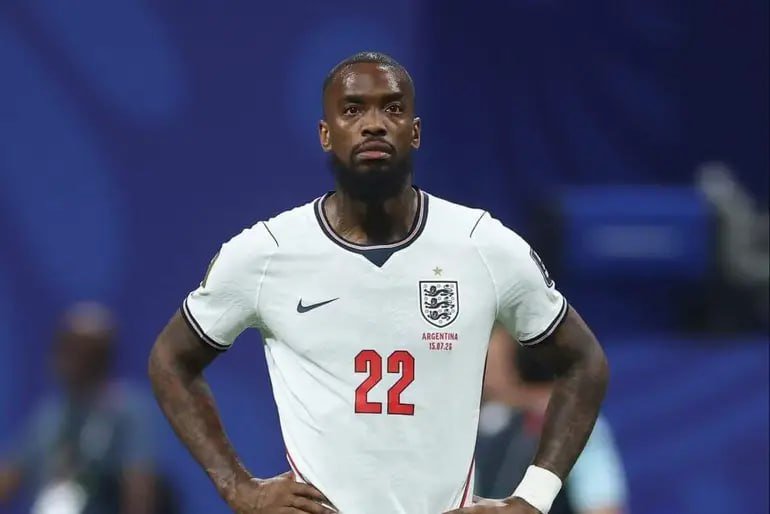
For five and a half hours on Friday, 3 July 2026, the only World Cup last-16 tie the world wanted to watch did not know where, or when, it would be played. England's meeting with co-hosts Mexico, the marquee fixture of the round and the only knockout game of the day live on BBC One, descended into a public standoff between broadcasters, federations and FIFA, ending only after kickoff was pushed deep into the Mexican night and the match was relocated at the cost of thousands of empty seats.
The episode is not a sporting controversy in the conventional sense. No goal was disputed, no red card was contested, no offside call divided a nation. It is an operational one — a football match treated as a TV product, a logistics problem dressed as a sporting one — and the public got to watch every uncomfortable minute of it. The pattern is familiar: a tournament organised around broadcasters' schedules rather than supporters' needs, with the people inside the stadium treated as the last audience consulted.
What actually happened
According to BBC Sport's reconstruction of the day, the confusion began hours before the scheduled 19:00 local kickoff (00:00 UTC, 4 July). England's delegation were told mid-afternoon that the match had been moved from the Estadio Akron in Guadalajara to the larger Estadio Azteca in Mexico City — a switch that, if confirmed, would have wrecked travel plans for thousands of ticket-holders and required a full reorganisation of transport, accreditation and broadcast compounds.
Inside the stadium, fans were left waiting on concourses and in food courts while officials argued. The teams were held in the tunnel area for more than an hour as television crews, who had built their entire broadcast architecture around the original venue, attempted to reconcile schedules with the proposed switch. By the time a decision was made public, shortly after midnight UTC, kickoff had been pushed back by more than five hours and the game finally went ahead at the original venue. It is not clear from the reporting what triggered the proposed move in the first place; FIFA did not immediately give a public explanation.
The players' view
For the England squad, the day had been complicated enough before the operational saga. BBC Sport reported on 3 July that Declan Rice, who had been managing an ongoing injury issue through the group stage, was likely to be available to start against Mexico. Manager Thomas Tuchel was reluctant to expand publicly on the problem during the uncertainty, but the delay itself created fresh selection questions — how long does a player keep warm? When does a pre-match meal become the post-match meal?
Players on both sides, used to the modern tournament as a tightly controlled broadcast environment, found themselves operating inside something closer to 1970s infrastructure. Several England players posted on social media during the wait. None of them blamed Mexico; all of them blamed the process.
Why a World Cup match became a TV scheduling problem
The English-language broadcasting windows for the knockout rounds have been a source of tension since the calendar was published. BBC Sport confirmed on 2 July that the England–Mexico tie was one of four last-16 matches the corporation would carry live, the others being shared across its platforms and partner channels. With European prime time beginning at 19:00 BST and the western United States audience only coming online several hours later, kickoff slots are negotiated months in advance — and renegotiated even later, when commercial realities shift.
The Guadalajara episode suggests the schedule was never robust to a venue change, because the schedule was not designed for venue changes. It was designed to deliver an English-speaking audience to a prime-time slot. When the underlying logistics of the competition intruded on that plan, there was no procedure visible to the public that could resolve it quickly. The lesson, presumably, is that any serious reform has to push the supporter's experience back to the centre of the operational design — and that doing so will require somebody, somewhere, to give up a slot.
Stakes and what comes next
The match itself ended in a 2-1 England win, enough to send Tuchel's side into the quarter-finals and to defuse, at least for 48 hours, the broader mood music around the squad. But the procedural failure will outlast the result. Co-hosts Mexico, the United States and Canada have spent a decade selling the 2026 tournament as a logistical showcase — 48 teams, 16 cities, three countries, a model for the future of the competition. The Guadalajara shambles suggests the operational scaffolding is not yet equal to that ambition.
There is also a financial dimension the public reporting has not yet quantified. Ticketholders who travelled, who booked hotels, who took days off work, will want compensation. Broadcasters will want answers on the value of advertising slots that ran while the game was a fixture in limbo. And FIFA, whose commercial model rests on the predictability of its matches, will need to decide whether the Guadalajara template is the one it intends to repeat. The next time a venue switch is floated, somebody, somewhere, will remember Friday night. Whether they remember it as a warning or as a precedent is the open question.
The Daily Monexus sports desk covered this as an operational failure as much as a sporting one. The wire reporting traced the confusion to venue, broadcast and federation lines that did not converge; this publication's read is that the supporter, again, was the last party consulted.