Mexico City braces for stormy Sunday as England arrive to a hostile welcome
England face Mexico at Estadio Azteca on Sunday in a last-16 tie that has been redrawn by severe-weather contingency talks and a doubled security footprint after two fan deaths at fan parks.
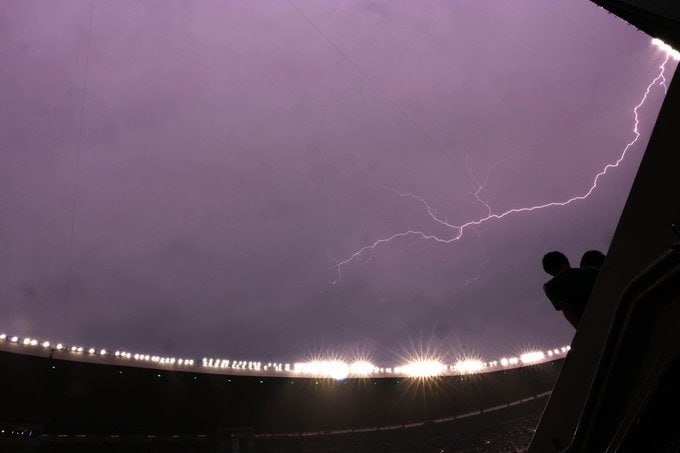
England's players stepped off the team bus at their Mexico City hotel late on Friday to be met by a wall of jeers, the BBC reported at 07:57 UTC on 4 July 2026. The reception was a reminder, if one were needed, that Sunday's World Cup last-16 tie at the Estadio Azteca will be played as much in the stands as on the pitch. FIFA has stuck to a 6pm local kick-off (00:00 UTC, Monday) after weighing whether to move the match earlier to dodge forecast storms; the federation considered the change but never confirmed it, BBC Sport and CBS Sports both reported.
What looked, a week ago, like a glamour tie between two teams in form has hardened into an away-day with three live risks: weather, crowd safety, and crowd mood. Each carries its own operational and political weight. The sporting story has not disappeared — but the operational one has crowded it.
A schedule on the move
The original 6pm local-time kick-off was questioned on Friday as Mexico City's storm season rolled in. CBS Sports, citing multiple reports at 19:38 UTC on 3 July, said the round-of-16 fixture at the Azteca could be moved earlier to avoid severe storms. The Athletic's David Ornstein reported at 19:32 UTC that FIFA was in "ongoing talks" about pulling the match forward, including to noon local (19:00 UTC), citing flooding risk. By 23:11 UTC the same day, Ornstein added that FIFA had decided to stick with the 6pm slot — the earlier option was discussed, never confirmed, and ultimately shelved.
That sequence matters because it shows a federation comfortable with publicly canvassing a time change in the hours before kick-off. Rescheduling at this stage of a World Cup is a structural headache: broadcast windows, stadium operations, and supporter travel plans all lock in days ahead. The fact that the conversation reached the late stage it did is itself a signal that the weather signal was strong enough to force a real, not nominal, debate.
Security doubled after two deaths
The other operational variable is heavier. On 4 July at 04:39 UTC, ESPN reported that Mexico will double security and cap capacity at the Angel of Independence monument and at the fan festival in Mexico City's main square for Sunday's match. The measures follow two fan deaths at official fan zones earlier in the tournament, which local authorities have attributed to crowd-crush dynamics at packed public screenings.
Mexico has not named a specific terror threat; the language used by local organisers is crowd-management language — control of ingress, alcohol policy, and flow at monument entrances. That framing matters, because in a stadium context crowd-crush and security-pause responses are well-rehearsed procedures. At a fan festival, with an open perimeter and free movement, the calculus is less forgiving. The doubled footprint at the Angel and the Zócalo is the visible answer to a problem that is, on the official record, about flow rather than threat.
An unfriendly welcome
Into that atmosphere steps an England squad booed on arrival. The BBC's footage and report at 07:57 UTC on 4 July showed fans surrounding the team bus and directing sustained jeers at the players as they entered the hotel. Mexico City supporters have history here — the Azteca crowd in 1970 produced one of the loudest atmospheres the tournament has ever recorded, and modern Mexican fans have made a habit of treating European opponents as away-day opponents in the strictest sense.
The hostile welcome is not, in itself, a security story. It becomes one only if it spills across the cordon between the hotel and the team coach on match day. England have not asked for additional protection at the hotel beyond the standard tournament detail. What the reception does do is reset the psychological terms of the tie: the players will walk out at the Azteca to a stadium that has already declared which side it is on.
Counterpoint and uncertainty
The dominant read of the next 48 hours is that the weather threat is real, the security posture is calibrated, and the crowd will be loud. Two readings complicate that frame.
The first is that the weather alarm may prove overstated. Forecasts for Mexico City's July storm season carry wide confidence intervals; kick-off windows that look dangerous at T-48 can be benign at T-2. FIFA's decision to hold the 6pm slot is, on the available evidence, a calculated bet that the storm cells will move through the basin before the second half. If they do not, the contingency plans shift from "earlier kick-off" to in-match suspensions — a scenario the federation has not publicly rehearsed but which the operational literature treats as routine at outdoor venues.
The second is that the security story is genuinely about flow, not threat. Two deaths at a fan festival are a serious indictment of perimeter planning; they are not the same thing as a stadium security breach. The doubling of security and capacity caps are the right response if the problem was ingress control, and the wrong response if the problem was something else. The source material does not specify the precise cause of the two deaths; the framing language is consistent with crush, but not yet confirmed as such.
Stakes
For England, the tie is the hinge of the tournament. A loss ends the campaign; a win sets up a quarter-final against either the Netherlands or one of the African qualifiers from the other bracket, on Mexican soil, against a crowd that has already declared itself. For Mexico, a win over a European heavyweight on home soil would be the loudest political football statement of the summer — and the security bill for hosting the next round will rise accordingly.
The bigger pattern is familiar. A World Cup co-hosted across three North American cities puts weather, security, and crowd dynamics under a single operational roof that does not always share data cleanly. Mexico City's storm window in July is well known; the federation's willingness to publicly discuss moving kick-off within 36 hours of the match is the new variable. The English squad did not choose any of this. They will have to win inside it.
This article was sourced from BBC Sport, ESPN, CBS Sports, and reporting by David Ornstein. Monexus has led with the operational frame — weather contingency, security posture, crowd reception — rather than the tactical preview more common to tournament wire copy.
Wire provenance
This editorial synthesis draws on the following public wire/social posts:
- https://t.me/David_Ornstein
- https://t.me/David_Ornstein