A Martyr's Funeral and the Machinery of Iranian State Media
Fars News has spent three days broadcasting the farewell to a "martyr leader" whose identity the channel leaves deliberately vague. The choreography tells readers more than the captions do.
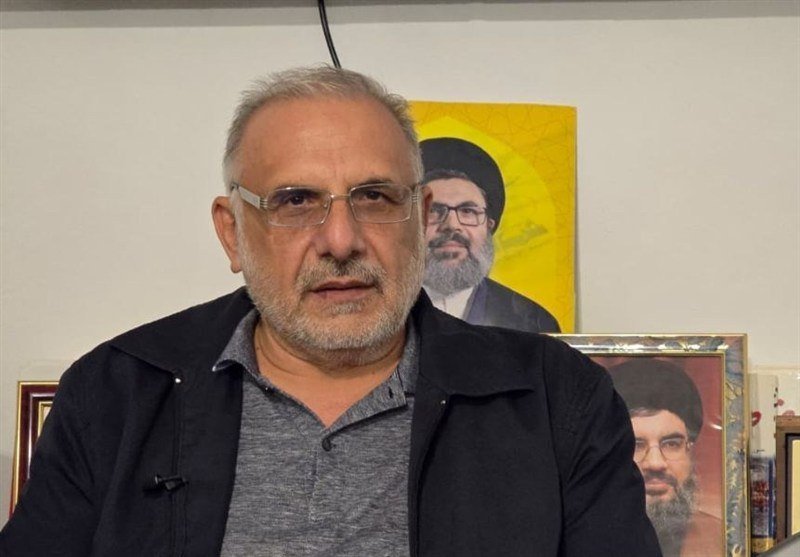
At 00:25 UTC on 4 July 2026, the Telegram channel of Fars News, the outlet closely identified with Iran's Islamic Revolutionary Guard Corps, posted a video titled "Pilgrimage of Ashura, the last meeting with the martyr leader." It followed, by roughly half an hour, another upload: "The place that makes everyone cry." And that, in turn, trailed a third piece broadcast earlier in the evening — "The foreign guests present at the farewell ceremony will tell about the martyr leader." Read together, the three posts describe a single, tightly produced media event: a martyrdom, a funeral, and a curated stream of international guests vouching for the dead.
Iranian state-aligned outlets have long understood that the politics of a death runs through the politics of its telling. Fars is not reporting news here so much as constructing a frame the rest of the system can inherit. The name of the "martyr leader" is withheld; the choreography is not. Three video dispatches inside roughly two hours is the rhythm of a propaganda cycle, not the cadence of journalism, and reading them as the latter mistakes the instrument for the music.
A funeral by algorithm
The Ashura framing is the giveaway. Ashura, the tenth of Muharram, is the annual commemoration of the killing of Husayn ibn Ali at Karbala in 680 CE — a foundational moment of Shi'a identity and the most emotionally freighted date on the Iranian religious calendar. To graft a contemporary political death onto Ashura is to claim, without saying so, that the fallen figure belongs in the same moral register as the imam himself. Fars does not need to make that argument in prose. The title does the work.
The "last meeting" phrasing carries its own freight. Iranian state media has used that construction for decades to dignify pre-death encounters between senior figures and the supreme leader; repurposing it for a farewell ceremony positions the deceased inside the innermost circle of the establishment, regardless of his actual portfolio. A viewer arriving at the channel with no prior context would conclude that a figure of the highest rank has been killed and mourned, and that his killing is being read as martyrdom in the classical sense.
Foreign voices as witness
The third dispatch — "the foreign guests … will tell about the martyr leader" — is the most revealing piece of the triptych. In Iranian state-media grammar, foreign dignitaries at a funeral perform two functions at once. Domestically, they certify that the grief is shared beyond Iran's borders and that the cause the dead man served commands international respect. Externally, they generate clips — short, attributable, on-camera — that sympathetic outlets across the region can recycle.
The line is a publishing schedule disguised as reportage. "Will tell" is future tense; the guests have not yet spoken in the post itself. Fars is promising its audience what the next upload will contain. For a reader trained on Western wire conventions, that promise reads as filler. For one trained on Iranian state media, it reads as a guarantee that the emotional payload of the ceremony will be redistributed through allied voices.
The architecture of the unnamed martyr
What is conspicuously absent is as telling as what is present. Fars does not name the deceased. It does not give his office, his unit, the date or place of the killing, or the actor responsible. The Telegram captions are deliberately bare — a title, a handle, an emoji. The sparseness forces the audience to seek the full story elsewhere, and elsewhere in the Iranian system means state television, the mourning banners in Tehran, and the speeches that will follow at the funeral itself.
That sequencing is not accidental. In Iranian elite politics, the timing of a martyrdom's public disclosure is itself a signal. To release images and atmosphere before naming the man is to build a wave of attention whose crest will be set by an official announcement, not by a news desk. Fars, as the IRGC-adjacent outlet most comfortable with that technique, is the natural vehicle for the soft launch.
What the framing is for
The architecture serves a domestic and a regional purpose simultaneously. At home, it saturates the audience with the emotional register of martyrdom before any political reading can crystallise — so that whatever narrative eventually attaches to the killing arrives inside an already-prepared affective container. Across the region, it furnishes allies in Iraq, Lebanon, Syria and Yemen with footage and language they can reuse without translation. The "foreign guests" clip is the export tranche.
Iranian state-aligned outlets have refined this pattern over decades, from the funeral of Qasem Soleimani in January 2020 to the rolling commemorations of figures killed in Syria and Iraq. The mechanic is consistent: the name is held back until the visual and emotional vocabulary has been established, then released into a public already saturated with the iconography.
What remains opaque
The sources do not identify the "martyr leader," specify the circumstances of his death, or name the foreign guests at the ceremony. The framing — Ashura, martyrdom, last meeting — is doing all the work that attribution normally would. That is itself the point of the exercise, and the reason a careful reader treats the three Telegram posts as evidence of media choreography rather than as a factual account of who died and how. The story, in the journalistic sense, will arrive later, attached to a name. What Fars has published tonight is the stage on which that name will be made to mean what the state wants it to mean.
This publication treats Iranian state-aligned outlets, including Fars, as legitimate primary sources for claims about their own coverage. The three dispatches above describe Fars's own publishing, not the underlying events; those remain to be verified against independent reporting.
Wire provenance
This editorial synthesis draws on the following public wire/social posts:
- https://t.me/farsna
- https://t.me/farsna
- https://t.me/farsna