Fery's five-set grind keeps British singles flag flying at Wimbledon
British qualifier Arthur Fery survives a near-five-hour, five-set marathon against Zizou Bergs — and three mid-match nosebleeds — to reach Wimbledon's fourth round for the first time.
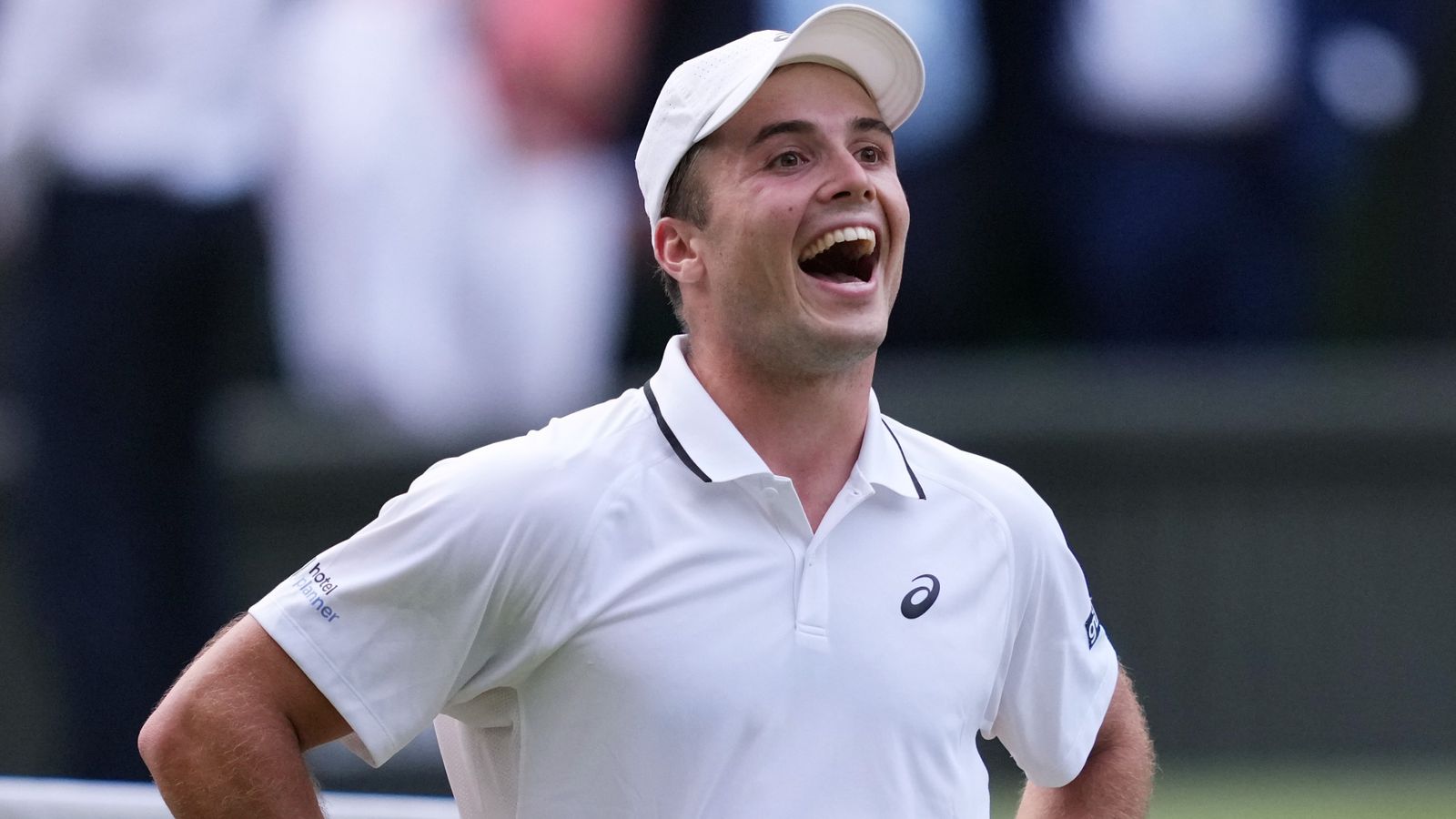
Arthur Fery, the British qualifier ranked outside the world's top 150, dug himself out of two one-set deficits on 4 July 2026 and outlasted Zizou Bergs 6-7, 6-3, 3-6, 6-3, 6-4 in a Wimbledon third-round epic that ran close to five hours, propelling him into the last 16 of a grand slam for the first time in his career. The scoreline understates the chaos: Fery required three separate medical timeouts for nosebleeds, played the closing games with tissue stuffed up one nostril, and converted his third match point to close out a contest that did not finish until late in the Wimbledon evening.
The win carries weight beyond Fery's own story. With the home singles draw thinning rapidly through the first week, Fery's comeback is now the only British singles campaign left standing on either side of the draw — a fact that turned Centre Court and Court One crowds into something closer to a home Davis Cup tie than a routine grand-slam third round.
A match that refused to end
Bergs arrived as favourite in form, having lifted the Eastbourne title the week before, and played like it for long stretches. The Belgian's serve and forehand combination held the upper hand through the first set tiebreak, and he moved a set ahead again at 6-3 in the third. Between those bookends, Fery carved out just enough — a steadier tiebreak in the opener, a cleaner service pattern in the second — to keep the scoreboard honest.
The match's hinge was medical rather than tactical. Fery began bleeding from the nose in the early stages of the fourth set, had it packed courtside, and returned visibly uncomfortable. He required further treatment twice more before the deciding set. Sky Sports reported that play was delayed several times while the British player was treated; Fery himself, in his post-match interview with BBC Sport, called it "unbelievable" and said it "will take some time to really digest." Bergs, serving for control in the fifth, was broken at a critical juncture as Fery simply refused to blink.
A qualifier's route, not a wild card's
It is worth marking the path Fery took to get here. He is not a wildcard propped up by federation favouritism. He came through qualifying — three wins on the outside courts in the days before the main draw — before dispatching his first two main-draw opponents in straight sets. The BBC's best-shots compilation from day six paired him with 2024 Wimbledon finalist Jasmine Paolini, a marker of how unusual his week has become relative to his previous grand-slam experience.
That distinction matters because Wimbledon's wildcard system has long carried an asterisk in the British press. Fery's route — through the cut-throat qualifying draw, then through two seeded or in-form opponents, then through Bergs — is the harder argument to make for his presence in the second week.
What this does, and does not, mean
For British tennis, a home player in the last 16 at the All England Club is a commercial and atmospheric asset. The SW19 operators, the Lawn Tennis Association, and the BBC's rights team all benefit when a Fery, a Draper, or a Raducanu runs deep. The press attention generated by Fery's run — and the willingness of Centre Court crowds to endure a five-hour match for the sake of a British comeback — is precisely the kind of upside the tournament was restructured to protect.
None of that, however, makes Fery the favourite in his next match. Reaching the fourth round is a milestone, not a breakthrough; the draw from here steepens sharply. The Belgian he beat was an in-form grass-court title-winner, not a top-ten seed. Whether Fery's run continues will depend less on the story and more on whether his body — sinuses and all — holds up against the next round's demands.
Stakes and uncertainty
The structural read is simple: British tennis has not had a male singles contender at this stage of Wimbledon in several years, and Fery's run matters less for the ATP rankings than for the sport's domestic pipeline. A deep run here puts British qualifying numbers, junior pathways, and university-style development routes back into the conversation in a way no administrative announcement can.
What remains genuinely uncertain is the medical picture. Fery played through a recurring nosebleed that required repeated treatment; the BBC's report notes the third bleeding episode but does not specify a diagnosis, and the sources do not say whether the condition will recur. Bergs, for his part, was widely credited post-match for his level, and his Eastbourne form suggests the loss is a setback rather than a collapse. The two paths the tournament can now take — a Fery run to the quarter-finals, or a more measured fourth-round exit — both depend on factors the scoreboard at 19:48 UTC on 4 July could not capture.
This piece treats Fery's win as a sporting story with a clear set of verifiable inputs from BBC Sport and Sky Sports reporting, and stops short of drawing broader conclusions about British tennis' future from a single five-set match.