The Housing Market Just Stopped Getting Worse. That Isn't the Same as Getting Better.
Median monthly housing payments rose for the first time in nine months while days-on-market stopped climbing. The IMF is already sketching the next disruption: tokenized real estate on public ledgers. Neither signal points to affordability.
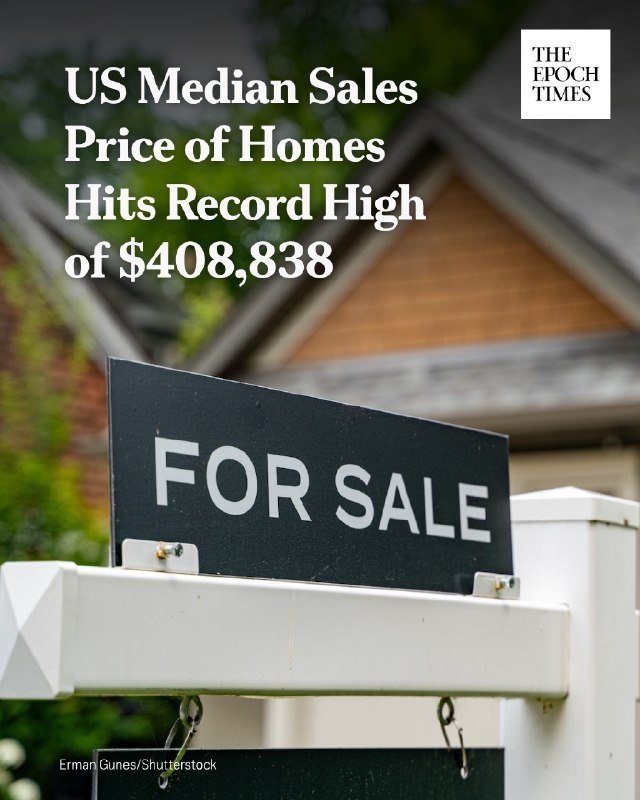
Two data points landed within twelve hours of each other on 3–4 July 2026, and they describe the same housing market from opposite ends. According to a 4 July 2026 Telegram dispatch from The Epoch Times citing the latest housing-payment index, the median American household's monthly housing payment rose for the first time in nine months, to $2,633. Twelve hours earlier, an Unusual Whales wire noted that the median home sat on the market for 53 days — flat year over year, ending a 26-month streak of homes taking longer to sell than the prior year.
Read these together and the picture is not a recovery. It is a floor. The market has stopped deteriorating along one margin (time-to-sale) and resumed deteriorating along the other (carrying cost). That is not the same thing as a turn, and the gap between the two readings is where most of the political argument about affordability will live for the next two quarters.
What the "flat days-on-market" headline is hiding
A 53-day median is, on its face, healthy. It also ends a streak in which every month for two straight years was worse than the month before it. The honest reading is that buyers and sellers have stopped adjusting to each other in real time — the price-discovery process has effectively paused at a level where neither side feels coerced. Inventory remains tight enough that sellers don't have to slash; rates remain high enough that buyers don't have to rush.
That equilibrium is fragile. A single material cut in benchmark mortgage rates would unlock the deferred first-time-buyer demand sitting in underwriting pipelines and reintroduce bidding pressure. A single shock to confidence — a soft jobs print, a regional bank wobble — would do the inverse. The 26-month streak of deceleration was the market bleeding out slowly. The 53-day flat reading is the tourniquet. It is not the cure.
The carry-cost number is the one that bites
The Epoch Times wire is blunt: median monthly housing payments rose to $2,633, the first year-over-year increase since October 2025. That is the figure that decides whether a household can stay in its unit. Days-on-market is a sentiment indicator; the monthly payment is a solvency indicator. A flat time-on-market tells you the market has caught its breath. A rising median payment tells you the breath is being held at a higher altitude than the year before.
For the cohort that bought in 2020–2021 at sub-3% fixed rates and is now facing a refi or a move, $2,633 a month is not an abstract. It is the difference between staying and selling at a loss. For the renter cohort it is the rent-equivalent benchmark landlords point to when raising asking prices on the next lease.
Enter the IMF's tokenization pitch
On 3 July 2026, Crypto Briefing's wire of an IMF staff analysis ran under a quiet headline: tokenization cuts friction but removes safety buffers. That framing matters here. Real-estate tokenization — fractional ownership of property recorded on a public ledger — has spent three years being sold to the same household that just got told its monthly payment is back on the way up. The pitch is that tokenization unlocks liquidity for assets that have historically been illiquid.
The IMF's caveat is the structural one. Tokenization removes intermediaries — title insurers, escrow agents, recording clerks, parts of the mortgage stack — that exist, in part, to absorb counterparty risk and to provide a paper trail courts can enforce. Speed is bought with the deletion of the institutional buffer that turns a transaction into a property right. In a market where median carrying costs are again climbing, the political question is whether households want their home equity turned into a token that trades on a 24-hour cycle, or whether they want the slower instrument that comes with a deed.
The counter-narrative that deserves a hearing
The bullish case is straightforward: a 53-day median is a functional market, and tokenization lowers the cost of entry for the same first-time buyers the Fed has been unable to help through the rate channel. Fractional ownership could, in principle, let a household buy a slice of a rental property the way it buys a slice of an equity index — and diversify what is currently the most concentrated asset on most American balance sheets. The IMF's "safety buffers" line, in this reading, is a caution about a v1 product, not a verdict on the category.
The skeptical case is equally straightforward: tokenization arrived at a moment when the underlying market is no longer self-correcting. Lower friction in a market where the median payment is rising is not unambiguously pro-consumer. It accelerates price discovery in both directions. A 30% drawdown in tokenized housing in 2027 would feel, to a retail buyer, exactly like a 30% drawdown in any other speculative instrument — except that this one is allegedly their home.
What we verified and what remains open
We verified three things against the source wire. The $2,633 median monthly payment figure and its nine-month context trace to The Epoch Times' 4 July 2026 dispatch. The 53-day flat days-on-market figure and the end of the 26-month deceleration streak trace to Unusual Whales' 3 July 2026 wire. The IMF tokenization framing — friction down, safety buffers down — traces to the 3 July 2026 Crypto Briefing summary of IMF staff analysis. What the wires do not yet say, and what the next data points will have to settle, is whether the payment figure reflects a rate-driven re-pricing of outstanding mortgages or simply rising rents feeding the median. That distinction decides whether 2026 is a buyer's market slowly thawing or a renter's market getting worse in a quieter way.
The stakes
If the carrying-cost number continues to rise while time-on-market stays flat, the political center of gravity shifts from "when do rates fall" to "what do we do about monthly affordability." That is a different policy conversation — one that points toward direct subsidy, rent regulation, or, plausibly, a regulator-mandated framework for tokenized property that addresses the IMF's safety-buffer concern head-on. The households most exposed are not the marginal ones. They are the median ones, in the units the median payment of $2,633 describes, who will feel the next move before they read about it.
Desk note: Monexus is framing this as a solvency-versus-sentiment story, not a "housing is back" piece. The wires from The Epoch Times and Unusual Whales describe the same market from opposite ends; the IMF tokenization brief from Crypto Briefing belongs in the same frame because it is being pitched to the same cohort. We left the bullish and skeptical readings in balance and flagged the open question on whether the payment rise is rate-driven or rent-driven.
Wire provenance
This editorial synthesis draws on the following public wire/social posts:
- https://t.me/CryptoBriefing