The IMF's Tokenization Warning and the Press-Freedom Test Before the Supreme Court: Two July 4 Signals About Power, Transparency, and the Next Financial Architecture
On the same July 4 weekend, the IMF flagged the systemic risks of tokenizing real-world assets, and the US Supreme Court let stand a daily fine against a journalist who refuses to name a source. Read together, the two signals point to a structural fight over who controls the next layer of the financial stack — and who gets to see it work.
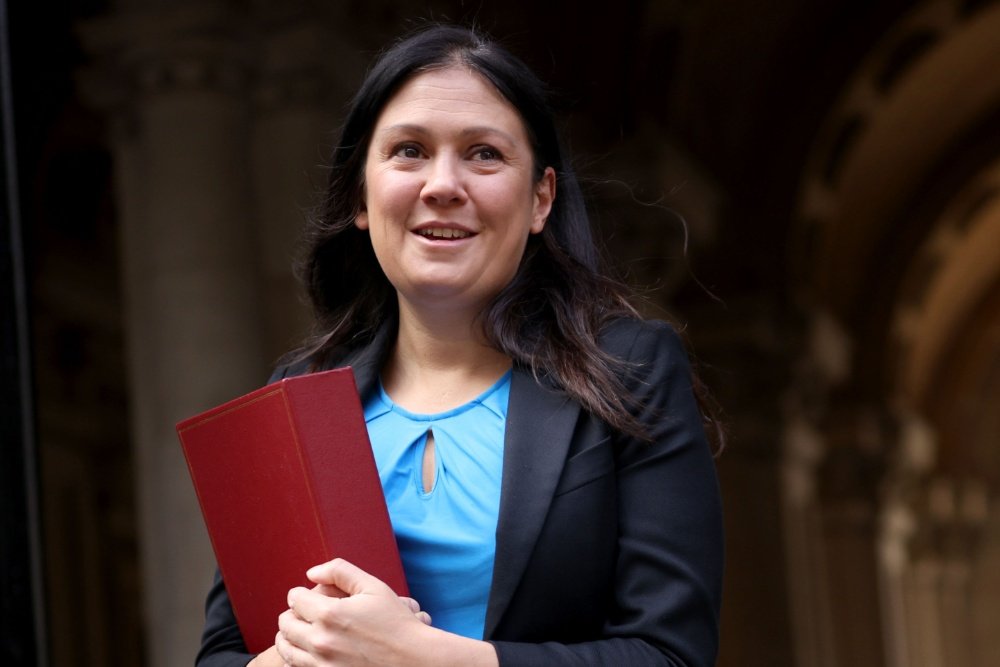
The two stories landed within thirty-six hours of each other, and almost no one noticed them as a pair. On 3 July 2026, the International Monetary Fund published a fresh analysis arguing that tokenizing real-world assets — putting bonds, fund shares, real-estate deeds, and trade-finance claims on distributed ledgers — does indeed cut friction in capital markets, but that doing so quietly removes the safety buffers that have, for the better part of a century, kept ordinary savers from being absorbed into the next crash. Two days earlier, on 1 July, the United States Supreme Court declined to intervene in a contempt-of-court dispute that has been fining the investigative journalist Catherine Herridge $800 a day until she reveals a confidential source for a story she published in 2017 about an FBI inquiry. The fine has now accrued into the tens of thousands; her lawyers have asked the justices to halt it, and on 4 July 2026 the court said no. One story is about the architecture of money. The other is about the architecture of accountability. Read in isolation, they look unrelated. Read together, they describe the same problem from two directions.
The IMF's hedged endorsement
The IMF's note is, by the institution's own standards, unusually direct. Its argument is not that tokenization is a bad idea. It is that tokenization, as currently being marketed and built, is being rolled out faster than the supervisory, custodial, and disclosure frameworks designed to keep wholesale finance from collapsing under its own leverage. The report frames tokenization as a way to reduce settlement delays, compress intermediation costs, and make cross-border flows faster and cheaper — a description that has become boilerplate across the industry. The IMF then attaches a list of buffers that tokenization either eliminates or weakens: real-time settlement removes the lag during which a clearing bank or a central counterparty can catch a fat-finger error; programmable money removes the discretionary pause a compliance officer might use to interdict a suspicious transfer; on-chain collateral removes the slow legal process by which a custodian can recover assets when a counterparty fails.
This is not a marginal concern. The institutional plumbing that connects a pensioner's monthly contribution to a corporate bond is the same plumbing that, in 2008, took months to unwind before the damage became visible. Tokenization compresses that timeline. A buffer that takes weeks to act in the current system takes seconds in a tokenized one. The IMF is asking, in the dry language of a staff paper, who is going to watch the system when it moves that fast — and who gets to audit the watcher.
The Herridge case, narrowly
The Supreme Court's decision on 4 July is narrower than the IMF note but no less revealing. Catherine Herridge, an investigative reporter who previously worked at Fox News and later at CBS News, published a series of stories in 2017 about an FBI investigation into a Chinese-American scientist. The scientist's lawyers, in subsequent civil proceedings, demanded that Herridge reveal the source inside the FBI who had provided her with material about the case. Herridge refused, invoking the reporter's privilege — a protection that, in the United States, is not enshrined in a federal shield law but exists as a common-law recognition that journalism depends on confidentiality. A federal judge held her in civil contempt and imposed the $800-a-day sanction, which has been accruing since 2024. On 1 July 2026, Herridge's lawyers asked the Supreme Court to stay the sanction while her appeal proceeded. On 4 July, the court declined.
The mechanics of the case are familiar to anyone who has watched press-freedom disputes move through the US courts over the last decade. The privilege is real but uneven; it is strongest in criminal cases involving the government, weakest in civil cases where a private litigant claims a need for the source. The Trump-era Justice Department had, separately, seized Herridge's email and phone records from her time at CBS in an effort to identify the same source. That seizure was eventually reversed by the Biden Justice Department, which returned the records and acknowledged the constitutional overreach. The contempt sanction, however, is a creature of civil procedure and survives the change of administration. The Supreme Court's silence on 4 July is not a ruling on the merits — it is a refusal to pause the fine.
Where the two stories converge
The IMF paper and the Herridge case look like different departments of the same building. The IMF is asking who audits a financial system in which the audit itself has been automated into a settlement layer that closes in seconds. Herridge's case is asking who audits the state when the state's investigative powers are aimed at the people whose job is to expose what the state does. In both cases, the institution with the formal power — the central bank or the federal court — is being asked to police a relationship between a private actor and a public one, and in both cases the speed of the underlying system is outrunning the institutional reflexes designed to oversee it.
There is a further, less obvious convergence. Tokenization is, at its core, a project of removing the human intermediary from financial plumbing. The reporter's privilege is, at its core, a project of preserving a human intermediary — the journalist — in the plumbing of public accountability. Both projects claim to make the underlying system faster and cleaner. Both also depend on a prior settlement of who gets to see the settlement. The IMF note flags this directly when it warns that tokenization removes safety buffers; the implication is that the buffers have to be rebuilt at a different layer, or the speed advantage of the new system will be consumed by the first crisis it cannot absorb. The Herridge case flags the same problem from the other direction: if the state can compel a journalist to reveal the identity of a confidential source, the buffer between official action and public knowledge is removed, and the speed advantage accrues entirely to the party doing the compelling.
The structural pattern — without the theory
It is tempting to read these two stories as evidence that the institutions governing the global financial system and the institutions governing the US press are both being outrun by the technology they nominally oversee. That framing is partly correct. A more honest framing, though, is that the institutional reflexes are not being outrun — they are being deliberately narrowed. The tokenization agenda has been pushed for several years by a relatively small set of large banks, asset managers, and infrastructure providers, and the policy frameworks have been drafted in close consultation with that same set. The reporter's privilege, similarly, has been narrowed case by case, in litigation brought by private parties who have a financial interest in identifying a source, and the Supreme Court has declined the invitations to expand it. In neither case is the institution acting blindly. In both cases, the institution is acting in a way that preserves the discretion of the actors it is institutionally closest to.
This is what an editorial observer means when a story is described as a power story rather than a policy story. The IMF paper is a policy document. The Herridge sanction is a legal ruling. Each can be reported in isolation. But the structural fact is that, on the same July 4 weekend, two of the most consequential institutional actors in the global economy made choices that narrowed, rather than widened, the space in which the public can audit what those institutions do. One narrowed it for savers; one narrowed it for readers.
The stakes and what to watch next
The downstream consequence, if both trajectories continue, is a system in which money moves faster than any supervisor can follow it and official action moves faster than any journalist can document it. That is not a hypothetical future. It is a description of the present, lightly extrapolated. The list of actors who benefit from that arrangement is short and consistent: large intermediaries with the resources to build their own audit layers, and state agencies with the litigation budget to outlast any individual reporter. The list of actors who lose is longer and less organized: retail savers whose pension contributions enter a settlement layer they cannot see, and readers whose sources cannot afford a $800-a-day fine indefinitely.
Three things are worth watching in the next twelve months. First, whether the IMF's note is followed by any binding guidance from the Financial Stability Board or the Bank for International Settlements, or whether it sits on a shelf the way earlier warnings about leverage and shadow banking sat on shelves before 2008. Second, whether Herridge's underlying appeal reaches a merits decision, and whether that decision narrows or expands the federal common-law privilege in civil cases. Third, whether the major tokenization pilots — the ones being run by the largest US and European asset managers — publish their operational-risk frameworks in a form that an external auditor or a regulator can actually interrogate, rather than in the marketing-grade summaries that have accompanied the projects so far. The answers to those three questions will determine whether July 2026 is remembered as a turning point or as a footnote.
This publication framed the two stories together because their structural similarity is more revealing than their separate coverage suggests. Treating the IMF note and the Herridge sanction as unrelated events — one a financial-policy story, one a press-freedom story — flatters a division of labour that the underlying actors do not respect.
Wire provenance
This editorial synthesis draws on the following public wire/social posts:
- https://t.me/s/epochtimes
- https://t.me/s/cryptobriefing
- https://t.me/s/epochtimes
- https://t.me/s/livemint