Iran buries its Ayatollah, and the world watches what fills the vacuum
Millions gathered at Tehran's Grand Mosalla for Ayatollah Khamenei's funeral. Foreign Minister Araghchi sketched a 'dignified, strong' Iran as the official frame — and a US pressure campaign to thin the guest list is now part of the public record.
Millions of Iranians began filing into Tehran's Grand Mosalla in the small hours of 4 July 2026, hours before the funeral ceremonies for Ayatollah Seyyed Ali Khamenei, according to Press TV's on-the-ground reporting from correspondent Moein Amini. The scale of the public mobilisation — Press TV's own framing has it in the millions — and the staging at a purpose-built prayer complex near the capital make this less a private rite and more a state performance of continuity at a moment when continuity is the very thing in question.
The Islamic Republic is burying its longest-serving Supreme Leader at a hinge moment. What the Iranian state chooses to project on the dais, and which foreign dignatories are allowed onto it, will shape the successor regime's first impressions with every chancery that matters.
What Tehran is saying it is burying
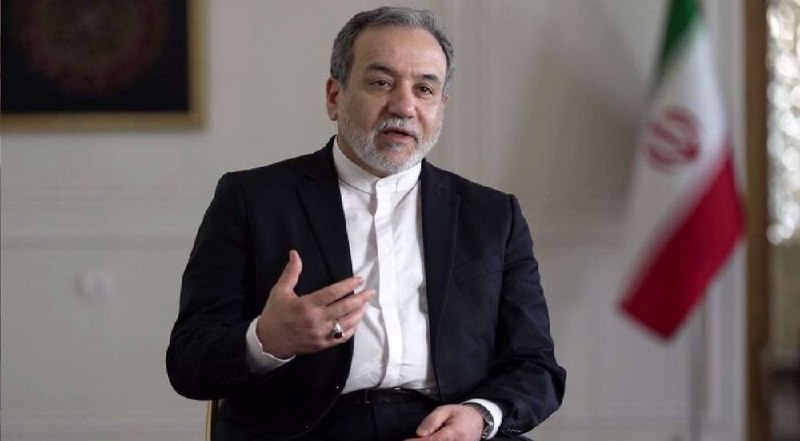
Foreign Minister Abbas Araghchi, in remarks carried by Press TV on the eve of the ceremonies, identified the defining characteristic he says Khamenei sought for the country: a "dignified, strong Iran." That formulation does real work. It tells Iranian audiences the martyr narrative is inward-facing — about national stature, not external conquest. It tells foreign capitals that Tehran is reading succession as consolidation, not rupture. In a region where two of Iran's principal adversaries, the United States and Israel, have spent the past year framing the Islamic Republic as a weakened and isolated actor, the official line at the funeral insists on the opposite picture.
Press TV's Amini, reporting from the Mosalla precinct, emphasised preparations and crowd density. Theatrical state media coverage of this kind is not evidence of anything by itself; it is, however, the only show in town for now, and the global audience is being invited to read it as the script.
The guest list as geopolitics
The more pointed story is who is not coming. According to a Press TV report dated 3 July 2026, "senior American officials waged an intensive behind-the-scenes campaign over the past five days to dissuade" foreign governments from sending high-level representation to the funeral. The lobbying, as Press TV describes it, frames participation as a foreign-policy signal the United States would rather not see.
Treat that claim with the caveat it deserves: this is Iranian state media reporting a US pressure campaign, sourced through Tehran's lens. It is plausible — quiet US demarches of this kind are routine in diplomatic practice — but the intensity, the targets, and the precise asks are not independently corroborated in the items available to us. If the reporting holds up, it nonetheless tells you something useful: Washington is treating a funeral as a coalition-management problem, not a ceremonial footnote. That is a tell about how the administration reads the post-Khamenei moment.
The rival read is straightforward: Tehran has every incentive to maximise the appearance of foreign snubs, because a besieged narrative serves an interior political function. Hardliners preparing the succession can paint a wide, hostile world closing in, which is precisely the climate in which a vigilant, centralised state sells itself. Both readings can be true at once.
What the successor regime will be pressed to prove
A funeral of this scale is a debut for whoever inherits the chair. The press TV-led coverage, including Araghchi's "dignified, strong" framing and the prominence given to flag imagery and Revolutionary Guard formation, is engineered to suggest the transition is already consumed and the doctrine intact. The empirical test arrives in the weeks that follow: posture in nuclear talks, behaviour of regional proxies calibrated from Tehran, the tone of any street demonstrations that surface, and the way the new leadership handles the foreign dignatories who did show up versus the ones who were leaned on to stay home.
For Europe and the Gulf monarchies, the calculus is whether to read the transition as a window for engagement or as a moment to harden positions while the heir is still consolidating. For Washington, the question is whether the diplomatic isolation campaign shortens the runway of any successor, or merely hands the new leadership a sharper rallying cry. There is no historical precedent for a peaceful transfer of this office in the Islamic Republic's history — the position has only ever been held by one man, since 1989 — so every model that an analyst reaches for is, by definition, a guess.
The frame inside the frame
Coverage of Iranian state ceremonies has a familiar shape in Western wires: official footage is treated as performance to be decoded rather than fact to be reported, and the choreography is read for what it conceals. That instinct is often correct. It is also incomplete, because it tends to flatten what is plainly visible — a very large public gathering, broadcast continuously from a state channel that millions of Iranians and regional viewers consume in real time — into a piece of evidence about something else. A million-person crowd is not, by itself, proof of legitimacy; but neither is cynicism a substitute for reporting what is actually in front of the cameras.
What this publication would flag, on the available record, is the gap between the image Tehran is broadcasting and the corroboration that exists outside Tehran. The Press TV footage gives you the inside of the tent. Whether foreign leaders were leaned on, in what numbers, with what threats and inducements — those are questions that will be settled by other wires, other governments' readouts, and the eventual memoirs of the diplomats involved. For now, the official Iranian narrative that something like this lobbying took place should be marked as a Tehran-sourced claim, plausible, not yet independently confirmed.
What is not in doubt is the underlying political fact: the Islamic Republic has spent four days turning a funeral into a foreign-policy event, and foreign ministries from Washington to the Gulf have engaged on those terms.
Desk note: this piece leans on Press TV's on-site reporting and framing per the source items available; the US lobbying claim is flagged in line because the corroboration sits in Iranian state media, not yet in independent Western or regional wires accessible to us. Where the available record is thin, the article says so.
Wire provenance
This editorial synthesis draws on the following public wire/social posts:
- https://t.me/presstv/1
- https://t.me/presstv/2
- https://t.me/presstv/3
- https://t.me/presstv/4
- https://t.me/presstv/5