Iran's old guard turns out for Badragh: what the funeral footage actually shows
Crowds gathered in Tehran on 3 July for a senior cleric's funeral, and state-aligned channels streamed the mourners live. The footage tells less about theology than about who still turns out, and who no longer does.
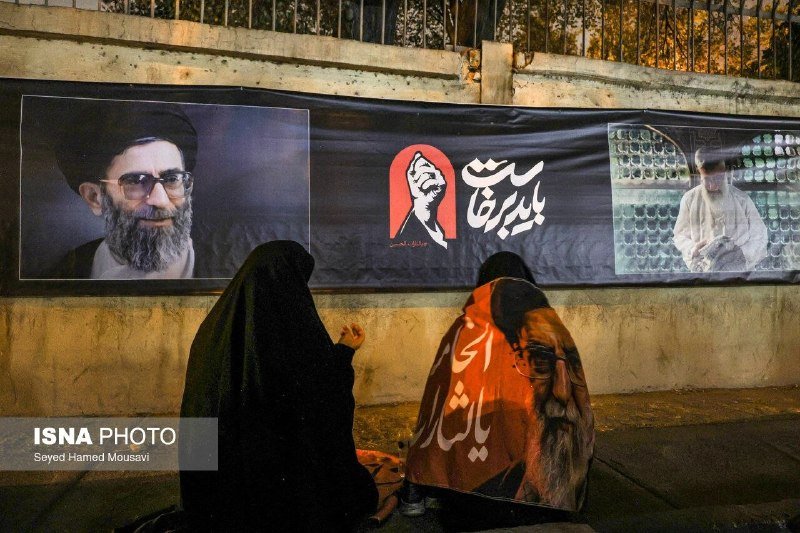
On the evening of 3 July 2026, the Fars News Telegram channel broadcast live footage of a Tehran street filling with men in dark jackets, women in black chadors, and the slow choreography of a clerical funeral. The subject of the mourning was Mohammad Mohagheghi Badragh, the Friday prayer leader of Gorgan and a longtime instructor at the Qom seminary, known across Iran's political-religious class by the honorific "Badragh." By the time the first clip went up at 22:26 UTC, mourners were already telling waiting camera crews, in plain Persian, that they could not bring themselves to say goodbye.
The footage is being framed inside Iran as a public outpouring. Read carefully, it is something narrower and more interesting than that — a snapshot of who still shows up for the velayat-e-faqih establishment, and on whose terms.
A clerical career that ran through the system's hardest years
Badragh was a generation removed from the 1979 revolution's inner circle, but close enough to it to count. He served in the Iran–Iraq War as a war literature figure and spent decades teaching in Qom, producing a network of clerics who now occupy mid-level posts in the judiciary, the seminaries, and the provincial Friday-prayer offices. His Friday prayer leadership in Gorgan — a Caspian province whose demographics skew younger and more skeptical of clerical politics than the national average — made him a recurring point of friction with reformist currents, particularly after 2009.
The state-aligned outlets that are streaming his funeral, Fars foremost among them, are not neutral observers. Fars operates under the supervision of the Islamic Republic's broadcasting establishment and has consistently framed clerical deaths as moments of national re-consolidation. The present framing — "the place that makes everyone cry," "the last hours of waiting are like this" — is consistent with that house style.
What the crowds actually look like
Three patterns are visible across the Fars clips. First, the demographic is older than the median Iranian. The faces pressed against the camera in the 22:26 UTC segment are predominantly men over fifty and women of the same cohort; the under-thirty presence is thin and largely clustered around organised bus groups from seminaries and state-linked associations. Second, the geographic signage — banners naming Gorgan, Qom, and specific seminary branches — confirms that the turnout is being partially organised through the networks Badragh built. Third, the emotional register in the on-street interviews is grief without surprise. The speakers know who he was and what he represented; the mourning is being performed by insiders, for insiders.
None of this is documentary proof of anything beyond what it shows. It is, however, evidence against the claim, sometimes advanced in Western commentary, that Iran's clerical establishment has lost the capacity to mobilise large in-person crowds at all. That claim is overstated; the establishment can still mobilise, but the pool it draws from is recognisably narrower than it was a decade ago.
Counter-frames worth naming
Iranian opposition channels operating from outside the country have been repackaging the same clips with a different caption: the funeral as a stage-managed performance for a regime that no longer commands spontaneous loyalty. There is a kernel of truth there, but the framing flattens what the footage shows. The mourners interviewed by Fars are not reading from a script; their grief is genuine, even if it is also politically useful to the state broadcaster covering them. The honest read is that both things are simultaneously true: a section of Iranian society, concentrated in the older, more religious, more provincial demographic, is still willing to turn out for a senior cleric, and the regime still treats that turnout as a resource to be cultivated rather than a fact to be reported.
Western wire reporting on clerical funerals in Iran has tended, over the past two decades, toward the second of those readings. The state-aligned footage, read on its own terms, supports the first. The synthesis — that the Islamic Republic retains a real but shrinking core constituency, and that its media strategy is built around making that core look like the whole country — is the one the underlying evidence will bear.
Stakes and what to watch
A single funeral does not move markets or change diplomatic posture. But it sits inside a longer contest over who in Iran gets to define what counts as a public gathering, and whose presence in those gatherings gets recorded for posterity. Fars is recording. The opposition channels are re-cutting the recording. The young Iranians who did not appear in the footage are not, for the moment, being recorded at all.
Over the next several months, two indicators will tell us whether the patterns visible on 3 July are stable or shifting. The first is whether Friday prayer attendance in provincial capitals continues to skew older, or whether post-2022 demographic pressure has begun to register in the mosques themselves. The second is how the state broadcaster handles the next clerical death — whether the template used for Badragh (organised bus groups, seminary banners, prolonged live coverage) gets reused intact, or whether producers begin to acknowledge, even quietly, that the demographic of the mourners is not the demographic of the country.
This article frames an Iranian state-aligned source against the well-documented pattern of Western and opposition readings of clerical funerals in the Islamic Republic. The footage itself is treated as primary material; the editorial question is what it shows, and what it does not.
Wire provenance
This editorial synthesis draws on the following public wire/social posts:
- https://t.me/s/farsna
- https://t.me/farsna/189342
- https://t.me/farsna/189338
- https://t.me/farsna/189319