Tehran plays the strait card
A prediction market is pricing 52% odds that Tehran imposes tolls on the Strait of Hormuz by August — and state-aligned channels are already rehearsing the rhetoric that would make it politically possible.
On 4 July 2026, with US-Iran diplomacy stalled and Israeli air assets parked uncomfortably close to Tehran's air-defence network, the political weather around the Strait of Hormuz has thickened. A contract on the prediction-market venue Polymarket is now pricing a 52% probability that Iran will impose transit fees or a toll regime on the strait before the end of next month — a threshold that would, in a single move, redraw the economics of roughly a fifth of the world's seaborne oil.
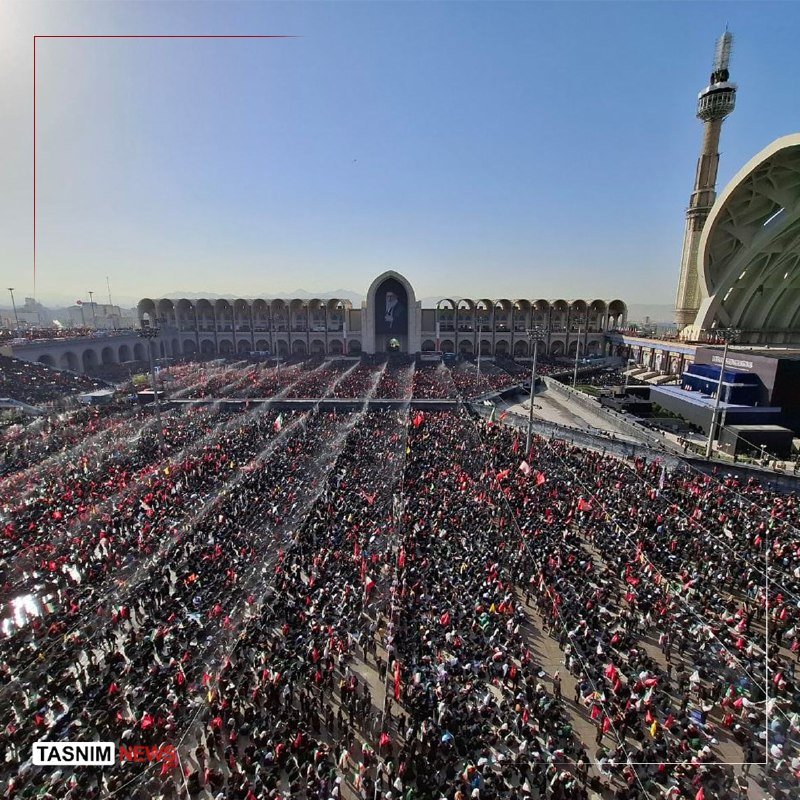
The market is not a verdict. It is a temperature reading of a small, informed crowd willing to put money on the line. But it lines up neatly with what state-aligned channels in Tehran have been broadcasting for seventy-two hours. Fars News Agency has been running footage framed around coffins and the line Iran's soul is passing between these coffins; Middle East Spectator has circulated a piece titled The Father of Iran, casting the supreme leader in the register of national patriarch under siege. The messaging is uniform: the republic has survived worse, and the strait is not a courtesy.
What "Hormuz fees" would actually mean
A formal toll would not be the first time Tehran has leaned on the choke point. Since the 1980s the strait has been the regime's most reliable asymmetric instrument — cheap to threaten, expensive to insure against, and almost impossible for a hostile navy to lock down without triggering a wider war. The current proposal being priced into Polymarket is narrower than a blockade: not closing the waterway, but taxing passage. Iranian Revolutionary Guard Corps fast boats have, in the past, simply hailed commercial traffic and demanded cash for safe-conduct. A formal schedule of fees would amount to that practice, laundered into policy and backed by the threat of seizure for non-payment.
For Tehran, the appeal is fiscal as much as strategic. Sanctions have throttled the regime's dollar revenues. A per-barrel or per-tonne fee on traffic moving through a corridor that Iran sits on top of would create a stream of hard currency the Treasury cannot currently access through oil exports. For Washington and the Gulf monarchies, the same logic reads as extortion. Both readings are correct at the same time, which is why the policy question has not gone away under any administration.
The rhetoric of martyrs and fathers
The state-aligned messaging matters because the toll regime is politically combustible on the Iranian side as well. Fars's coffin imagery is a reminder that the Islamic Republic sells its strategic moves to its own public in the language of dignity under siege. Any decision to provoke a US carrier group, even a rhetorical one, has to survive the scrutiny of a base that remembers the shoot-down of Iran Air Flight 655 in 1988 and the long war with Iraq. The Middle East Spectator piece recasting the supreme leader as a national father pushes the opposite emotional button — protectiveness rather than martyrdom — and is calibrated for the same domestic audience.
The sequencing is deliberate. Before any toll announcement, Tehran has to be sure the streets read the move as sovereignty rather than adventurism. The current wave of propaganda, in other words, is the prerequisite paperwork.
Why a prediction market is the right instrument
Polymarket's 52% figure is less interesting as a forecast than as a coordination device. The people willing to bet on Hormuz fees by the end of August are, in effect, traders who have read the same public signals — Fars, Middle East Spectator, satellite imagery of IRGC naval movements, the diplomatic freeze — and concluded that the political cover is now in place. If the number drifts down over the next week, it will be because a back-channel has produced enough reassurance to make the bet look foolish. If it drifts up, expect tanker insurance premiums to move with it.
This is the part of the story that rarely makes it into the wires. Coverage tends to treat Hormuz as a binary: open or closed. In practice the strait operates on a continuum of frictions — boarding, inspection, GPS spoofing, selective harassment — and the toll regime is the next step up that ladder, not a leap into full closure. The Polymarket price captures that continuum more honestly than most of the cable-news commentary does.
The structural read
What we are watching is hegemonic transition played out at a depth of about fifty metres. The United States still underwrites the freedom of navigation that makes the strait usable; Iran still sits on the only shore that matters. Each side is testing how much of the old bargain still holds. A formal toll is, among other things, a way of asking: does Washington still have the political appetite to escort tankers through a corridor where a mishap could draw it into a shooting war on the eve of a domestic election cycle? Tehran's bet is that the answer is no.
That bet is not crazy. The previous decade saw successive US administrations absorb Iranian harassment in the strait without a kinetic response, and the current administration has shown little appetite for another Middle Eastern entanglement. The market is pricing the most likely outcome of that alignment: friction that does not quite become war, monetised by the party that controls the geography.
Stakes, and what we do not know
The concrete stakes are easy to enumerate. Oil benchmarks would spike on the announcement, with knock-on effects on Asian importers — China, India, Japan, South Korea — that depend on the strait for the bulk of their crude. Insurance and freight rates would move first, hours before any barrels do. Gulf monarchies would lose leverage on pricing; Iran would gain a sanctions-resistant revenue line; the United States would be forced into the familiar posture of issuing condemnations while deciding whether to escort. None of this requires a shot to be fired.
What remains genuinely uncertain is whether Tehran has the naval capacity to enforce a toll at scale. Collecting fees from a few defiant tankers is one thing; collecting them from a sustained convoy operation backed by a US carrier strike group is another. The sources do not specify the operational readiness of the IRGC navy, and we have not been able to corroborate the Polymarket crowd's apparent confidence on this point. The market may be pricing politics, not logistics.
That distinction is the one to watch over the next four weeks. If the toll announcement comes, it will arrive with state-aligned channels already on message and a prediction market already positioned. The only surprise left is whether the ships follow.
This publication treats Hormuz not as an abstraction but as a margin call on an old order. The market is telling us what the cables won't.
Wire provenance
This editorial synthesis draws on the following public wire/social posts:
- https://t.me/farsna
- https://t.me/Middle_East_Spectator