Iran bids farewell to Khamenei: a regime choreographs its longest night
Tehran is holding farewell rites for Ayatollah Ali Khamenei, framed by state media as martyrdom. The choreography, the foreign guests, and the silence on a successor say as much as the eulogies.
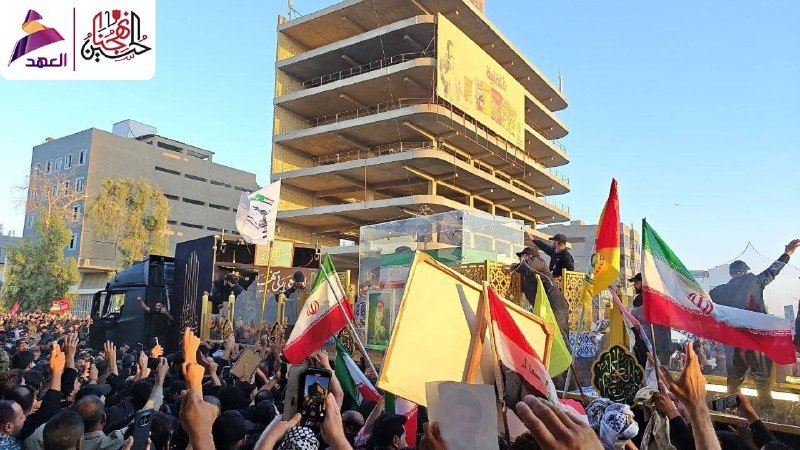
At 01:41 UTC on 4 July 2026, Telegram channels linked to the office of Ayatollah Ali Khamenei published the choreography of his own departure: a farewell ceremony, funeral procession and burial for the "martyred Leader of the Islamic Revolution," broadcast across state-aligned outlets in Persian, English, Russian and Arabic within minutes of each other. Theatrical language — shaheed, rahbar, farewell of the dear Iranian people — filled the captions. The missing words mattered more.
What is happening in Tehran in the small hours of 4 July 2026 is not a normal state funeral. The Islamic Republic is staging a succession as a martyrdom pageant. The framing tells the outside world who gets to grieve, who gets to be seen grieving, and whose grief confers legitimacy on the next generation of rulers. Read closely, the guest list and the silence on a successor name are the story.
The framing: martyrdom, not mortality
The Khamenei office's English-language Telegram channel opened the night's coverage at 01:41 UTC with a single banner: "The farewell ceremony, funeral procession and burial of the martyred Leader of the Islamic Revolution, Ayatollah Seyed Ali Khamenei." Tasnim News English followed minutes later, publishing a new KHAMENEI.IR poster at 01:33 UTC carrying the same designation — "Grand Ayatollah Martyr Seyyed Ali Khamenei" — and tagging the event for Iranian state broadcasters.
Calling a sitting leader a martyr before he is in the ground is a deliberate semantic move. In the grammar of the Islamic Republic, shahada confers political infallibility by association: the deceased is no longer a fallible political actor but a sacred witness. The same vocabulary was reserved for Quds Force commander Qasem Soleimani after his killing in January 2020, and for Hezbollah's long-time secretary-general Hassan Nasrallah. Each time, the regime converted a death — natural or otherwise — into institutional capital.
The guest list as foreign policy
The Russian-language Khamenei channel, working through the early UTC hours of 4 July, posted four back-to-back video items in roughly half an hour — between 23:50 UTC on 3 July and 00:16 UTC on 4 July — cataloguing precisely who had come to pay respects. Two threads stood out.
First, the religious pluralism of the visitors. The same window that brought "female seminarians and international activists" — at 00:16 UTC — also brought "Hindu leaders, Shiites of Thailand and Germany" — same timestamp, same channel. Iran's clerical establishment is courting a ummah wider than its own Shia co-religionaries, in keeping with a longer Khamenei-era project of presenting the Islamic Republic as a pole for non-aligned religious civilisation against a putative Western secular order.
Second, the politics of the mourners. At 00:10 UTC, the same Russian-language feed posted footage of "respected persons and ulemas of Palestine" paying tribute, with no further identification. The implicit signal: the Axis of Resistance's religious establishment — the network that includes Hamas, Palestinian Islamic Jihad and Hezbollah-aligned figures in Lebanon — is appearing under the umbrella of Iranian state mourning. In a Middle East where the armed front opened by Hamas's 7 October 2023 operation has not closed, the optics carry operational weight.
A separate 23:50 UTC item featured Gholam-Ali Haddad-Adel — the former parliament speaker whose daughter Zahra was previously reported killed, and whose son-in-law is widely identified in Iranian state media as Mojtaba Khamenei — visiting "the exalted degree of the martyr leader of the Islamic Revolution" with "a group of" unnamed others. In Tehran's baroque internal politics, the choice of whose family the cameras linger over during a funeral is not incidental. It is a soft indicator of who is being normalised in the line of succession.
What the cameras are not showing
The Telegram traffic since late 3 July is rich in atmosphere and thin in substance. None of the channels operating inside the Khamenei media ecosystem — Tasnim, the Khamenei-language feeds in Persian, English and Russian — has named a successor. None has posted text of a written will. None has confirmed the cause of death, the date of death, or the location of death beyond the implication of a farewell ceremony in Tehran. Iranian state outlets are describing a martyrdom without, in these dispatches, walking a reader through the medical or military facts that would normally be the spine of an overnight bulletin.
That gap is the story. A regime confident in its own narrative does not need to publish a will on day one; it can let institutions — the Assembly of Experts, the Guardian Council, the Supreme National Security Council — work the question in private and present the answer as fait accompli. A regime anxious about its narrative saturates the feed with grief, symbolism and foreign validation precisely so that no one is talking about procedure. The Islamic Republic has chosen the second option.
The risk in this choice is asymmetry of information. Foreign ministries in Washington, Riyadh, Tel Aviv, Ankara and Beijing are reading the same Telegram channel at the same UTC timestamps and drawing inferences from what is present and what is absent. So is the domestic opposition — from the diaspora around Reza Pahlavi to organisers inside Iran who remember 2022. A pageant that controls the imagery but not the headlines controls less than it thinks it does.
Stakes for the region and the world
Iran is not Venezuela. It is a state with ballistic-missile reach, with proxies spanning Lebanon, Iraq, Syria, Yemen and the Palestinian territories, and with the largest Shia clerical establishment in the world. A succession under those conditions is a continental event, not a domestic one. The farewell ceremony currently being broadcast is therefore a foreign-policy instrument in real time: every frame tells a counterpart abroad whether Iran under its next leader intends continuity or rupture.
Three plausible readings sit alongside each other in the open source record. The continuity reading — supported by the prominence of Mojtaba Khamenei's family in the mourning footage and by the religious-pluralist guest list, which signals an outward-facing clerical state — holds that the system will produce an insider successor and that the Axis of Resistance will be reaffirmed. The rupture reading, popular in some Western chancelleries and among exiled opposition movements, holds that a succession crisis will surface factional splits inside the Islamic Republic, that the IRGC's political weight will grow, and that Iran's regional posture could either harden sharply or bargain opportunistically. The hybrid reading, which the evidence so far most closely fits, holds that Tehran will run an extended pageant designed to compress the decision window — using funeral optics to legitimise, in advance, the choice the Assembly of Experts eventually ratifies.
The room for honest reporting on any of the three is narrow. Iranian state media is, by its own institutional logic, a participant in the outcome, not an observer of it. The Telegram feeds cited above are real-time inputs into how that participation is being choreographed; they are not, on their own, sufficient evidence of what comes next. What they do establish is the present fact: as of 01:41 UTC on 4 July 2026, the Islamic Republic's media apparatus is performing the death of its longest-serving leader as martyrdom, and is calibrating who may grieve publicly in order to shape who may rule next.
Desk note: this article leans on Telegram traffic from the Khamenei office and Tasnim — sources that, by their nature, are part of the political event they describe. Where Western wires later publish independent confirmation of the underlying facts, Monexus will fold that reporting in and adjust the framing accordingly.
Wire provenance
This editorial synthesis draws on the following public wire/social posts:
- https://t.me/Khamenei_es/
- https://t.me/tasnimnews_en/
- https://t.me/Khamenei_ru/
- https://t.me/Khamenei_ru/
- https://t.me/Khamenei_ru/
- https://t.me/Khamenei_ru/