Iran's Tehran Diplomacy Day Reveals the Shape of an Axis Looking Outward
In a single July 4 afternoon, Araghchi hosted a PFLP-GC official, a Yemeni delegation, and Serbia's telecoms minister — a snapshot of a regional posture in motion.
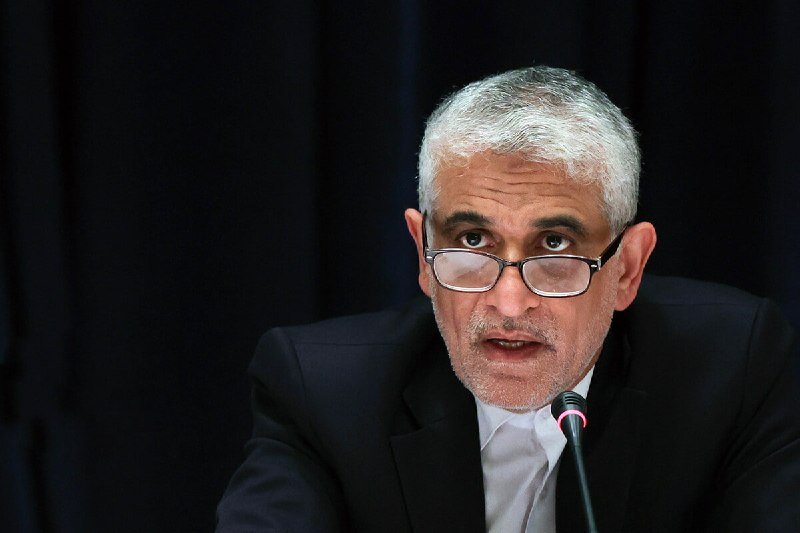
On 4 July 2026, between roughly 17:00 and 17:40 UTC, Iranian Foreign Minister Seyyed Abbas Araghchi held three consecutive meetings in Tehran that, taken together, read less like a day's schedule and more like a foreign-policy doctrine on display. He sat down first with Boris Bratina, Serbia's Minister of Information and Telecommunications; then with a high-level Yemeni delegation; and finally with Talal Naji, Secretary General of the Popular Front for the Liberation of Palestine – General Command (PFLP-GC). All three encounters were carried live by PressTV, Iran's state broadcaster, and each was framed in its own visual register: a Balkan European dignitary in a suit, a Sanaa-aligned Yemeni group, and a Palestinian faction whose founder once commanded PLO forces inside Syria. The thread that runs through the three is the thing worth examining.
The conventional reading — that Iran is a regional actor boxed in by sanctions and encircled by adversaries — does not survive contact with a calendar like this. What the day lays bare is a posture: Tehran convening partners from three different theatres inside a single afternoon, in a building that functions, in effect, as a hub. The argument this piece makes is straightforward. Iran's regional diplomacy is no longer a project of ideological alignment alone; it has become a connector service — matching a Serbia that wants non-Western technology partnerships with a Yemeni delegation managing one of the world's most intractable conflicts, and a Palestinian faction with deep ties to the Syrian and Lebanese armed opposition. The shape of the axis being assembled is wider, and more pragmatic, than its caricatures.
What Araghchi actually did on 4 July
The first meeting, with Serbia's Bratina, sits at the unexpected end of the day's portfolio. Serbia is not a Middle Eastern state, is not a member of any Iran-aligned military coalition, and has spent the post-2014 period tilting between the European Union and a hedging posture toward Russia and China. A visit by its information and telecommunications minister to Tehran is, on its face, a sectoral exchange — digital infrastructure, telecom equipment, perhaps satellite-spectrum cooperation. But the optics matter. Iran has spent two decades under Western export controls on dual-use telecoms gear; Serbia, similarly sanctioned-adjacent after the 2022 Balkans period, is a useful European interlocutor for hardware that Western vendors will not supply.
The Yemeni delegation meeting, at 17:20 UTC, is the more familiar terrain. Sanaa has been the site of one of the most sustained Saudi-led air campaigns of the past decade, and the Iran-aligned Houthi movement has, since late 2023, become a maritime actor in the Red Sea whose disruption is felt well beyond the peninsula. A high-level Yemeni delegation in Tehran on 4 July sits inside a continuous channel of consultation between the two capitals.
The third meeting, with Talal Naji of the PFLP-GC, is the meeting that will draw the most scrutiny. The PFLP-GC is a faction that broke from the original PFLP in 1968, fought in the Lebanese civil war from a Syrian-aligned position, and retains a relationship with both Damascus and Tehran. Naji's reception in the foreign ministry is a deliberate signal — to Beirut, to Damascus, and to anyone tracking the longer arc of Palestinian factional diplomacy.
Counter-read: optics, not architecture
There is a case that none of this matters much. The critic will point out that Iran hosts visiting delegations continuously; that PressTV is a state outlet that elevates routine courtesy calls into theatrical statecraft; and that the three meetings, separated by twenty minutes each, do not necessarily indicate a coordinated doctrine. Serbia's Bratina is a telecoms minister, not a foreign minister, and the substantive agreements emerging from such visits tend to be modest. The Yemeni and Palestinian meetings could equally be read as solidarity theatre for a domestic audience at a moment when the regional picture for Tehran is harder than it has been since 2020.
That counter-read is honest and should be noted. But it is not sufficient. The same logic — "routine courtesy" — was applied to Iran's diplomatic choreography in 2014 and 2015, and the architecture that emerged (the Astana process on Syria, the nuclear framework with the P5+1) was neither routine nor courtesy. Diplomatic scheduling is one of the few instruments a sanctioned state has, and using it loudly is not frivolity; it is signalling.
What the day reveals structurally
Read together, the three meetings describe a portfolio that is broader than Middle Eastern security alone. Iran is positioning itself across three simultaneous registers: (1) as a regional security patron to armed and political allies in the Palestinian and Yemeni theatres; (2) as a Western-Asian bridge for governments seeking non-aligned partnerships, of which Serbia is a useful emblem; and (3) as a hub state whose convening power — the ability to put a Balkan, an Arab, and a Palestinian figure in the same building on the same afternoon — is itself a foreign-policy instrument.
The structural point is this. Sanctions are designed, in part, to deny a state the convening power that comes from financial integration. Iran has lost much of the financial integration; what it has not lost is the ability to host meetings and to put delegations on the same calendar. PressTV, whatever its editorial character, distributes the images. That distribution is doing diplomatic work. Coverage routinely defers to the language of official spokespeople in this region; what is less often reported is that the spokespeople on the Iranian side have, over two decades, become unusually fluent in the grammar of diplomatic staging.
Stakes and what to watch
If the trajectory holds, three things become more likely over the next twelve months. First, Iran–Serbia cooperation on telecoms infrastructure will produce a publicly visible agreement, modest in size but useful as precedent for further European engagement with Iran in non-sanctioned sectors. Second, the Sanaa–Tehran channel will continue to shape Houthi posture in the Red Sea; the visit is one input into that posture but the channel has not been interrupted since 2023. Third, the PFLP-GC meeting is a small reminder that Palestinian factional diplomacy has not paused, and that Iran's role inside it remains one of the variables that any future Palestinian reunification track will have to absorb.
The limits of the analysis are worth stating plainly. PressTV is the only source for the substance of these three meetings; the Iranian foreign ministry has not, as of the time of writing, posted its own readouts. The names of the Yemeni delegation members have not been published. Bratina's published schedule for 4 July has not been independently corroborated beyond the PressTV footage. What the day therefore proves is the staging, not the substance. The staging, however, is the story — and it is the story this publication is choosing to tell.
Monexus covered this as a single-afternoon composite rather than three separate meetings because the calendar pattern, not any one encounter, is the analytically interesting fact.
Wire provenance
This editorial synthesis draws on the following public wire/social posts:
- https://t.me/presstv/
- https://t.me/presstv/
- https://t.me/presstv/