The Funeral Diplomacy No One in the Western Press Wants to Read
Foreign ministers, presidents and party leaders from Malaysia to Cuba to Georgia converged on Tehran this week to pay respects to a martyred Leader — and the Western wire services largely stayed home.
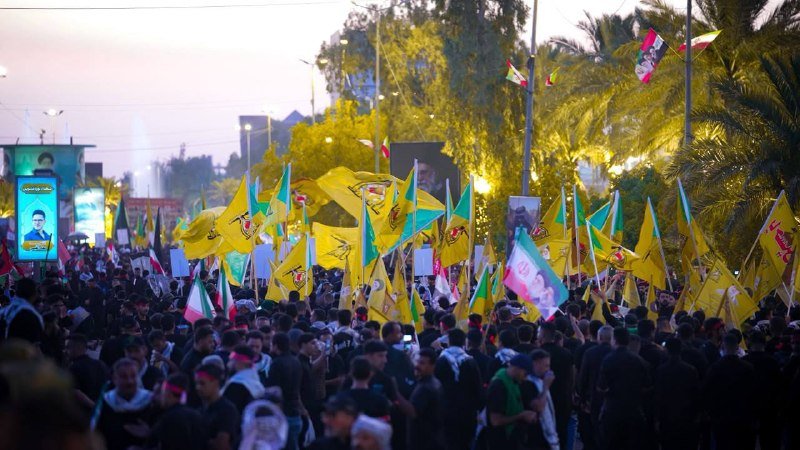
On 4 July 2026, Malaysia's Minister of Agriculture and Food Security Mohamad Sabu stood in Tehran at the farewell ceremony for the martyred Leader of the Islamic Revolution, joining a procession of foreign dignitaries that, by the close of the morning, had already included the president of Georgia and Cuba's Minister of Higher Education. IRNA, Iran's official English-language outlet, ran the tributes as discrete human-interest stories within a single news cycle. Read together, they form something more interesting than a series of condolence calls: a portrait of which governments still treat Tehran as a peer capital, and which do not.
The simple fact is this. While Western wire desks spent the day filing explainers about succession mechanics in the Islamic Republic, a quiet diplomatic procession was unfolding in southern Tehran — and the most telling coverage of it was being produced in Farsi, broadcast on state channels and then translated by IRNA into English. The absence of Reuters, AP and the BBC from the byline roster is itself the story.
What we actually saw on the wire
IRNA's English service, between 09:17 and 10:05 UTC on 4 July 2026, carried three distinct tribute items. First, at 09:17 UTC, the agency reported that Walter Baluja Garcia, Cuba's Minister of Higher Education, had travelled to Tehran to pay homage at the mausoleum of the martyred Leader. Four minutes later, at 09:20 UTC, a second dispatch placed Georgian President Mikheil Kavelashvili at the same site. By 10:05 UTC, Malaysian Agriculture Minister Mohamad Sabu had been added to the official programme. None of these items is, on its own, a major diplomatic event. Taken together, they describe a coordinated flow of senior visitors from three continents into a capital most Western governments now treat as a pariah. That coordination is the news.
Why the optics matter
Three governments, three very different geometries of relationship with Tehran. Georgia is a Caucasus state balancing between the European Union, Russia, Turkey and Iran; its president's presence in Tehran signals a quiet refusal to fully subordinate its foreign policy to Brussels. Cuba is a Latin American hold-out under US sanctions that has historically maintained working ties with the Islamic Republic even at the height of Western pressure. Malaysia is a Southeast Asian Muslim-majority middle power with its own Iran relationship going back decades, currently led by an administration that has been careful to keep channels open across the Middle East's sectarian lines. None of these governments needs Tehran. All three chose to come.
The counter-narrative from the Western press, where it engages at all, tends to read the ceremony through the lens of succession theatre: who is up, who is down, which faction of the Islamic Republic's security elite will inherit the late Leader's apparatus. That is a real question, and a serious one. But it is not the only question. The presence of Sabu, Kavelashvili and Baluja Garcia points to something the succession frame cannot capture: that the Islamic Republic retains a layer of genuine peer-to-peer diplomatic relationships outside the Western core, and that those relationships are now being performed publicly rather than managed through discreet back channels.
The structural frame
Coverage of Iran's foreign relations has for years operated on an implicit assumption: that the Islamic Republic's diplomatic gravity is a function of crisis — nuclear files, sanctions evasion, regional proxy networks. The state visits that punctuates this week's coverage suggests a second gravity, slower and quieter, built on routine engagement between governments that simply do not accept the Western consensus on Iran's isolation. Havana, Kuala Lumpur and Tbilisi do not appear in the IAEA inspector reports. They appear in the condolence register, and that is where the long arc of Iranian diplomacy is currently being written.
The structural pattern is familiar. A sanctioned or partly-sanctioned state accumulates a constituency of partners whose interests are not aligned with the sanctioning coalition's. Those partners do not always agree with the sanctioned state's domestic politics; they agree with their own reasons for not joining the sanctions regime. Over time, that constituency becomes a counter-architecture: not a bloc, not an alliance, but a working layer of bilateral ties that can be activated when pressure peaks and that does not collapse when pressure recedes. The visits to Tehran this week are that counter-architecture performing itself.
Stakes and what remains uncertain
What the sources do not specify is the political weight each visitor carried back home. Kavelashvili's Georgia is a country where street politics around Iran alignment is not a settled matter; Sabu's Malaysia has domestic constituencies that read the relationship through a Muslim-solidarity lens the government does not formally endorse; Cuba's presence is unsurprising but its senior-minister level signals an elevation from the routine chargé d'affaires engagement. If this week's visitors are read as a sample, the Iranian foreign ministry's next challenge will be converting the condolence register into working ministerial contact on the substantive files — energy, banking, sanctions circumvention — that actually move the bilateral relationship.
The further uncertainty is whether the Western wire will eventually notice. So far, the answer is no. The condolences are being documented in detail by IRNA, occasionally echoed by Al Jazeera's Arabic service, and otherwise travelling through Telegram channels and foreign-language outlets that an English-language reader has to actively seek out. That is a choice about which diplomacy counts as news, and it is worth naming.
Desk note: The Western wire frame here defaulted to succession speculation; Monexus focused on the visitor register as the more under-reported signal of where Iran's diplomatic gravity still lands.
Wire provenance
This editorial synthesis draws on the following public wire/social posts:
- https://t.me/Irna_en
- https://t.me/Irna_en
- https://t.me/Irna_en