Maggie Gyllenhaal's Two Films and a Century of Stereotypes: What the Karlovy Vary Honour Actually Recognises
Two directorial features, a Karlovy Vary honour, and an argument with the entire history of how Hollywood has framed women. Gyllenhaal's career behind the camera is short by design, this publication finds, and that brevity is the point.
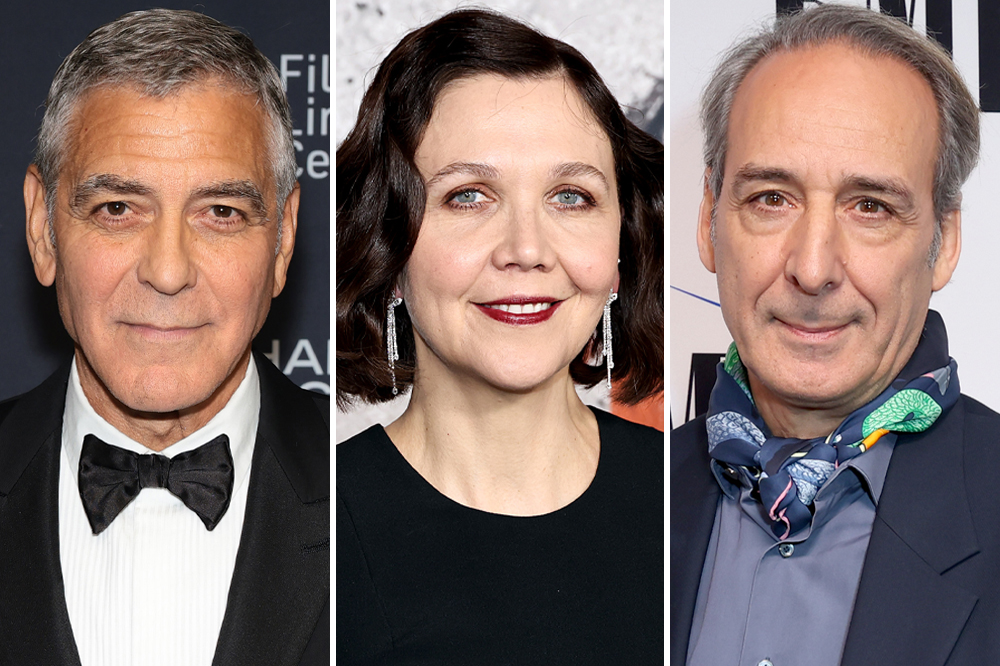
On 4 July 2026, the Karlovy Vary International Film Festival used one of its career tributes to make a pointed argument. Maggie Gyllenhaal, the actor-turned-director whose behind-the-camera output remains small enough to fit in a single evening, was honoured in the Czech spa town not for a body of work measured in decades, but for a body of work that has, in the festival's framing, dismantled more than a century of how women appear on screen. The honoree herself pushed back on the size of the claim. In a conversation with Variety tied to the tribute, Gyllenhaal said she never set out to break taboos, and that the real intent was narrower and more honest: she was "just trying to make space for my own experience to be expressed" [Variety, 4 July 2026]. That tension — a major European festival awarding a maximalist reading of a minimalist filmography, against the laureate's own insistence on the personal rather than the programmatic — is the most useful lens onto Gyllenhaal's second-act career.
The structural frame matters. Gyllenhaal's two directorial features — "The Lost Daughter" (2021) and "The Bride!" (2025), the latter a reimagining of the 1935 James Whale classic — are the entirety of the data set. A filmography that small is either a vanity exercise or a deliberate constraint. The evidence so far suggests the latter: each project picked a specific corner of the female cinematic inheritance and refused to flatter it. "The Lost Daughter" followed a woman whose interior life is closer to discomfort than to redemption; "The Bride!" recast a monster's companion as a fully autonomous figure rather than a damsel appendage. Read together, the two films argue that the inherited grammar of Hollywood femininity — passive, decorative, and oriented around the men who look at her — has been a choice, and therefore can be unchosen. The festival's centenary-of-stereotypes framing is, in effect, a way of saying that the choices are older and more entrenched than the auteur who is now declining them.
What the Karlovy Vary honour actually recognises
Karlovy Vary's career tributes are unusual in the European festival circuit. Where Cannes reserves its Palme d'Or for finished work and its honorary Palme for a body of films, and Venice mixes jury prizes with career Golden Lions, the Czech festival has historically used its honorary Crystal Globe to single out artists whose work complicates the medium rather than merely accumulating it. The 2026 tribute to Gyllenhaal sits inside that lineage. The festival's framing — that two directorial outings can redraw more than a hundred years of on-screen femininity — is the kind of claim that only holds up if the work in question has been read as a corrective to a specific, identifiable tradition. The Variety interview makes the corrective legible: the films refuse the soothing arc in which female interiority resolves into either marriage, motherhood, or death, and they refuse the camera's habit of treating the female body as the object of an external gaze. That refusal is the inheritance that the festival is rewarding, not the number of features on the CV.
The economics of the claim matter too. A director with two features cannot be plausibly accused of running a brand. There is no Gyllenhaal cinematic universe, no signature visual tic that audiences are expected to recognise on sight. That absence is, in the context of the 2020s director-as-auteur economy, itself a position. Studios have spent the period since roughly 2015 building franchise templates around a small number of named filmmakers; Gyllenhaal's pace and project choice read as a quiet refusal of that template. The festival, by honouring her in the middle of that industrial moment, is implicitly endorsing the slower model.
The actress-who-directs counter-narrative
The counter-read is straightforward and should be taken seriously. Acting-to-directing transitions in Hollywood have a long history of being received as proof of seriousness when the underlying output is thin. The phrase "auteur" gets applied generously in those cases, partly because the alternative — admitting that the actor's celebrity is doing the work — is unflattering to the press and inconvenient to the studios. Variety's own framing leans into the corrective language, which is appropriate for the subject but worth holding at arm's length. Two features, however pointed, are not a body of work. A third or fourth would let the catalogue speak for itself; until then, the work is best treated as an opening argument rather than a verdict.
There is also a generational question that the festival coverage did not press. The 2020s have seen a wave of women directors break into the prestige circuit in numbers that the industry did not previously permit. Gyllenhaal is not the only example; she is one of the more visible ones. A useful analysis of her films would have to ask whether the work reads as subversive because of what is on the screen, or because the prestige festival circuit has been waiting for exactly this kind of project to validate. The honest answer is probably both, and the festival's framing is at its strongest when it acknowledges that.
What Gyllenhaal said, and what she did not
In the Variety interview, Gyllenhaal was careful to keep the work personal. She framed the directing as a process of making space for her own experience to be expressed, and declined the larger cultural framing the question implied [Variety, 4 July 2026]. That is a more interesting position than either the maximalist festival reading or the dismissive counter-read. It puts the work in the register of craft — the difficult, narrow act of trying to make a film that does not lie about what the filmmaker has actually lived — rather than in the register of cultural mission. The festival's honour, by recognising that personal project at scale, is making a bet that the personal project and the cultural project are the same thing. Whether that bet pays off will be settled by the third and fourth films, not by the Crystal Globe.
The interview also surfaced a point that did not get enough space in the press cycle: the question of how a director of two features sustains a directing career without the industrial muscle that comes from a longer catalogue. Gyllenhaal is unusual in having the kind of name recognition that allows her to green-light small, personal projects without the platform of a major studio behind them. The structural conditions for her directorial freedom are the same conditions that keep most other would-be directors out of the room. The Karlovy Vary tribute honours the work; it cannot, by itself, change the conditions.
Stakes and the open question
If Gyllenhaal directs a third feature, the festival framing will start to look like a settled verdict. If she does not — and acting careers in Hollywood routinely absorb directing ambitions, especially for women who can still command the kinds of roles that Gyllenhaal is offered — the honour will look, in retrospect, like a festival paying for the symbolic value of the gesture rather than the actual record. The sources available at the time of writing do not specify what her next project will be, when it will shoot, or whether it will reach the festival circuit at all. That is the genuinely open question. The two existing films are real, the festival recognition is real, the interview is on the record. Everything beyond that is the kind of bet a tribute is meant to enable, not to settle.
This publication framed the Karlovy Vary tribute as an argument about what the festival values — slow, personal authorship over brand-scale directorial output — rather than as a verdict on a closed filmography. The two existing films are read as an opening case, not as a body of evidence.