Merz's military-spending defence, and the trade that keeps flowing anyway
Friedrich Merz is no longer apologising for rearmament. Separately, EU-US trade quietly hit a record high despite tariff theatre — and the two stories rhyme.
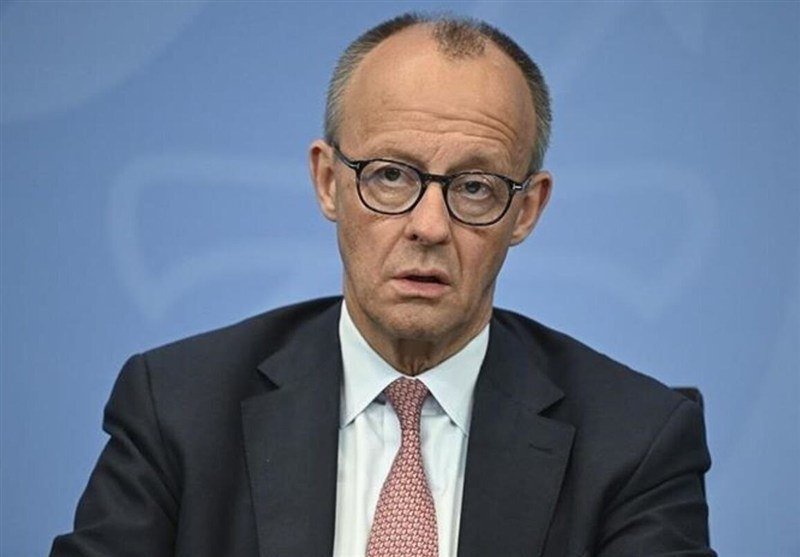
On 4 July 2026, German Chancellor Friedrich Merz drew a line under years of post-2014 squeamishness about military budgets. There is, he declared, no reason for Germany to "shy away" from defending the surge in defence spending now reshaping the country's fiscal stance. The phrasing matters. Berlin is not pivoting quietly; it is asking, in public, to be argued with on the merits rather than apologised to about the optics.
That posture is the opposite of where Germany stood a decade ago, when surplus politics and constitutional debt limits functioned as a kind of national brand. What changed is not the mathematics of interest rates or the availability of credit — German borrowing costs remain structurally cheap. What changed is the security perimeter. With a full-scale war on the European continent entering its fifth year, and with the United States signalling periodic impatience about the burden of European defence, the cost of fiscal restraint has stopped looking like prudence and started looking like exposure. Merz's intervention is an attempt to rebrand the trade-off in plain language: the question is no longer whether Germany can afford to rearm, but what it costs the country to keep declining to.
The shape of the new defence consensus
The chancellor's framing is a clear break with the austerity reflex that defined Berlin's contribution to NATO throughout the 2010s. For most of the post-Cold-War era, German defence outlays were treated as a compliance metric — something to be calibrated just enough to satisfy alliance targets, and ideally not discussed in the same breath as social spending. The recent turn is more ambitious. Officials across the governing coalition have stopped treating the Sondervermögen (special defence fund) as a one-off and started treating it as a baseline. Procurement cycles, ammunition stockpiling, and the industrial base needed to sustain them have moved from the periphery of economic policy into its centre.
The domestic political risk is real. The fiscal hawks inside the Bundestag have not disappeared; they have merely been outflanked, for now, by the argument that under-investment in defence is itself a form of fiscal irresponsibility. If Merz holds that line, expect two things: a sustained attempt to lock in higher baseline spending beyond the current supplementary budget, and friction with those — inside and outside his coalition — who read the turn as drift rather than discipline.
The trade that tariff theatre did not stop
Almost a day earlier, on 3 July 2026, a quieter headline cut against the prevailing mood. EU trade with the United States reportedly hit a record high last year, despite the tariff skirmishes and threat-and-retaliate cycles that dominated the trade press. The two stories rhyme. A continent that is supposedly decoupling from Washington in security is, on the commercial ledger, deepening its exposure to it. Energy contracts, pharmaceutical supply chains, financial services flows, and the steady drumbeat of transatlantic investment all kept adding up while ministers sparred at press conferences.
This is not a contradiction; it is the texture of the relationship. Tariffs are loud and visible. Trade flows are quiet and structural. When the cameras leave, invoices do not. The political class in Brussels and Berlin performed disagreement; producers, shippers, and bankers priced continuity. Read together with Merz's defence remarks, the picture is of a European elite that is rhetorically diversifying its dependencies — on security, on industrial partnerships, on the Global South — while the underlying commercial plumbing with the United States thickens.
What the structural shift actually is
Strip away the rhetoric and two things are happening simultaneously. First, European state capacity is being rebuilt in the security domain after a generation of outsourcing to Washington. Second, the transatlantic commercial relationship is being quietly stress-tested in public — tariff theatre, subsidy races, industrial-policy skirmishes — while its real substrate continues to expand. The two tracks are not in conflict; they are how a mature alliance recalibrates. Allies that pay more of their own bill and complain more loudly about the terms of trade are, paradoxically, easier allies to sustain than dependents who smile and under-invest.
That is the Merz wager, and it is a defensible one. The risk is that domestic audiences read the defence build-up as adventurism while reading the trade figures as proof that the security case is overstated. The honest answer is that both can be true at once: dependence on American power is being reduced precisely because it is being paid for, and the commercial relationship is deepening precisely because the political one is being renegotiated. The wire cycle will keep generating a headline a day that sounds like rupture; the data will keep showing a relationship that is denser than the headlines suggest. Both are real, and the work of the next several years is to make the public square comfortable with holding both at once.
Stakes and what remains uncertain
If the trajectory continues, the winners are Europe's defence industrial base — primes, mid-cap suppliers, ammunition plants, dual-use tech firms — and the broader European project of pooling procurement. The losers, in the short run, are social-spending constituencies whose budgets are squeezed by the reallocation, and smaller export-dependent economies whose access to the American market depends on the next tariff cycle going their way. Over a five-to-ten-year horizon, the calculus changes again: a Europe that carries more of its own security weight is a Europe with more leverage in every other negotiation, including the commercial one.
What remains genuinely uncertain is whether the Merz-era consensus holds. Defence build-ups are easier to announce than to sustain across an electoral cycle; procurement programmes are easier to launch than to deliver on time; and tariff rhetoric, if it hardens into action, can still derail commercial flows that today look invulnerable. The sources documenting these developments are the wire snapshots of a relationship in motion, not its settled shape. Read together, they suggest a continent that is finally pricing in the cost of its own security — and discovering, in the same breath, that decoupling is much harder than complaining about it.
Desk note: this publication treats the German rearmament turn and the EU-US trade record as two faces of the same recalibration — one rhetorical, one structural. The wire cycle tends to report each in isolation; the more useful frame is to read them in parallel.
Wire provenance
This editorial synthesis draws on the following public wire/social posts:
- https://t.me/polymarket/39827
- https://t.me/polymarket/39825
- https://en.wikipedia.org/wiki/Bundestag
- https://en.wikipedia.org/wiki/Friedrich_Merz