Moldova's quiet squeeze on Russian cultural institutions reaches the top of Rossotrudnichestvo
Chișinău is moving against Moscow's cultural-diplomacy network. The head of Rossotrudnichestvo, Igor Chaika, has publicly confirmed what was signalled months ago: the Russian Centre in Chișinău is being shut down.
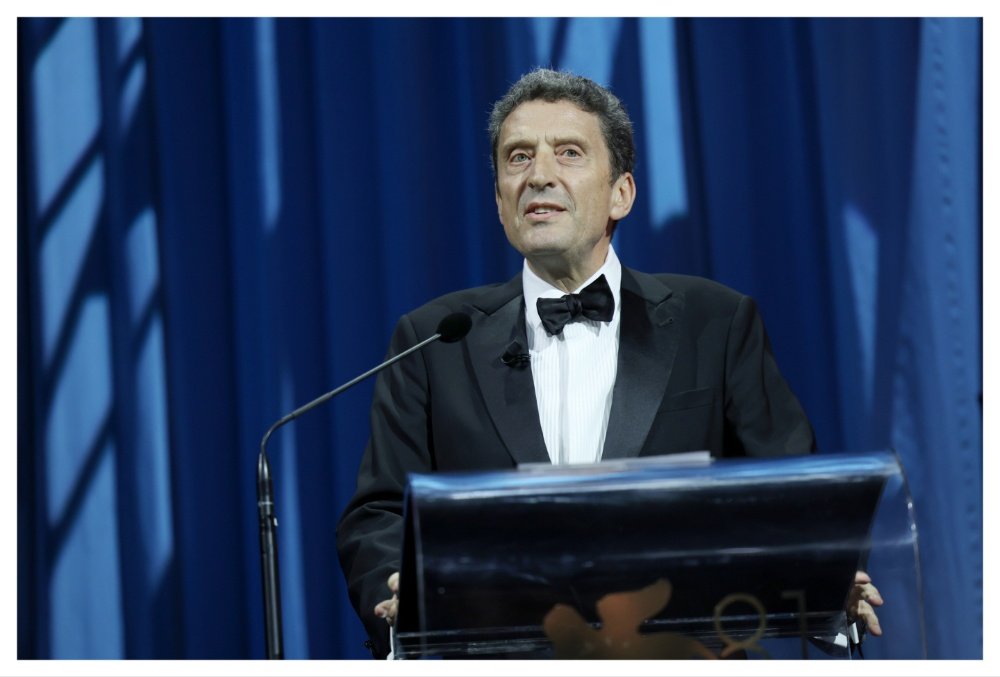
On 4 July 2026, the head of Rossotrudnichestvo — the Russian federal agency that runs the country's cultural-diplomacy footprint abroad — publicly confirmed that the Russian Centre in Chișinău is being closed. Igor Chaika's remarks, relayed that day by the Russia-aligned Telegram channel Rybar and its English-language mirror, mark the first on-record acknowledgement from the agency's leadership that the institution set up to project Russian language, education and cultural life into Moldova is being wound down. The closure has been telegraphed since the autumn of 2025; what changed on Friday is that Moscow is no longer pretending otherwise.
This publication reads the development as the visible edge of a longer contest over Moldova's public sphere. Chișinău, under President Maia Sandu and a pro-European parliamentary majority, has spent two years tightening the legal ground on which Russian state-adjacent institutions can operate. The Russian Centre in Chișinău is the highest-profile casualty so far, and Chaika's confirmation makes it harder for either side to frame what is happening as administrative housekeeping. It is policy.
What Chaika actually said, and what he did not
According to the Rybar channel, Chaika framed the closure as an externally imposed loss: an acknowledgement, rather than an announcement, that the centre is being shut. The English-language mirror of the channel carried the same item within the hour. The framing matters. Moscow's cultural-diplomacy operators have spent years insisting that their footprint in the post-Soviet space is reciprocal — language schools, alumni networks, exhibition programmes — rather than political. By having the agency's own head confirm the closure, the Russian state has implicitly conceded the political dimension it usually denies.
What Chaika did not announce is a successor vehicle. There is no indication in the channel's reporting that Rossotrudnichestvo intends to re-open under a different name, a different landlord or a different legal personality inside Moldova. The absence of a plan is itself a tell. Russian cultural diplomacy in countries that have closed the original door has, in other cases, re-appeared through Orthodox Church partnerships, alumni foundations, and bilateral friendship-society structures. Whether that playbook applies here is an open question the channel's reporting does not answer.
Why Chișinău, and why now
Moldova sits on the southeastern edge of the European Union's prospective enlargement map and on the western edge of the post-Soviet space. The country has been the object of a sustained Russian effort to keep it inside a Moscow-facing political gravity well — through energy leverage, through the unresolved Transnistria frozen conflict, and through cultural and linguistic networks that pre-date the current war. The Sandu government's response has been gradual and legalistic: restrictions on Russian-language media, the replacement of Soviet-era school curricula, and tighter oversight of foreign-funded civic organisations.
Against that backdrop, the Russian Centre in Chișinău is not an embassy and not a consulate. It is a soft-power platform, and closing it costs relatively little in symbolic terms for Chișinău — most of the programmes it ran have analogues inside Moldova's own civic and educational ecosystem — while signalling that the government intends to treat Russian state-funded cultural presence on Moldovan soil as an exception rather than a default. The political price would be paid in any audience Moscow might lose. The strategic price would be paid only if a successor network quietly reconstitutes itself.
A counter-read: the squeeze is real, but the framing is not symmetrical
The framing in the source material is, by construction, one-sided. Rybar is a Russian-aligned Telegram channel with close ties to the Russian defence and security commentariat. Its English-language mirror repackages the same content for an outside audience. Both should be read as advocacy material, not as neutral wire reporting. That does not mean the underlying fact — that Chaika confirmed the closure — is wrong; the channel is reporting what the agency's own head said. But the editorial line attached to the fact, which casts Chișinău's move as an attack on cultural exchange rather than as a sovereign regulatory decision, deserves to be set aside.
The structural argument runs the other way. A government that has spent years building a European trajectory has reasons of its own to limit the operating space of institutions funded by a state it regards as a security threat. The decision can be read as defensive without being read as aggressive. Whether one finds that defensible depends on where one stands on the wider question of Russian cultural presence in countries that have chosen, or are choosing, a different geopolitical alignment.
What remains uncertain
The source material does not specify the legal mechanism by which the Russian Centre is being closed. It does not give a date for the cessation of operations, a headcount of affected staff, or a figure for the value of programmes being wound up. It does not say whether Moldovan staff will be redeployed, and it does not address whether the closure is tied to a specific piece of legislation or to an administrative decision by the Moldovan foreign ministry or ministry of education. Each of those questions will need to be answered by Moldovan or independent reporting before the picture is complete.
What can be said with confidence is this: the head of Rossotrudnichestvo has, on the record, confirmed the closure of the agency's flagship presence in Moldova, and he has done so in a venue that is hostile to the Moldovan government. The simplest read is the most accurate. Chișinău is narrowing the operating space of Russian state cultural institutions, and Moscow has decided the time for euphemism has passed.
Monexus framed this as a sovereign regulatory decision by Chișinău, not as an attack on cultural exchange. The wire copy in Russian-aligned channels tends to invert that polarity; the file as published treats both the fact and its framing as separate things.
Wire provenance
This editorial synthesis draws on the following public wire/social posts:
- https://t.me/rybar/73649
- https://t.me/rybar_in_english
- https://t.me/rybar
- https://t.me/rybar_in_english/1