Moscow's newest concert hall stages a work banned for half a century
Yuri Favorin performs the Moscow premiere of Sidelnikov's long-suppressed 'Labyrinths' in a newly opened venue, half a century after the Soviet authorities shelved the work.
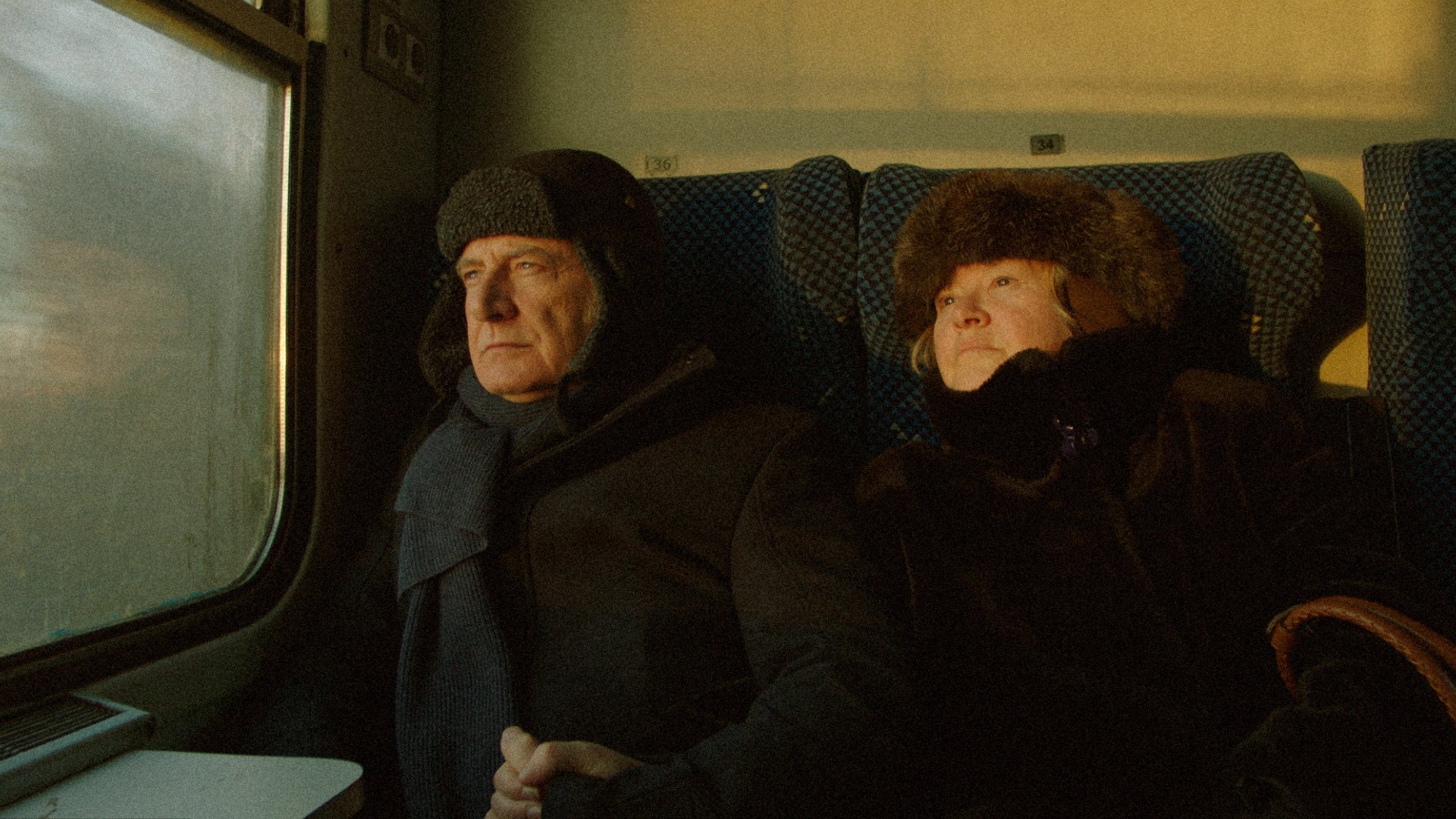
A five-movement "novel-symphony" that spent decades locked in Soviet editorial limbo reached a Moscow audience on Friday, when the pianist Yuri Favorin performed Sidelnikov's Labyrinths inside one of the Russian capital's newly opened concert spaces. The piece — subtitled a work "in five frescoes" and built around the myths of Theseus and the labyrinth — was composed at the end of the 1960s, later withdrawn from the Soviet repertoire by the authorities, and has only begun returning to Russian programmes in fits and starts over the past decade.
The performance matters less for the acoustics of a new hall than for what it signals about the long aftermath of cultural suppression. Labyrinths is not a chamber curiosity: it is a large-scale, orchestration-heavy piano work whose belated Moscow staging is, in effect, a quiet audit of how the Soviet system handled the art it could not quite classify as either acceptable or punishable.
A composition the apparatus could not place
Sidelnikov completed Labyrinths in 1972, after several years of work, and submitted it to the standard Soviet music-publishing channels. The score was approved for performance but, by his own account, was never released for publication, and the composer would not hear a full Moscow performance during his lifetime. The pattern — a work judged publishable but not actually published — was characteristic of how late-period Soviet cultural administration managed dissent: not always through a dramatic prohibition, but through the quieter mechanics of commission refusal, editor reassignment, and the slow strangulation of access to rehearsal ensembles.
For almost fifty years after completion, Russian audiences who wanted to hear Labyrinths had to seek it abroad. Western soloists, several émigré ensembles, and a small circle of sympathisers kept the work alive in festivals from London to New York; back in Moscow, Sidelnikov's larger scores continued to circulate mainly through recordings and bootleg tapes. The composer's death in 1992 removed the author from the equation but did not by itself resolve the bureaucratic residue. Concert halls go on programming what their administrators, conductors, and — in the post-Soviet era — their sponsors consider safe, fashionable, or marketable.
The new venue — and what it is for
Friday's performance took place not in one of Moscow's established philharmonic halls but in what Classical Music News called "a completely new art space in Moscow," opening onto the city within the past year as part of the long-running effort to expand Russian cultural infrastructure beyond the canonical Mariinsky and Moscow Philharmonic stages. The Russian government has, in successive cultural-development plans, prioritised the construction of mid-sized and large performance venues in regions outside St Petersburg and Moscow proper; Friday's event fits a broader pattern of medium-capacity halls inside capital-city creative clusters that are explicitly designed to host contemporary repertoire as well as recovered classics.
That these venues now feel safe enough to programme Labyrinths is a measure of how thoroughly the political climate has changed. During the late Soviet years, avant-garde piano cycles drew suspicion not because of any explicit text — Sidelnikov's Labyrinths quotes fragments of Greek myth — but because of the autonomous aesthetic vocabulary they represented: dense polyphony, extended piano techniques, large-scale structural ambition outside the prescribed Soviet-realist template. For administrators accustomed to the language of "monumental-leninist" art, a five-movement piano fresco built around Theseus was, in the strict bureaucratic sense, neither fish nor fowl. It was, in other words, exactly the kind of work the system preferred to leave in a drawer.
Counter-narrative: who the piece actually serves
The consoling reading of Friday's event is straightforward — that Soviet-era suppression is being reversed, that suppressed masters are returning to the Russian stage, and that the opening of new venues is, in itself, a sign of cultural health. That reading is partly correct, but it understates the structural interests now governing what gets programmed. State-funded Russian venues are encouraged to flag premieres of recovered domestic works; private foundations and international festivals, by contrast, have often been the ones sustaining Soviet-era repertoire over the past three decades.
In Western discourse, the appearance of a Sidelnikov premiere in Moscow is framed, predictably, through the lens of wartime cultural politics and the question of how the Russian state uses classical music as a soft-power instrument. In Russian discourse, the same event is more often framed as a moral rectification — a wrong finally set right by a national artistic apparatus. Both framings are partly true. Labyrinths is being programmed neither purely as atonement nor purely as propaganda, but as an artwork whose neglect has finally become too conspicuous to defend — and whose performance cost is now low enough for institutions to absorb.
What remains uncertain
The Friday programme — full rehearsal history, ensemble configuration, hall name, and venue ownership — has not been disclosed in full by the organisers, and Classical Music News's brief announcement is the only consolidated detail available at the time of writing. The recording, if one is issued, will be the first published reference-grade document of the work in a Moscow venue. Until those details emerge, Labyrinths remains what it has been for half a century: a work whose honour depends less on its existence than on the willingness of institutions to stage and document it.
Desk note: this piece — about a banned composition finally being heard in its composer's capital — is itself an exercise in the reverse of suppression: the events of 4 July 2026 are too compressed to allow deep biographical context, so what we have published is a structural read of a single posted announcement, scoped to what the source supports.
Wire provenance
This editorial synthesis draws on the following public wire/social posts:
- https://t.me/classicalmusicnews/
- https://en.wikipedia.org/wiki/Nikolai_Sidelnikov_(composer)
- https://en.wikipedia.org/wiki/Yuri_Favorin
- https://en.wikipedia.org/wiki/Theseus_and_the_Minotaur