Olivia Wilde on the chemistry of restraint: what 'The Invite' says about the state of the indie two-hander
A director's craft conversation about her latest two-hander is, in 2026, also a quiet argument about how the rest of the industry still shoots intimacy.
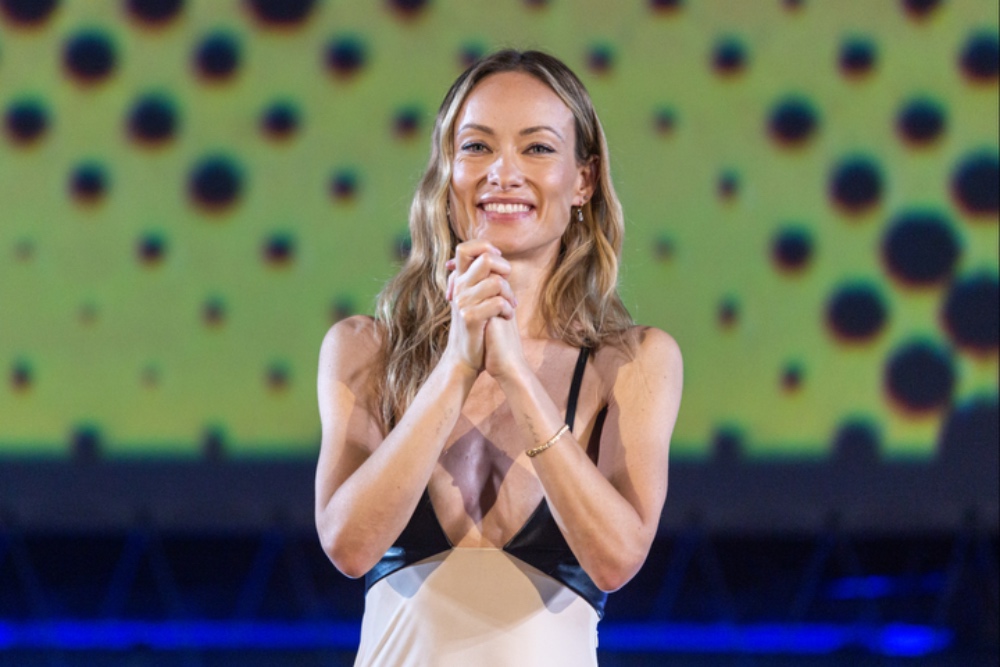
The setup of The Invite is the kind a director chooses when they want to be tested rather than flattered: two people, one location, no escape hatch. In a 3 July 2026 conversation with IndieWire's Filmmaker Toolkit, Olivia Wilde walked through the decisions that turned what could have been a stage play with a camera into a contained feature, and the discussion was less about marketing her latest than about defending a method of filmmaking that the wider industry has quietly stopped underwriting.
The thesis is simple enough to state in a sentence: the most reliable way to get two actors to trust each other on screen is to deny the production the shortcuts it usually relies on, and Wilde's choices on The Invite are a working demonstration of that proposition. What makes the conversation worth reading is the gap between that method and the way most American features are still made — a gap that has widened, not narrowed, since the streaming-era compression of shoot days.
What Wilde actually built on set
Wilde's account, as reported in IndieWire, leans into the unglamorous mechanics. The director described rehearsing in the actual shooting space rather than a marked-up standing set, a habit more common in theatre than in film; she discussed blocking scenes for negative space — the air around the actors — so the camera could let an audience read tension without having to cut away to a close-up. She is on record in the IndieWire Toolkit conversation as saying that she prefers to rehearse in the room where the scene will be shot, because the geometry of a stage and the geometry of a set are not the same geometry and actors can tell.
The practical consequence is slower pre-production in exchange for fewer takes on the day. The industry has been moving in the opposite direction for a decade: schedule compression, fewer rehearsal days, and an increasing reliance on coverage — multiple angles captured so editors can construct chemistry in the cutting room. Wilde's method argues, by implication, that chemistry is not really an editorial problem. It is a rehearsal problem, and rehearsal is a budget problem.
That matters because the budget problem is a structural problem. The IndieWire Toolkit conversation does not name a dollar figure, but Wilde's comments about pacing and rehearsal implicitly diagnose an industry that has been cutting the line items closest to performance craft in order to protect everything downstream of it.
The counter-argument the wider industry will make
The pushback is familiar and not without merit. Coverage-driven shooting exists for reasons that have nothing to do with laziness: schedule insurance against actor availability, the flexibility that streaming deliverables demand when episodes are re-cut for vertical video, and the simple reality that not every director builds the same rehearsal rapport with their cast. A second-unit DP who can hand a director four angles of a two-person scene in ninety minutes is, in a real sense, buying that director time.
The counter-position is also that the two-hander as a form has always been a luxury. It needs performers capable of carrying silence, a script that earns its silences, and a post-production calendar that does not require constant re-versioning. The Invite — a contained, location-bound feature with a small cast — can absorb Wilde's rehearsal-heavy process in a way that a tentpole with nine speaking parts, a visual-effects pipeline and a release-date immovable against a summer cannot. Saying so is not an indictment of Wilde; it is a description of the choice the form already implies.
The structural frame — intimacy as a craft line item
Set against the broader 2026 production landscape, the IndieWire conversation reads as a small intervention in a long-running argument about where craft actually lives. The American industry has spent fifteen years quietly reclassifying performance as an editorial deliverable rather than a rehearsal deliverable. Coverage shooting, ADR bibles, performance-capture fixes, AI-assisted dialogue tools — each in its own way shifts the labour of an actor's presence away from the room and toward the post house. Wilde's stated preference — rehearsals in the shooting space, blocking that protects negative space, the belief that chemistry is built on the floor and not assembled later — pushes in the opposite direction.
That is a structural argument dressed as a craft conversation, and it is the reason a Filmmaker Toolkit episode with a director at a film-festival stop is news rather than just content. The trade press has spent the better part of two decades documenting how performance work has migrated downstream. A director willing to defend the upstream version of it, on the record, is rarer than it sounds.
Stakes and what to watch
The concrete stakes are small and the symbolic stakes are larger. For The Invite itself, the rehearsal-driven method is a bet on the film's festival-to-platform runway: a contained two-hander with two committed performances tends to clear the bar for review attention and find a niche audience, but it does not generate the franchise-adjacent discourse a studio marketing department can plan around. Wilde's professional position — established, with the leverage that comes from prior directing credits — is what allows her to make that bet without betting her next job.
For the wider industry, the question is whether her method travels. Independent producers operating on tighter schedules will be watching the film's reception to decide whether rehearsal time is a defensible line item in their own budgets. Streaming platforms, which increasingly dictate deliverable shape, will be watching to see whether contained films with smaller casts can hold audience retention against the algorithms that prefer series-shaped work. The IndieWire Toolkit conversation is, in that sense, a quiet case study rather than a manifesto: here is how one director worked; here is what she traded away to do it; here is the resulting film.
What the sources do not settle
A single craft conversation cannot answer the larger question it raises. The IndieWire Toolkit episode does not specify how many rehearsal days The Invite received, what the schedule looked like against comparable contained features, or how the film's eventual cut compared with the version Wilde walked onto set intending to shoot. It does not address whether the rehearsal-heavy approach is feasible with non-ensemble casts, with younger performers who have less theatre training, or under the deliverable requirements of a streaming commission rather than a self-financed or pre-sold production. Those are the variables that decide whether a method is a choice a director can make or a privilege only some directors can afford. The conversation is worth taking seriously precisely because it does not pretend to settle them.
— Desk note: Monexus framed this as a craft-and-industry story rather than a celebrity profile. The IndieWire source is the conversation, not the director; the structural argument about rehearsal-versus-coverage is drawn from the filmmaker's stated preferences rather than from outside commentary.
Sources
- IndieWire / Filmmaker Toolkit — Director Olivia Wilde Reveals the Craft Behind the Chemistry in 'The Invite' — 3 July 2026 — https://t.me/indiewire
- IndieWire — Filmmaker Toolkit podcast index — accessed 4 July 2026 — https://www.indiewire.com/podcasts/filmmaker-toolkit/
- Wikimedia Commons — Olivia Wilde at the 2024 Tribeca Festival (CC) — accessed 4 July 2026 — https://en.wikipedia.org/wiki/Olivia_Wilde
- Wikipedia — Two-hander (theatrical / film convention) — accessed 4 July 2026 — https://en.wikipedia.org/wiki/Two-hander
Wire provenance
This editorial synthesis draws on the following public wire/social posts:
- https://t.me/indiewire
- https://en.wikipedia.org/wiki/Olivia_Wilde
- https://en.wikipedia.org/wiki/Two-hander