Osaka–Sabalenka collision sets up Wimbledon quarter-final with something to prove
Two former world number ones meet in the Wimbledon last eight, one chasing a first title at SW19, the other chasing a return to the top of the game.
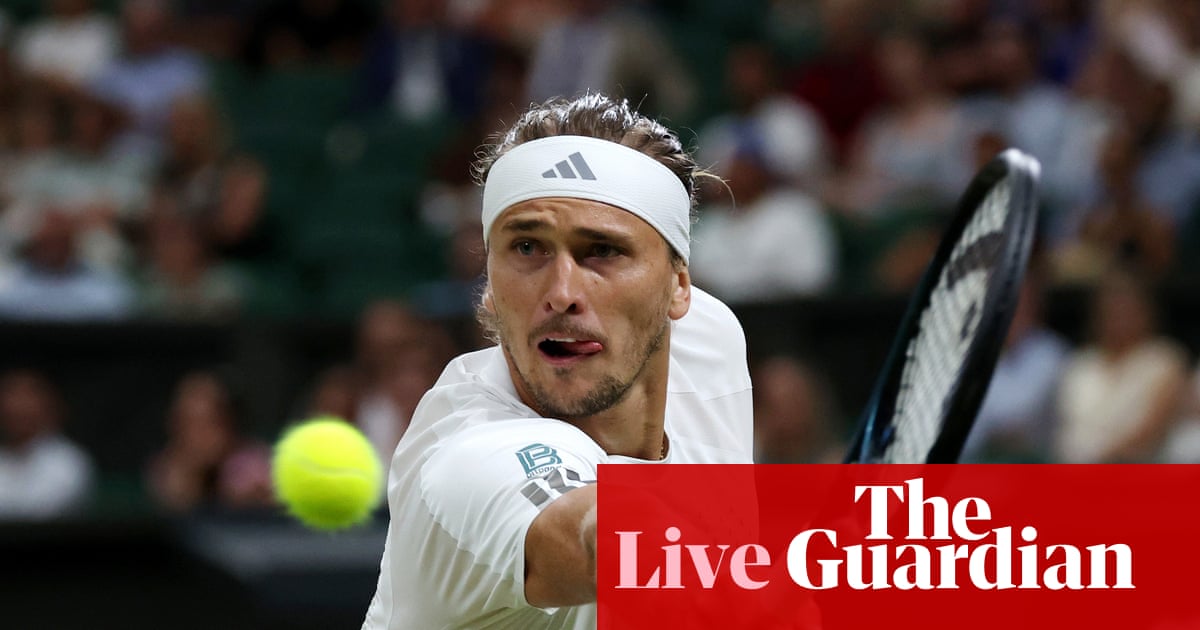
Naomi Osaka walked into the second week of Wimbledon 2026 without dropping a set, and on 4 July she gets the opponent the draw had been waiting to deliver: Aryna Sabalenka, world number one and the woman who has spent the past fortnight reminding the field why she sits at the top of the rankings. The match is not a final, but it has the architecture of one — a four-time major champion against a player hunting the one major that has eluded her.
The storyline writes itself, which is precisely why it deserves a second look. Sabalenka's case for Wimbledon has been steady rather than spectacular: a straight-sets dispatch of Latvia's Jelena Ostapenko on 3 July carried her into the last 16 and kept her seeding in the top half of the draw intact. Osaka's case has been louder. A run of form without a dropped set is the kind of result line that forces neutrals to sit up, particularly on a surface that has historically rewarded grass-court specialists rather than power baseliners.
Sabalenka's quiet accumulation
The Belarusian's path through the first week at SW19 has been, by her own standards, almost orderly. The straight-sets victory over Ostapenko on 3 July was her seventh consecutive set won at the tournament, according to BBC Sport's round-four report. There has been no obvious crisis, no three-setter against an unknown qualifier, no mid-match injury timeout demanding the trainer. That steadiness is the point. Sabalenka is a player who has learned, sometimes painfully, that her biggest title losses came when her power ran ahead of her composure. Wimbledon has not yet given her a major final; her two Australian Open titles came on hard courts where her ball-striking is most penalising.
The structural question is whether grass — lower, faster, more demanding of low-bounce timing — now suits her game as well as the data suggests. Her first-week scorelines hint that it does. They do not prove it. The proof arrives in the second week.
Osaka's return and what the numbers don't say
Osaka's run is, on paper, the more arresting of the two. Yet a run without a dropped set is not the same as a run through the field; her path to the fourth round has been compressed, and the order of the wins matters more than the count of the sets. According to ESPN's preview on 4 July, Osaka has not lost a set at this Wimbledon and has been the tournament's most efficient server on first-strike points. That is a real number. It is also a number generated in matches against opponents whose own grass-court pedigree is thin.
The deeper question is whether the Osaka of mid-2026 is the Osaka of 2021 and 2022 — the player who could absorb pressure on her own serve and turn a match in three or four key moments — or whether this is a lesser version still searching for its level. Her ranking, her title tally and her draw have all conspired to keep that question quiet. Sabalenka is unlikely to let it stay quiet for long.
The tactical shape of the match-up
Both players hit the ball flat and early. The grass-court variable does not change that; it merely compresses the time. Sabalenka will look to take the ball on the rise and redirect to the Osaka backhand; Osaka will look to vary the placement on her second serve and pull Sabalenka forward with body serves at 100 mph or more. Whoever wins the second-serve duel — the four or five points per set where return becomes neutral rather than offensive — almost certainly wins the match.
What is harder to forecast is the mental architecture. Osaka has spoken, across her career, about the weight of expectation at majors. Sabalenka has had her own reckonings with the biggest moments. The All England Club's Centre Court on a quarter-final Friday tends to find out which player has done the deeper work.
Stakes, and what the second week actually decides
The winner faces a semifinal against the survivor of the lower quarter of the draw — a path that, in this tournament, does not look as gentle as the rankings suggest. For Sabalenka, a Wimbledon title would complete the set of major surfaces at the very top of the game and settle a long-running argument about whether her game travels to grass. For Osaka, a run to the second weekend would be the loudest statement of her comeback season and would restore her to the conversation about world number one sooner than the form book currently predicts.
The honest caveat is that neither storyline is yet earned. Both players have done the work to arrive at this match; neither has done the work the match itself will demand. The All England Club, as ever, will keep the receipts.
Desk note: Monexus treated this as a tennis form story rather than a celebrity-comeback story, leaning on the two wire confirmations (ESPN's Osaka set-record, BBC Sport's Sabalenka scoreline) rather than narrative colour that the sources did not supply.