Portugal edge Croatia in stoppage time to set up Iberian showdown with Spain
A 2-1 win in Toronto, sealed by Gonçalo Ramos in added time and decided by a disputed VAR review, sends Portugal through and ends Luka Modrić's tournament.
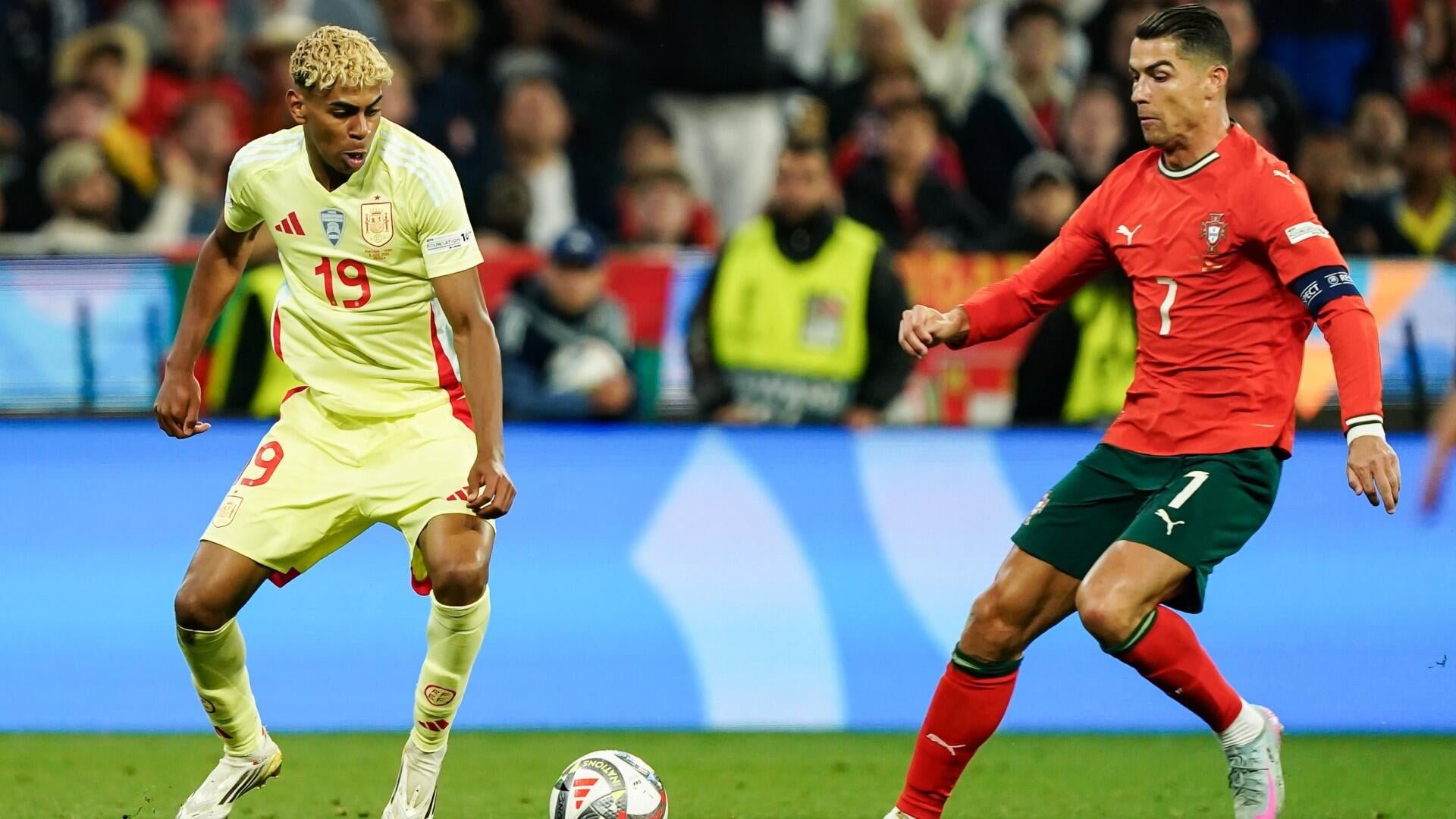
Portugal survived the kind of finish World Cups are remembered for, and the kind they are also forgotten for, when Gonçalo Ramos headed in Rafael Leão's cross deep into stoppage time at the BMO Field in Toronto to beat Croatia 2-1 on 3 July 2026 and book a last-16 tie with Spain. Cristiano Ronaldo, who had given Portugal the lead from the penalty spot in the first half, watched the closing minutes from the bench after being substituted, his team-mates holding a lead that had been wiped out by an 79th-minute equaliser and then rescued only after a lengthy VAR review ruled out what would have been a Croatia second. The result sends the 41-year-old Ronaldo into another day at this tournament; it ends Luka Modrić's.
The win keeps Portugal in the competition on their own terms rather than as a side scrambling for reprief, and it does so while exposing, again, the fault line that runs through every modern international tournament: a marginal offside call, adjudicated from a monitor in a distant booth, has more weight over a career than the 90 minutes of football played in front of it. Portugal's reward is a meeting with Spain — the fixture the bracket had been pointing toward since the draw — and a test that will tell us far more about this squad than a frantic night against a Croatian side running on fumes and on one last great midfielder.
How the match actually broke
Portugal controlled the early running in Toronto and were rewarded in the 39th minute when Ronaldo converted a penalty, his record-extending contribution to a World Cup story that now stretches across five tournaments. Croatia, as they have done under Zlatko Dalić for a decade, grew into the game without ever looking like the side that reached the 2018 final and the 2022 third-place match. They equalised in the 79th minute through a set-piece route that has been their historical calling card, and for a few minutes the stadium and the bracket tilted toward extra time.
The decisive moment came in the 90th minute. Croatia thought they had turned the game on its head; the assistant's flag went up; the VAR review that followed consumed more than three minutes; and the goal was eventually ruled out for offside in the build-up. Ramos, who had come on as a substitute, then met Leão's cross from the left at the far post to head Portugal into the last 16 in the fifth minute of stoppage time. Ronaldo, who had been withdrawn moments earlier, rose from the bench; Leão dropped to his knees in relief rather than celebration; Portugal's staff exhaled.
The Ronaldo-Modrić coda
For two players whose careers have run in parallel since the mid-2000s — both announced on the global stage at the 2006 World Cup in Germany, both winning Ballon d'Ors in the same year, both still operating at this level two decades later — the symmetry of the night was almost too neat. Ronaldo gets another match. Modrić, at 40, exits the tournament and, almost certainly, the World Cup stage. The BBC's report on the result noted that the late VAR intervention prolonged "Ronaldo's last dance" while ending Modrić's; ESPN framed the same evening as Portugal surviving "without Ronaldo" for the final twenty minutes, a small contradiction that captures how dependent the side still is on its captain even when the captain is no longer on the pitch.
What the night also confirmed is that neither of these teams is what it was. Croatia's run to the 2018 final and the 2022 semi-final was built on a midfield that included Ivan Rakitić, Ivan Perišić at his peak, and a Modrić operating at his peak. This version is a tier below, and the equaliser, when it came, had the feel of a side squeezing one more result from a system that is running out of parts. Portugal, for their part, are deeper than they have been since 2006 — Fernandes, Vitinha, Leão, Ramos, Bernardo Silva — and yet still default to giving the ball to a 41-year-old when the moment requires it. The bet that Martínez is making is that depth plus ritual can carry them past Spain and into the quarter-finals. The evidence from Toronto is that it can carry them past Croatia. Spain is a different argument.
What the VAR review actually settled
The late disallowed goal will be the residue of this match, not the result. Offside decisions of the marginal-variety kind — a heel in line with a shoulder, a leaning torso at the moment of contact — have been the single most consequential officiating intervention in football for a decade, and this tournament has produced enough of them that the pattern is now structural rather than incidental. Croatia's grievance, fairly or not, is that a competition defined by fine margins has again resolved one of those margins against them.
The case for the review is straightforward: the protocol exists precisely for situations where the on-field call is plausibly wrong, and the assistant's flag came late. The case against is that the review took long enough to drain the stadium of momentum, and that a competition which markets itself on passion and spontaneity now regularly resolves its most important moments in a booth several hundred metres from the touchline. Neither side of that argument is going away, and Portugal's progression does not depend on which side one finds more persuasive — but Croatia's exit, and Modrić's last World Cup minutes, very visibly do.
Stakes and what to watch against Spain
The Spain tie, scheduled for the weekend, is the match the bracket had been shaping toward. Portugal have not beaten Spain at a major tournament since the 2004 European Championship in Lisbon, and the version of Spain they will face in this tournament has looked, in the group stage, the most coherent side in the competition. Martínez's bet is that Ronaldo's goalscoring gravity still tilts tight matches; the counter-bet, from Spain's perspective, is that Portugal's bench — Ramos, Leão, Fernandes — is now the more dangerous attacking unit on the pitch and that the captain is, increasingly, a luxury rather than a foundation.
What the Croatia match settled is that Portugal can win ugly, can win on a VAR review they did not control, and can win without their captain on the pitch. What it did not settle is whether any of that travels against a Spain side that has spent the group stage looking like the team to beat. That argument begins in a few days.
This publication framed the result through the lens of the late officiating decision rather than the headline scoreline, on the view that the goal ruled out in the 90th minute did more to shape the bracket than the goal that actually won the match.