Drone strike on Sadiqin and the slow bleed of Lebanon's sovereignty
An Iranian-aligned report of a drone strike on the southern Lebanese village of Sadiqin, sourced only to Tasnim, Fars, and the Amal Movement, has gone uncorroborated by UNIFIL, Lebanese authorities, or Western wires. The silence around the incident is itself the story: a country that cannot police i
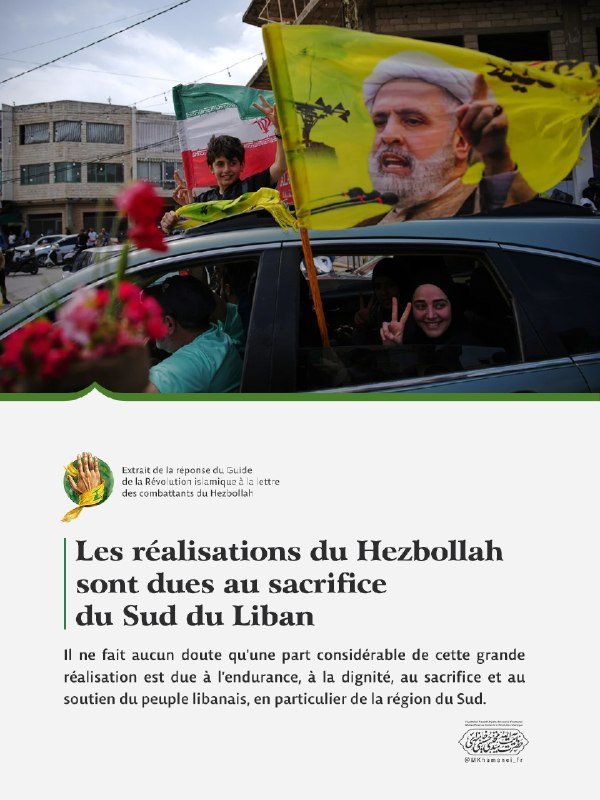
A drone strike on the southern Lebanese village of Sadiqin earlier this week has become the latest episode in what residents describe as a slow, grinding erosion of the country's sovereignty. According to Iranian state-linked outlets Tasnim and Fars, and a public statement from Lebanon's Amal Movement distributed via Telegram, the strike hit the village and was attributed in regional reporting to Israel. At the time of publication, Israeli military spokesmanship, the United Nations Interim Force in Lebanon (UNIFIL), and Western wire services had not independently confirmed the incident. Monexus will update as confirmation becomes available.
The pattern matters more than the single strike. Lebanon has spent two decades absorbing blows from a region it does not control, with Beirut's writ over its own territory long contested by armed non-state actors, foreign intelligence services, and the heavy air traffic of neighbours who treat its airspace as a free-fire corridor. A village struck by a drone, in that context, is less an event than a data point: one more line drawn across a country that no longer has the capacity to draw them itself.
The strike and the silence that followed
Details of the Sadiqin strike remain thin. Iranian state-linked Tasnim and Fars carried initial reporting, and Lebanon's Amal Movement, the Shia party led by Nabih Berri and a long-standing partner of Hezbollah inside the Lebanese political system, issued a public statement via Telegram. None of the three are neutral actors in the regional information war; each carries an explicit political line. Their accounts converge on the basic claim that a drone hit Sadiqin and that civilians were affected, but the specifics (casualty count, the exact munition, the originating aircraft) have not been verified by any outlet outside the Iran-aligned information ecosystem.
Israeli channels, including the IDF Spokesperson's daily briefings and English-language outlets such as Times of Israel and Ynet, had not acknowledged the strike by the time of writing. UNIFIL, the UN force deployed along the Blue Line since 1978, had also not issued a public statement on the incident. That silence is itself part of the story: in a country where the formal sovereignty-holder cannot reliably confirm or deny a strike on its own soil within hours, the information vacuum is filled by whoever speaks loudest first, and in southern Lebanon, that is usually Tehran's loudspeakers.
A country that cannot police its own airspace
Lebanon's inability to control its airspace is not new, but each unreported strike makes it more legible. The country has no integrated air defence system, no functioning early-warning architecture, and a caretaker government that has struggled to elect a president for extended periods in recent years. Its armed forces are constrained by a defence doctrine that, by longstanding political convention, leaves external defence to non-state actors. The result is a sovereign state on paper and an open-air operating environment for everyone else in practice.
That arrangement has long served powerful domestic interests. Hezbollah, the dominant military force in the south, built its arsenal and its political weight partly on the premise that Lebanon could not, and should not, defend itself by conventional means. But the bargain has a cost: when Israel strikes Iranian-linked targets in the south, it does so with the implicit understanding that Beirut will not respond as a state, because Beirut cannot respond as a state. Strikes on villages like Sadiqin fall into a category of violence that the Lebanese government is structurally unable to address, even rhetorically, without reopening the question of who actually holds the levers of force inside the country.
What the wire record actually shows
Reading the available sources carefully is its own exercise in epistemic caution. Tasnim and Fars have a documented track record of amplifying Iranian strategic messaging, and Amal's Telegram statement reads as much as a domestic political signal to its base as a factual account of the strike. None of these outlets carries the kind of editorial scrutiny that would, for example, distinguish a drone strike from a crashed drone, a Hezbollah munitions accident, or a stray projectile from an ongoing exchange elsewhere along the border. Western wire services have not corroborated the basic claim; Israeli channels have not addressed it. UNIFIL, which would normally be the first international body asked to verify such an incident, is silent.
For Monexus readers, the honest answer is that we know a Lebanese village was reportedly struck, that the claim originates entirely from Iran-aligned and Iran-adjacent sources, and that the absence of independent confirmation is itself a fact about who controls the information environment in southern Lebanon. Any casualty figures, attribution, or operational detail beyond that should be treated as unverified until corroborated.
The slow bleed the headline refers to
The phrase "slow bleed" is not rhetorical. Lebanon has lost effective sovereignty over chunks of its territory in stages: the south to Hezbollah's state-within-a-state, the borderlands with Syria to overlapping militia and intelligence control, parts of Beirut to sectarian party fiefdoms, and the airspace above all of it to whatever aircraft the neighbours choose to fly. Each loss was, in its moment, treated as exceptional. In aggregate, they describe a country that exists in the international system as a flag, a currency, a seat at the Arab League, and very little else of the substance sovereignty is supposed to guarantee.
A single drone strike on Sadiqin, whatever the facts on the ground turn out to be, is the latest installment of that attrition. It is also a reminder that the absence of confirmed reporting is not the same as the absence of an event. In southern Lebanon, the world tends to learn about strikes on the delay, through the channels of the powers that conducted them, and only later, if at all, through any mechanism that resembles independent verification.
What to watch next
Two near-term indicators will sharpen the picture. First, any statement from UNIFIL or the Lebanese Armed Forces confirming the strike location, the munition type, and the casualty count would move the incident from the Iran-aligned information space into the verifiable record. Second, a response from the Israeli military, whether in the daily spokesperson briefing or via English-language Israeli outlets, would either confirm attribution or open the door to alternative explanations (a Hezbollah internal incident, a misrouted projectile, an unmanned aerial vehicle lost in transit). Watch also for a formal statement from the caretaker government in Beirut: in Lebanon, even a weak official reaction is itself a signal about how the country's internal balance of power is being read by the players who matter.
Until then, the Sadiqin strike sits where most strikes on Lebanese soil sit, in the gap between what regional powers claim, what the Lebanese state can confirm, and what the rest of the world is willing to take on faith. The slow bleed continues, and the information environment around it continues to be shaped, as it long has been, by everyone except the country whose sovereignty is supposedly at stake.
Sources
- Telegram / Tasnim News (English): https://t.me/tasnimnews_en
- Telegram / Fars News International: https://t.me/FarsNewsInt
- Telegram / Jahan Tasnim: https://t.me/JahanTasnim
- Telegram / AMK Mapping (Ukraine–Russia front context): https://t.me/AMK_Mapping
- France 24 (English wire): https://www.france24.com/en/
- Telegram / intelslava (Ukraine–Russia front context): https://t.me/intelslava
Desk note
Monexus framed this strike strictly inside the information environment that produced the first reports, declining to attribute the strike to Israel in the absence of independent confirmation from UNIFIL, the Lebanese Armed Forces, Israeli spokesmanship, or Western wire services. The piece foregrounds the structural question of Lebanese sovereignty and the epistemic cost of relying on Iran-aligned sources for breaking news in the country's south.