The 'Shahid of Iran' and the choreography of state mourning
Tasnim's overnight dispatches describe children in a mosque, a 125-night vigil and a farewell ceremony for a 'martyred leader' — a textbook study in how Iran's state-aligned outlets choreograph grief.
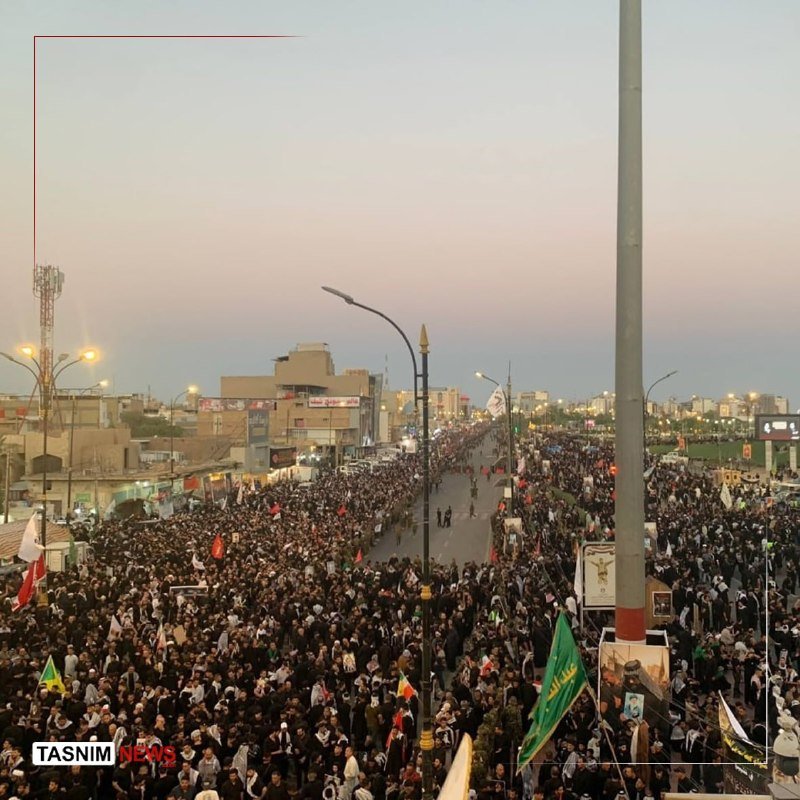
Overnight between 3 and 4 July 2026, the English-language feed of Iran's Tasnim News ran a steady drip of captions and short video captions about a farewell ceremony for a figure it called, repeatedly, "Mr. Shahid of Iran," "the martyred leader," and "Imam Shahid." Children were brought to the great mosque of Imam Khomeini in Tehran, "80s teenagers" who had spent 125 nights in the street came to bid farewell before the ceremony, and mourners whispered prayers at the square of Imam Zaman (AS) in the middle of the night [https://t.me/tasnimnews_en]. The street-blocking map around Mosli in Tehran was published [https://t.me/tasnimnews_en]. The last prayer of Imam Khomeini (RA) was recited, in the words of a man identified as Sardar Hassanzadeh, head of the headquarters organising the farewell and burial [https://t.me/tasnimnews_en].
The ceremony exists to convert private grief into a public lesson. Watch the wording: small hands are described as "flag bearers of the future"; the martyred leader "kept the country of Iran strong and did not allow the enemy to take a single bit of our country's soil and credit" [https://t.me/tasnimnews_en]. The grammar is the grammar of an official story, not a breaking story.
The vocabulary tells you who it is for
The thread uses one term more than any other: shahid. It is not a casual synonym for the dead. In the Iranian state's register it carries a militant, sanctified weight — a death in service of a cause, a model for the next generation. Tasnim's editorial choice to escort children through the doors of the mosque and to underline their presence with the caption "these small hands are the flag bearers of the future" is deliberate. The point of the image is not the child; it is the child being shown what martyrdom looks like [https://t.me/tasnimnews_en].
The "125 nights in the street square" detail is the second tell. It reframes ordinary public mourning as endurance, and endurance as devotion. The teenagers are not mourners in the Western sense; they are witnesses whose presence is being recorded for later use.
What the source does not say
A reader landing on the English-language feed alone has no way to identify the deceased. The eight Tasnim items do not give a full name, a date of death, a cause of death, or a biographical sketch. They give the role ("martyred leader"), the ritual (funeral at the Imam Khomeini mosque, burial to follow), and the organising headquarters under Sardar Hassanzadeh. The sources do not specify whether this is a military commander, a nuclear scientist, or a political figure. They do not specify whether the death occurred in combat, in an Israeli or US strike, in custody, or of natural causes. They do not say where the body was held between death and the public farewell. Each of those gaps is itself an editorial choice: a name and a cause would invite external verification; a role and a ritual travel further.
Reading the structural pattern
Iranian state-aligned outlets have, for years, used the same scaffolding for senior deaths: night-time mosque vigils, quoted Qur'anic verses attributed to founding figures, an organising committee with named military or security brass, and a tightly captioned photo sequence designed to be cropped by other outlets. The English-language feed of Tasnim is part of that architecture. The captions are short, the hashtags repeat ("#Badarqa_Aghai_Shahid_Iran", "#must_rise"), and the call-and-response between outlet and audience is engineered, not improvised [https://t.me/tasnimnews_en]. Treating that as cynical misses the point. It is choreographed because the organisers want the optics to read identically in Tehran, Beirut, Baghdad and Caracas.
What to watch over the next 48 hours
Three things. First, the actual burial — Tasnim's overnight thread is the farewell, not the burial; the body is still being moved through ritual [https://t.me/tasnimnews_en]. Second, whether the official cause of death is published, and in what language; English-first framing usually means the story is meant to travel. Third, whether a name emerges at all. If the deceased is never named in the English feed, the editorial decision to keep him generic is itself the story — shahid as a role, not as a person.
Monexus framed this piece against the editorial-compass rule that Iranian state-aligned sources appear with explicit caveat and never as stand-alone factual basis. The eight Tasnim dispatches are quoted and described; the unverifiable biographical claims are flagged as gaps rather than guessed at.
Wire provenance
This editorial synthesis draws on the following public wire/social posts:
- https://t.me/tasnimnews_en/1
- https://t.me/tasnimnews_en/2
- https://t.me/tasnimnews_en/3
- https://t.me/tasnimnews_en/4
- https://t.me/tasnimnews_en/5
- https://t.me/tasnimnews_en/6
- https://t.me/tasnimnews_en/7
- https://t.me/tasnimnews_en/8