Tehran's farewell and the choreography of succession
State-aligned Telegram feeds are staging a public mourning ritual that doubles as a managed introduction to a new supreme leader — and the production values tell their own story.
At 05:31 UTC on 4 July 2026, the Tasnim News English feed pushed a single, repeated phrase onto its Telegram channel: Labik ya Khamenei — "At your service, Khamenei." It is the response in the liturgy of the hajj, repurposed for a political congregation. By 06:24 UTC the rhythm had hardened into a chant, by 06:34 UTC it had merged with Quranic recitation, and by 07:17 UTC the same feed was broadcasting lines of personal testimony from mourners filing past a coffin. None of this is spontaneous. The whole sequence — the sloganeering, the holy verses, the orchestrated grief, the early-morning queue — is being shepherded into a public record by an outlet that is editorially answerable to the Islamic Revolutionary Guard Corps. Read in isolation, each post is devotional. Read in sequence, it is a production.
The thesis is straightforward. Iran is conducting the first open transfer of the supreme-leadership position in the history of the Republic, and the country's state-aligned media apparatus is doing what every political-mediating apparatus does in such moments: filling the public square with images that settle a contested question before the contestation is allowed to surface. The Tasnim thread is not a news report of a farewell. It is the farewell.
The grammar of the feed
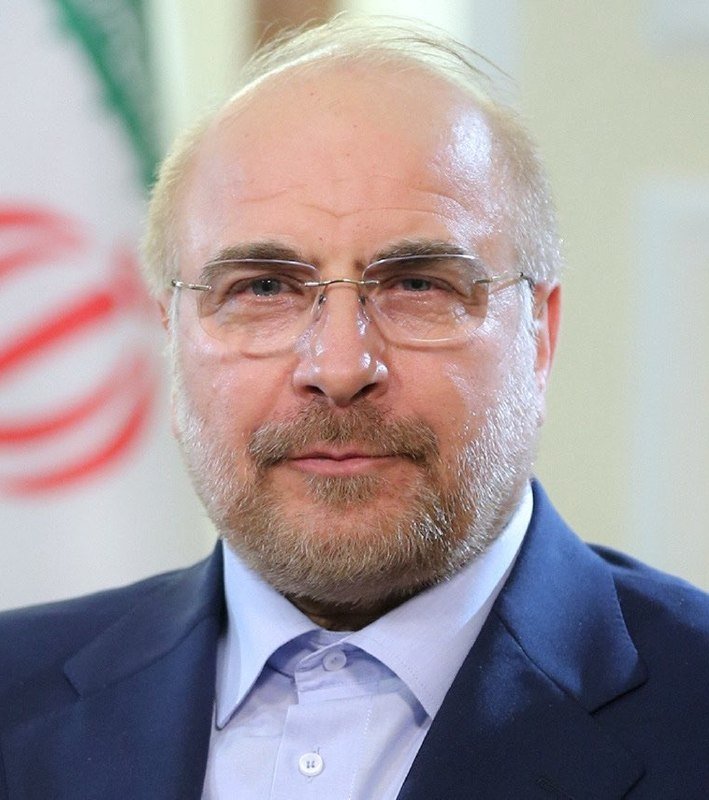
Five posts, ninety minutes, one mosque. The items move through a recognisable liturgy: a slogan, a chant, scripture, a mourner's first-person line, then — at 07:27 UTC — the introduction of a named successor figure, Haj Seyed Mahmoud Alavi, framed as a mourner-in-waiting and as a haji (a man who has completed the pilgrimage). The vocabulary is deliberately intimate. Badarqa Aghai Shahid Iran — "Brother-in-arms of the Martyr of Iran" — is the recurring hashtag, with a second tag, must_rise, embedded in the same lines. The effect is to weld the man being mourned, the man being introduced, and the slogan of loyalty into a single affective unit. The reader of the channel, particularly the diaspora reader scrolling at dawn, is not being asked to evaluate a transition. They are being asked to recognise it.
This is not an accident. The IRGC-aligned press has spent two decades perfecting a register in which piety, sacrifice and political continuity are folded into one breath. The departure of a supreme leader is the first event that register was built to cover, and the posts show it working as designed.
The line the wire is not carrying
Western agencies have, to date, given more column-inches to speculation about the mechanics of succession than to the visual rhetoric of it. That is the wrong allocation. The interesting question is not who sits in the office next. It is how the country is being prepared, in real time and in front of a documented audience, to accept the answer. Tasnim is publishing a finished object. The job of the external reader is to recognise it as such.
Two reasonable counter-reads exist. The first holds that this is simply how Iran mourns its leaders — a long, public, scripture-laden vigil, of the kind held for Khomeini himself in 1989. The second holds that the personal testimony lines, including the mourner who tells Tasnim "this is the first time I see the leader, but everyone says that this is the last meeting," are an artefact of a tightly managed press environment, not a window into it. Both are partly right. The ritual form is genuine; the framing of it, on a state-aligned feed with a haji promotion built in for the apparent successor, is curated.
What the rest of the system is doing
The corollary is the part that matters for analysts. If Tasnim is the lead voice, the rest of the system — reformist outlets, the diaspora networks, the foreign-language services of state television — is being assigned, by omission, the role of footnoter. Coverage of a transition this consequential will be reported, in Iran, as a consensus rather than a contest. The protocol is being normalised in the only public square the state owns.
The stake for the rest of the region is not who succeeds. It is whether the shape of the succession — visible, scripted, semi-religious, broadcast in five-second increments on Telegram to an international audience — becomes the template for managing future leadership changes elsewhere in the axis. Tehran has now demonstrated a working method. Others will study it.
What we cannot yet verify
The thread gives a name, a rank, a ritual posture and a hashtag. It does not give a date for any formal announcement, a description of the body of institutional decisions that surround a succession in Iran, or any independent confirmation of who the next supreme leader will be. The Tasnim feed is, by its own admission, a participant in the event it is documenting. Independent reporting from the mosque itself, from the Assembly of Experts, and from the foreign-press bureau remains, for the moment, outside the source ledger. Read the feed as primary evidence of how the state wants this to be seen — not, yet, as evidence of what is being decided.
— Monexus Staff Writer
Wire provenance
This editorial synthesis draws on the following public wire/social posts:
- https://t.me/tasnimnews_en
- https://t.me/tasnimnews_en
- https://t.me/tasnimnews_en
- https://t.me/tasnimnews_en
- https://t.me/tasnimnews_en