The crowds came for the leader, not the system
Iran's state media is documenting a sea of mourners at the farewell to Iran's senior leader. The Western read will be mass brainwashing; the Iranian state's read is democratic legitimacy. Both are half-right — and both miss what the choreography is actually for.
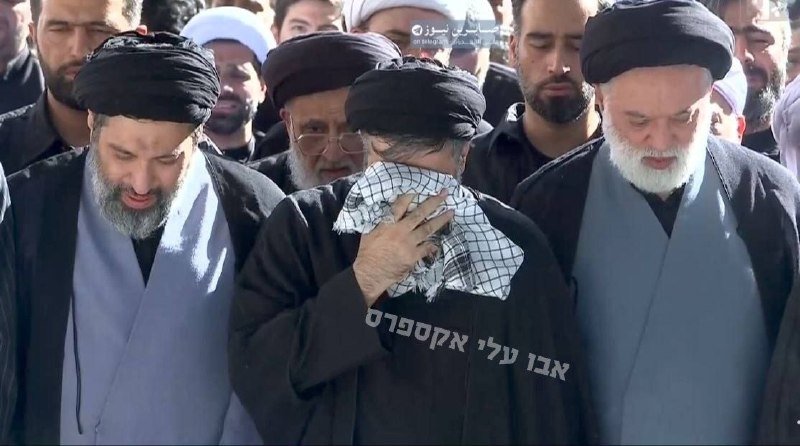
Anyone who has ever tried to push through a packed prayer hall knows that a crush is not photogenic. Tehran's Mosalla on 4 July 2026 looked, by every piece of footage Tasnim News released in the 16:00 to 18:36 UTC window, like an event where the venue had lost the ability to absorb more bodies. The Telegram channel of Iran's official Tasnim News Agency called it "magnificent," used the Arabic-Persian neologism badarqa — "risen," a martyrdom-to-resurrection shorthand — and reported that the venue had become "a place to throw a needle" is no longer. The framing is devotional, not civic: the mourners love the leader, and the leader has been martyred. That is the official script, broadcast at full volume.
A reader outside Iran has two reflexes available, and both are incomplete. The first says: this is manufactured. State-organised transport, state-organised chanting, state-organised grief — kit-of-parts authoritarian stagecraft, designed for cameras that will be re-edited tonight for the evening news. The second says: this is real. Millions of Iranians are genuinely grieving, and the condescension of Western analysts who call any mass display of piety in the Global South "manufactured" tells you more about the analyst than about the plaza. Monexus finds that both reflexes are half-right, and that each one, taken alone, misreads what the choreography is actually trying to do.
Why the Western wire frame will flatten this
Coverage outside Iran is going to lead with numbers — the size of the crowd, the logistics of moving it, the leader's death itself — and will frame the gathering as a display of regime strength. That read is correct on the input side: a state that can fill a 100,000-capacity prayer hall on four hours' notice, and keep it full across an afternoon, is a state with operational reach. Western outlets will reasonably note that the same security architecture that produces the reach also produces the limits — that cameras in a mosalla cover a curated slice of a much larger city.
The error the framing will make is to treat the crowd as the message. Crowds in large autocracies are rarely a free read on public sentiment. They are a read on the cost of absence. A bureaucrat who does not attend is a bureaucrat who can be queried. The institution of the ceremony — paid transport for pilgrims, official leave, bussed students, clerics assigned to organise local contingents — does its work before the cameras turn on. By the time the drone shots go out, the question is not whether people are there willingly. It's whether attendance is a precaution or a conviction.
Why the Iranian state frame overreaches
Tasnim's own coverage makes the opposite error, in reverse. To describe a funeral crowd as evidence that "all these troops have come for the love of the leader" is to extrapolate from attendance to devotion in the same way Western commentary extrapolates from attendance to brainwashing. It substitutes one unverifiable interior state for another, and it does so in the service of regime legitimacy. The fact that Tasnim is using the love register rather than the presence register tells you what the Islamic Republic wants the choreography to communicate: not that the system commands bodies, but that it commands hearts. That is a claim about legitimacy, not about turnout, and Tasnim is happy to make it.
What the choreography is actually doing
The longer arc is more honest on both sides. A senior leader's death under any system produces a deliberate sequence: declared mourning period, closed schools and offices, bussed mourners, staged religious readings, televised funeral procession. The choreography is designed to do three jobs at once. It ratifies the succession — bodies in a room are a non-verbal ballot for whoever the clerical establishment is anointing. It deters defection in the security services — the day an officer refuses to deploy to a funeral is the day an officer has chosen a side. And it signals, abroad, that the system that struck the leader is the system that buried him, intact.
Read that way, the size of the crowd at the Mosalla on 4 July 2026 is not a poll on grief. It is a procedural step in a transition that began in the hours after the death was announced, and that the next forty-eight hours will continue: clerical council meetings, security-force deployments, replacement of the outgoing leader's protocol apparatus, recapture of the news cycle from outside actors who would prefer to script this moment for Tehran. The crowd is therefore downstream of politics, not upstream of them. The Tasnim footage is not trying to tell you what Iranians think. It is trying to tell every Iranian — and every foreign observer — that the script is holding.
The serious question underneath
The temptation, in the days ahead, will be to treat the size of the funeral as itself the verdict. It isn't. The verdict comes later: in whether the successor consolidates, whether the regional network recalibrates, whether the street absorbs the moment or treats it as a permission slip. The Mosalla is a stage-set, not a poll station. Discounting it as pure regime theatre is naive; treating Tasnim's footage as evidence of national conviction is naive in the other direction. A useful rule for the next week: the ceremony ends when the schools reopen, and that is when to start counting what this did and didn't change.
— Desk note: Monexus leaned on four Telegram dispatches from Tasnim News's English channel between 16:48 and 18:36 UTC on 4 July 2026 to ground the visual claims. Where the funnel of official footage meets the lack of independent on-the-ground verification from inside Tehran, this publication flagged the gap rather than smoothing it over.
Wire provenance
This editorial synthesis draws on the following public wire/social posts:
- https://t.me/tasnimnews_en
- https://t.me/tasnimnews_en/90556
- https://t.me/tasnimnews_en/90557
- https://t.me/tasnimnews_en