Tehran's funeral diplomacy and the architecture of a post-Khamenei moment
Iran's foreign ministry is turning the burial of its long-time Supreme Leader into a soft-power showcase. The guest list tells you who Tehran still needs — and who it no longer trusts.
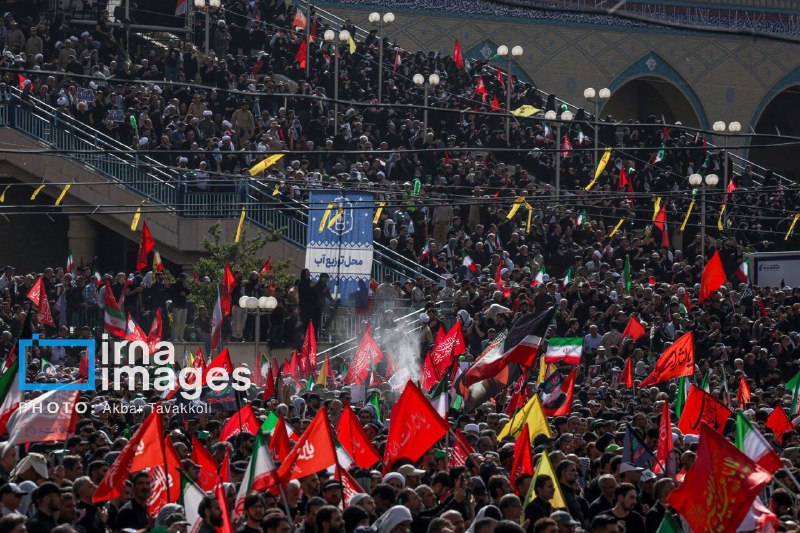
Iran's foreign ministry has spent the past 48 hours doing something it rarely does in public — saying thank you. In a statement carried by IRNA on 4 July 2026 at 17:49 UTC, the ministry thanked foreign delegations for attending the funeral of the late Supreme Leader "despite pressure and threats," language that doubles as a quiet scorecard of who showed up and who was warned off. Earlier the same day, the World Forum for Proximity of Islamic Schools of Thought, through its secretary-general Hamid Shahryari, framed the late Leader's legacy as one of Islamic unity against external enemies. By 17:30 UTC, PressTV was reporting the foreign ministry's pledge to "uphold the martyred Leader's legacy" in foreign policy.
Read together, the three readouts are not grief management. They are a foreign-policy doctrine being announced at a moment when Iran's external posture is unusually exposed.
What the funeral is actually for
State-aligned outlets are using the ceremonies to consolidate two things at once. The first is internal legitimacy at a moment of acute leadership transition: a state that has lost its Supreme Leader needs rituals, texts and a definable inheritance to project continuity. The second is external signalling — a stress test of who in the Muslim-majority world, and beyond it, is willing to be photographed alongside the Islamic Republic during a period of maximum Western pressure. The Foreign Ministry's "pressure and threats" formulation, reported by IRNA, is aimed as much at foreign ministries that did send delegations (and now need defending at home) as at those who stayed away.
The unity language matters too. Shahryari's invocation of the late Leader as a bulwark "against enemies" is the standard framing on Iranian state-aligned outlets, but it is doing new work now: it tells Shia and Sunni publics, and the non-aligned capitals watching from the Gulf to Jakarta, that the new leadership intends to inherit a pan-Islamic posture rather than narrow it.
The guest list as a geopolitical instrument
Diplomatic funerals are unusually candid about alignments, because attendance is a binary choice with visible cost. Tehran is publicly thanking attendees because that gratitude has bargaining value — it can be spent later, in sanctions negotiations, in oil-customer relationships, in voting alignments at the UN. Foreign ministries that sent senior figures now hold a small chip; foreign ministries that did not have already been told, in IRNA's careful phrasing, that their absence was noticed.
The implicit message to Western capitals is sharper. By staging the thanks in English-language wire copy and emphasising that dignitaries came "despite" external pressure, Iran's foreign ministry is constructing a counter-narrative to the standard Western frame of regional isolation. The story Tehran wants told is not "a pariah state burying its autocrat" but "a pole of attraction holding its coalition together under siege." That is a contest of framing, and it is being waged in real time on Telegram channels and ministry readouts.
Continuity doctrine, stated plainly
PressTV's 17:30 UTC dispatch is the most explicit doctrinal statement of the three: the foreign ministry will "strive to honour" the late Leader's legacy. Stripped of the religious register, that is a policy commitment — the apparatus of the Islamic Republic's external behaviour, from the Axis of Resistance portfolio to the hedging relationships with Beijing and Moscow, is being presented as inheritance rather than innovation. For capitals that have bet on policy change at the top, this is the clearest signal yet that personnel moves inside the foreign-policy establishment will be incremental, not rupture.
For the West, that lowers the odds of a near-term opening and raises the value of the relationships Tehran is currently cultivating elsewhere.
Stakes and what remains uncertain
What remains genuinely unclear — and what Iranian state-aligned sources will not tell you — is how the foreign-policy inheritance will be balanced against a domestic transition that is still unfolding. The funeral diplomacy is sophisticated, but it is also a stress test of institutional capacity: a state that can stage a continent-spanning set of ceremonies while simultaneously naming a new Supreme Leader is signalling competence; a state that cannot is signalling fragility. Both readings are live.
The other open variable is the counter-coalition. Tehran is publicly courting a particular segment of the Muslim-majority world through the Proximity Forum's framing and through the gratitude language of the Foreign Ministry. Whether that coalition translates into concrete diplomatic cover at the UN, in OPEC+, or in bilateral dealings with the Gulf monarchies, cannot be inferred from three Telegram readouts. What can be inferred is that Iran intends to be judged on attendance lists, and that it intends to do the judging itself.
Desk note: Monexus is treating the IRNA and PressTV readouts as primary-source statements of Iranian state position, not as neutral reportage. The Western wire line on Iranian leadership transitions has historically stressed isolation and factional contest; the Iranian-aligned framing presented here stresses unity and inheritance. Both are partial. The honest reading holds them together.
Wire provenance
This editorial synthesis draws on the following public wire/social posts:
- https://t.me/Irna_en
- https://t.me/Irna_en
- https://t.me/presstv