Tehran's midnight faithful and the choreography of waiting
Footage from Fars news agency shows tens of thousands gathering around the Mosla mosque on the eve of Tasianeh, a vigil that doubles as a reminder of how the Islamic Republic stages national grief.
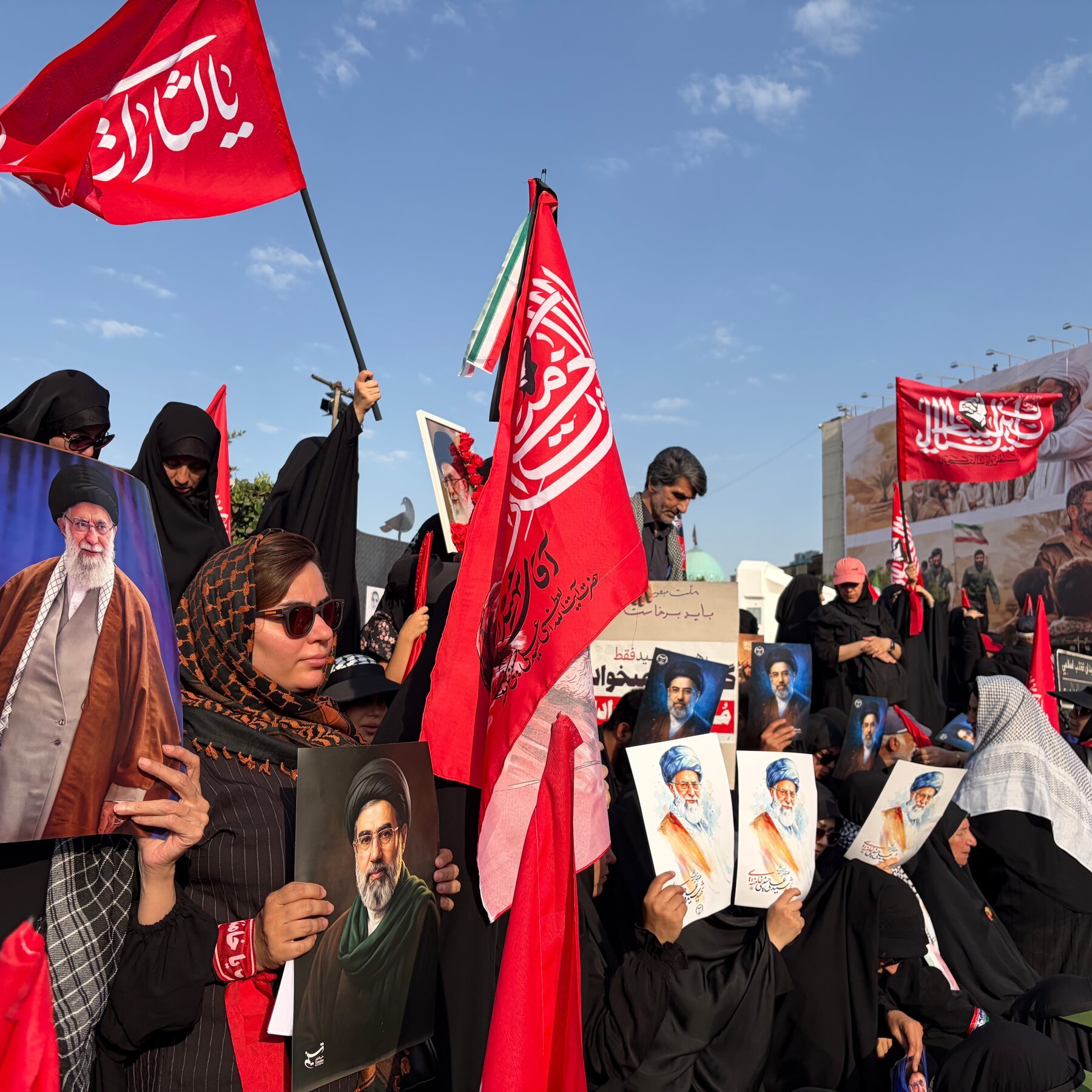
It is the small hours of 4 July 2026 in central Tehran, and the streets around the great mosque — the Mosla — are filling with a devotion that looks, to outside eyes, almost industrial. Fars News Agency, the outlet closest to Iran's hardline establishment, broadcast rolling footage through the night: families pressed against the doors of the shrine at 22:29 UTC on 3 July, traffic restrictions being read out for the surrounding district, the last hours of waiting filmed at 23:43 UTC, and by 00:18 UTC on 4 July, the agency describing the mosque as "a great sadness and longing has cast a shadow." The clip that closes the sequence, posted at 00:33 UTC, is captioned simply: "we came, we did not miss the visit."
For Iranians these rituals — the Tasianeh commemorations, the night vigils held in the lead-up to the martyrdom anniversaries of Shia imams — are older than the republic itself. What is newer is the choreography: a state-aligned press operation that treats mourning as both sacred rite and soft-power broadcast, packaging grief for an audience that already knows what it is watching, while leaving foreign viewers to decode it as either piety or performance.
A stage designed for the cameras
The framing of the Fars footage is unmistakable. The camera lingers on the swelling crowd, pans over traffic diversions that suggest crowd control at urban-event scale, and then cuts to the long, slow approach of worshippers to the gate. The narration — "the last hours of waiting are like this" — is less news than liturgy, and it is broadcast on a service whose editorial line is openly aligned with the Islamic Republic's conservative establishment.
That alignment is not incidental. Coverage of Tasianeh in Iranian state-aligned media has, for years, served a dual function: it dignifies a religious population that the state claims to represent, and it stages, for regional and global audiences, an image of an Iran that is orderly, devout, and demographically confident. The traffic-restriction bulletin, posted as part of the same thread, is a small piece of that work — evidence that the event is large enough to require a city-level logistics response.
Reading against the frame
Western wire coverage of similar vigils has tended to flatten the ritual into either "Iran mobilises its Shia base" or a softer note about cultural colour. Both readings miss something. The Tasianeh cycle is not, in origin, a regime project: it is a centuries-old pattern of mourning that long predates the 1979 revolution, and participation crosses the political spectrum in Iran. Even granting that Fars is curating its footage, the people at the gate are not extras. The agency's own clip of expectations "behind the doors of Mosla" registers that — the faces pressed to the entrance are not performing for the camera, they are waiting to enter.
A more honest read is therefore simpler than either the regime's narration or its critics' dismissal: this is what urban Iran looks like when one of its major religious cycles lands on a capital-city shrine. That it is being filmed and packaged by a state-aligned agency tells us about the agency, not about the crowd.
The information environment
It is worth naming what this thread does and does not show. It does not show casualty figures, arrests, or security-force deployments in the way that, say, a protest cycle would. It does not contain named officials, dollar figures, or legal claims that require independent corroboration. What it contains is atmosphere, and atmosphere is the unit of currency in which establishment outlets like Fars compete with diaspora Persian-language channels, satellite broadcasters, and platform-native creators for the attention of Iranian viewers.
For a reader outside Iran, the operational question is narrower: how much weight does state-aligned footage of a religious event carry as evidence? Used in isolation, very little — it is, by construction, sympathetic. Used as one input among several — alongside diaspora coverage, Western wire reporting, and on-the-ground accounts from independent journalists — it is a useful marker of what the establishment wants the world to see, which is itself a fact.
What the night leaves behind
The Tasianeh commemorations will pass, as they do every year, into daylight and ordinary traffic. The agency thread will sit in Telegram archives, searchable, available for the next time a Western outlet needs b-roll of "devout Iran." The harder analytical work — what these rituals mean for the regime's legitimacy claims, for Shia mobilisation across the region, for the cultural politics of a republic that has now governed longer than the monarchy it replaced — is not in the Fars thread and never will be.
The sources do not specify attendance figures, security-force numbers, or whether senior officials were present. They confirm only that the agency filmed the night, that traffic was restricted around the mosque, and that the framing was one of solemn national mourning. That is a thinner record than it looks. Read it for what it is: a state's-eye view of a vigil, broadcast in real time, by an outlet that has no incentive to disappoint its patron and every incentive to deliver exactly this kind of footage at exactly this hour.
This article relies solely on footage and captions published by Fars News Agency on 3–4 July 2026. Monexus presents the material as released, with the caveat that Fars is an establishment-aligned outlet and that the absence of independent corroboration is itself part of the story.
Wire provenance
This editorial synthesis draws on the following public wire/social posts:
- https://t.me/farsna/
- https://t.me/farsna/
- https://t.me/farsna/
- https://t.me/farsna/
- https://t.me/farsna/