A funeral, a flag, a signal: Tehran reads the farewell at Mosalla
Mourners filled Tehran's Grand Mosalla on 4 July 2026 for the farewell to Ayatollah Khamenei. The slogans on display say as much about the direction of the Islamic Republic as the eulogies do.
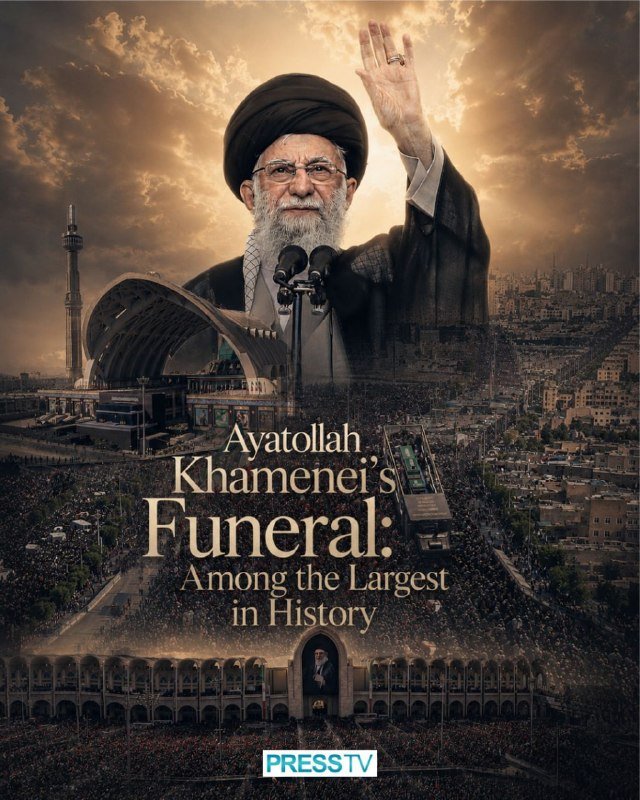
At 06:00 UTC on 4 July 2026, the chants began. Inside the Grand Imam Khomeini Mosalla in Tehran, the formal farewell for Ayatollah Sayyid Ali Hosseini Khamenei — Iran's Supreme Leader since 1989 — opened with two refrains the regime has been refining for decades: "Down with Israel" and, within minutes, "Down with USA." By 06:16 UTC the official IRNA feed described the hall as "teeming," and by 07:52 UTC Press TV's Moeen Amini was broadcasting from the floor, the camera panning across red flags that state-aligned outlets explicitly call the "symbol of vengeance." This is not a private grief. It is a state signal, choreographed for a domestic audience that has just lost a 36-year leader, a regional audience that has lost a patron, and an external audience that is being told, in plain Persian and plain English, what comes next.
The choreography is the story. The slogans are not spontaneous eruptions; they are the rehearsed register of an Iranian leadership that uses mourning rites to telegraph intent. The order matters: Israel first, the United States second. The red flags, by Press TV's own description, are signs of retaliation owed. The choice of venue — the Mosalla, the same hall used for the funerals of Khomeini and the IRGC commanders killed in the January 2020 strike on Qasem Soleimani — places this farewell inside a continuity, not a rupture. The Islamic Republic is advertising that the leader is gone but the trajectory is not.
What we know, and what the cameras show
The thread of evidence is thin by Western-wire standards and entirely Iranian-state in origin. Press TV, IRNA, and the official Khamenei channels are the only sources we have on the ceremony itself, and they are not neutral observers — they are the ministry of information for a regime that has spent two decades curating how its grief looks. The verifiable facts: the farewell is being held at the Grand Imam Khomeini Mosalla in Tehran; mourners are present in numbers the official footage describes as overflowing; the slogans "Down with Israel" and "Down with USA" have been broadcast on state channels; red flags framed as vengeance symbols are being displayed in the hall; the language of "martyrdom" is being used by every official outlet, including English-language IRNA, which explicitly attributes the death to a "US-Israeli terror attack."
What we do not have, and should not pretend to have, is any independent confirmation of the cause of death, the identity of any successor already agreed inside the Assembly of Experts, or the security posture around the ceremony. Those questions will be settled in the days ahead, by outlets with access outside the Mosalla. The Monexus read of the thread context is therefore strictly about the public signal — what the regime wants its audiences to see, hear, and conclude about the period that opens after 4 July 2026.
The slogan order is policy
For Western readers raised on the language of "de-escalation" and "off-ramps," the most uncomfortable part of the footage is not the volume of the chants but their sequence. Israel is named first. The United States is named second, not first. That ordering is not an accident of crowd dynamics; it tracks the regime's two-front strategic posture, in which the principal grievance is the Israeli security and intelligence apparatus credited by Tehran with enabling the strike, and the United States is the power behind that apparatus rather than the principal actor in it.
This framing has consequences for anyone in Washington or Jerusalem now writing threat assessments. If the Islamic Republic's public mourning script places Israel at the top of the retribution queue, the burden of deterrence shifts back onto Tel Aviv — and onto any American installation in the region that the IRGC considers co-located with Israeli intelligence. The chanted vocabulary is not boilerplate. It is the menu.
What a Western wire frame would miss
If Reuters or the BBC were to run a wire summary of the same footage, the lede would almost certainly be about a regional power transition and the question of who succeeds Khamenei. That is the right question for an analytical reader, but it is not the question the regime is asking its own public to consider. The signal is forward, not backward. It is about what is owed, to whom, and in what order. Monexus's read is that the dominant Western frame — succession, stability, de-escalation — risks under-reading the funeral because it treats the chants as noise rather than as the most legible piece of evidence in the entire broadcast.
A skeptic would say this is what Iranian funerals always look like, that the slogans are ritual rather than directive, and that the regime's actual decision-making will happen in private rooms the cameras are not allowed into. That is a fair reading. It is also, however, a reading that ignores how much of the Islamic Republic's deterrence credibility rests on the belief among adversaries that its public signals will be backed. A leadership that spent forty years teaching its neighbours to read red flags at Mosalla funerals cannot, at the moment of its highest-profile grief, afford to be ignored as merely performing.
Stakes, with the evidence held loosely
If the dominant read holds — that the funeral is a signal of continuity rather than rupture — then the period ahead is one of managed retaliation rather than restraint. Israel absorbs the top of the risk ladder. US bases in the Gulf, Iraq, and the Levant absorb the second tier. Energy markets, which are still pricing a partial reopening of the Strait of Hormuz, will reprice the second the first credible retaliatory act is confirmed. The uncertainty in the thread is real: no Iranian outlet has named a successor; no Western outlet has independently confirmed the cause of death; the "US-Israeli terror attack" framing is exclusively Iranian-state. What is not uncertain is the camera at the Mosalla. Monexus finds that the public signal is unambiguous, and that any policy read which treats the slogans as cosmetic is reading a different funeral than the one being staged.
Desk note: Monexus framed this piece on the public signal the Islamic Republic is broadcasting at the Mosalla, not on speculation about succession or the contested cause of death. Where independent Western or regional wire confirmation is unavailable, we have said so plainly rather than improvise it.
Wire provenance
This editorial synthesis draws on the following public wire/social posts:
- https://t.me/presstv/
- https://t.me/Irna_en/
- https://t.me/Khamenei_en/
- https://t.me/Khamenei_en/
- https://t.me/presstv/