The 250-year spectacle: pardons, AI minimalism, and a Russia-friendly republic, served on Independence Day
Three announcements in two days — 250 potential pardons, a veto-the-regulators AI stance, and a Kremlin greeting on the Fourth — sketch a presidency that treats the Founding as personal branding.
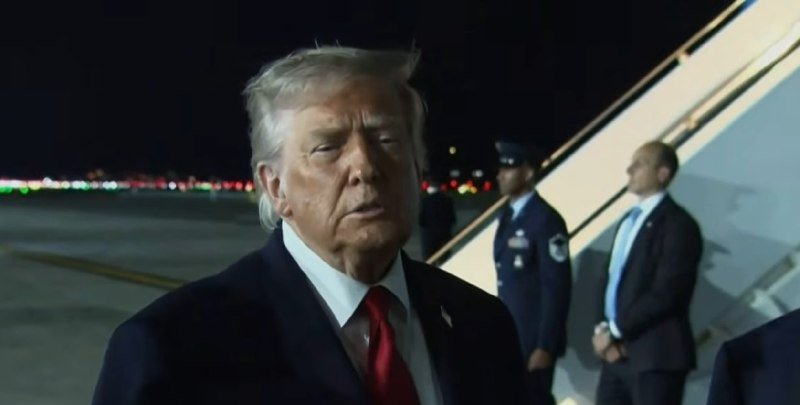
On 4 July 2026, the United States marks 250 years since the Declaration was read aloud to a crowd in Philadelphia. The occasion arrives freighted with three policy gestures that, taken together, say more about the current presidency than any parade.
A foreign dictator has congratulated the American head of state on the anniversary. The White House is, by multiple accounts, weighing a "250 pardons for 250 years" gesture. And the same administration has publicly declared that AI regulation should be "as little as possible." The symbolism is not subtle, and it is not accidental.
The parade and the pardon list
The "250 pardons for 250 years" framing first surfaced on 3 July 2026 via a Polymarket news thread, which reported that the president was considering the symbolic gesture to mark the nation's semiquincentennial. A presidential pardon is one of the most under-examined instruments in the American system — broad, unreviewable, and executed by signature alone. A list of 250 names, framed as a Founding tribute, would convert the clemency power into ceremony at industrial scale.
The reporting at this stage is preliminary, and the White House has not, on the evidence available to this publication, confirmed the final shape of any list. But the political logic is plain enough. Clemency events reset the news cycle. They put the incumbent at the centre of a story about mercy rather than misconduct. And they pre-empt the more uncomfortable journalistic question: who, exactly, is being forgiven, and on what terms?
The Vladimir Vladimirovich problem
Then there is the greeting. On 4 July 2026, the Kremlin's press service released a message from Vladimir Putin congratulating Donald Trump on America's 250th anniversary, as reported by the X account @sprinterpress. The optics matter. A Russian president marking the founding of a republic he is methodically working to weaken — through cyber operations, election interference, sanctions evasion, and the long war in Ukraine — is not a neutral act. It is a postcard.
The Moscow message will be filed under "diplomatic courtesy" in much of the wire coverage. That filing is too generous. The appropriate register for a foreign leader who is currently bombing a country the United States has armed, sanctioned, and pledged to support indefinitely is not congratulation. It is, at most, silence. The reception of the Kremlin's note inside Washington — the smiling repost, the returned pleasantries — tells a foreign-policy story the daily press briefings do not.
The AI posture: do almost nothing
The third beat is the policy one. On 2 July 2026, the same Polymarket feed recorded the president declaring that AI regulation should be "as little as possible." No qualifier, no carve-out for safety, no mention of the existing agencies that already have jurisdiction over segments of the stack. The minimalist posture is, on its face, a gift to the handful of frontier labs now posting nine-figure training runs and pitching sovereign infrastructure deals from Riyadh to Brussels.
The argument for restraint is not absurd. American AI labs do face an asymmetric regulatory environment — Beijing's industrial policy on frontier compute, Brussels' compliance perimeter, Seoul's localisation pressure. Lighter domestic rules, in that telling, preserve the lead. The argument against restraint is that the externalities of frontier models (labour displacement, model-assisted fraud, election interference at scale) do not stay neatly inside any one jurisdiction. A policy of "as little as possible" is a policy of letting the private sector write the rules, then asking the courts to clean up the wreckage.
What this actually is
Strip away the rockets, the reenactors, the naturalisation ceremonies, and what July the Fourth 2026 is actually staging is a presidential rebrand. The semiquincentennial is being treated as a personal anniversary — a backdrop for pardons, a recipient of foreign congratulations, an occasion on which the president can float deregulatory philosophy as civic creed.
There is an older American instinct that holds that the presidency is, on the Fourth of July, deliberately small. The office shows up, the office pays its respects, and the rest belongs to the parade. That instinct is at odds with the pageantry now being marketed. A 250-name clemency rollout, a Vladimir Vladimirovich telegram, and a deregulatory manifesto delivered on the same day are not modesty. They are not restraint. They are the inverse.
The contest the next nine months will turn on is not whether the spectacle is impressive. It plainly is. The contest is whether the country notices that the pageant and the policy are now the same object — and whether, in 2026, the press treats that as a story or as scenery.
Wire provenance
This editorial synthesis draws on the following public wire/social posts:
- https://t.me/sprinterpress
- https://t.me/polymarket
- https://t.me/polymarket
- https://t.me/polymarket