A funeral, a threat, and the negotiating table: Trump's strange week with Iran
Trump describes Iran as "begging to make a deal," pauses talks for a week of mourning, and floats a strike he says he won't order — the rhetorical geometry of a negotiation that may be running on fumes.
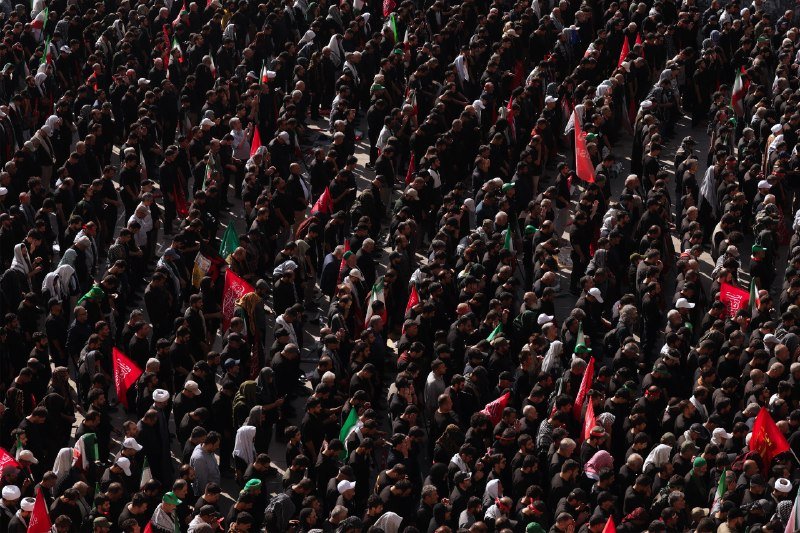
It is not often that the public phase of a major-power negotiation is interrupted by a state funeral. On 4 July 2026, that is roughly what the United States and Iran arranged for themselves. According to a series of statements attributed to President Donald Trump and relayed by the Telegram channel ClashReport, both sides have agreed to a one-week pause in nuclear diplomacy while Iran buries Ali Khamenei, the long-serving supreme leader whose death ended an era in Tehran. Trump told reporters the pause was mutual, that "neither side will a" — the dispatch truncated mid-sentence — and that the calendar would resume when mourning concludes.
What is striking is not the pause itself. It is the rhetorical load Trump has placed on top of it in the same breath: an explicit threat to kill the assembled Iranian leadership gathered for the funeral, a refusal to carry it out, and an insistence, in the alternative, that Iran is "begging to make a deal." Three claims, all uttered inside forty-eight hours, none of them obviously compatible.
The funeral as bargaining chip
The decision to halt talks for a week of mourning is, on its face, a procedural courtesy. It also hands Washington something rarer than time: a deadline. Iran now knows that whatever it concedes on the resumed schedule will be read against the backdrop of a leadership transition it did not choose and a public phase of grief it cannot disrupt. The US side, by Trump’s own account, could have chosen differently. "One shot [and we can take them all out], but we are" — again, the on-record sentence ends there in the reporting available. The clause that follows, presumably a reason for restraint, was not captured. The implied structure is familiar: a maximalist threat held in reserve, then declined, then converted into leverage for the next round.
"Begging" is a negotiating posture, not a description
Trump’s claim that Iran is "begging to make a deal" belongs to a particular American vernacular of arms-control talk. It inverts the actual asymmetry. Iran’s civilian nuclear programme is one of the most heavily sanctioned industrial operations on earth; the United States has, for two decades, refused to recognise Iran’s right to enrich under any threshold. By the standard metrics of who needs the deal more, the US position is the more flexible: Washington has historically been willing to settle for caps, monitoring and rollback of advanced work, while the Iranian system frames even limited enrichment as a matter of sovereign dignity. Calling the other side "desperate" is what a negotiator does when they want the public to read concession as collapse rather than adjustment.
The handwritten sign and what it tells us about Iranian framing
At the funeral itself, ClashReport reported, a handwritten sign held above the crowd read: "We will kill Trump." The line sits at the seam between street theatre and state messaging. Funeral crowds in the Islamic Republic are curated spaces; banners and placards pass through a layer of political and security vetting before they reach cameras. The sign is therefore both a measure of where elite opinion in Iran is willing to be seen aiming its rhetoric and a signal that, whatever is being negotiated in private, the public register between the two countries is heading in the opposite direction.
The contradiction Trump is willing to hold
Trump also said, on the same reporting day, that he was "surprised to see Iranians crying" at Khamenei’s funeral, and suggested the displays of grief might not be genuine. It is a small remark, but it cuts against the much larger claim he is making — that Iran is begging, that he could decapitate its leadership with one shot, that the deal is within reach. If the Iranian public is in fact unmoved by the supreme leader’s death, then the regime that Washington is about to negotiate with has thinner domestic cover than its regional posture suggests. If the grief is real, then the threat to strike the funeral is not a hypothetical; it is a posture aimed at a population in mourning.
The deeper story is that none of these statements require one another to be true. The threat, the restraint, the mourning, the contempt for the mourning, the demand that Iran negotiate — these are independent registers, and Trump is running them in parallel. That is a recognisable negotiating pattern: maximise the cost of saying no, minimise the cost of saying yes, and never let the audience settle on a single interpretation of your intent.
What the next week actually decides
If the pause holds and talks resume around mid-July 2026, the central question is not enrichment percentages. It is whether the Iranian side has consolidated enough internal authority, post-Khamenei, to sign anything that will outlast a single press cycle. The funeral crowds, the handwritten sign and the public tears — real or performed — are all data on that question. Washington is reading them. So is everyone else with skin in the regional game: the Gulf monarchies, Israel, Turkey, and the Russian and Chinese governments that have their own equities in any Iranian settlement.
What remains genuinely uncertain is whether the US side has a written end-state in mind at all. The reporting available describes posture, not text. Until a draft or a public framework appears, the negotiation is being conducted in threats, pauses and funeral observations — which is to say, in symbols rather than in the substance that sanctions, inspections and stockpile questions actually live in. The week of mourning may buy the calendar some breathing room. It does not, by itself, produce a deal.
Desk note: this publication treated the Telegram-channel reportage as the only verifiable wire available at time of writing and flagged truncated sentences as truncated rather than paraphrasing them into clean quotes. Where a claim rests on a single on-record remark by the US president, that is stated in the copy.
Wire provenance
This editorial synthesis draws on the following public wire/social posts:
- https://t.me/ClashReport
- https://t.me/ClashReport
- https://t.me/ClashReport
- https://t.me/ClashReport