At Mount Rushmore, Trump Reopens America's Longest Culture War
Dodging hail and political fatigue alike, Donald Trump used a half-hour beneath four carved presidents to frame the United States' 250th year as an existential contest with a 'communist menace.' The speech, delivered 2026-07-03, lands less as an oration than as a referendum on what kind of country the next century is meant to celebrate.
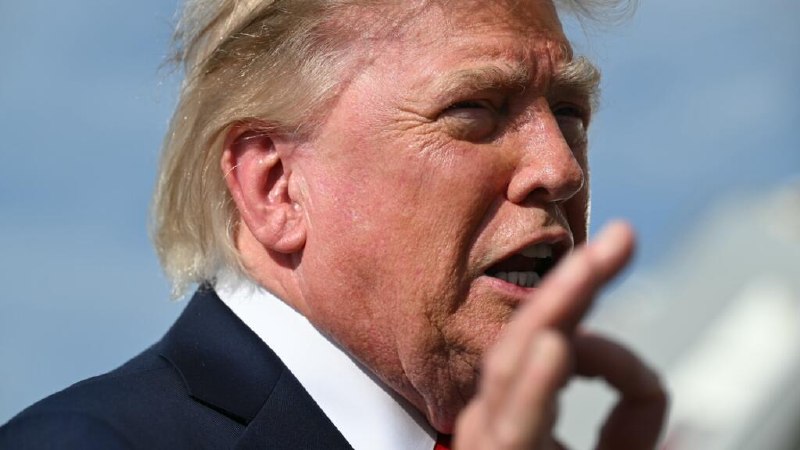
The hailstones that scoured the Black Hills on the evening of 2026-07-03 were forecast to be the story. Severe weather closed access roads, delayed the motorcade, and gave cable news a ready-made question — would the president still take the stage? Donald Trump did, roughly ninety minutes behind schedule, and addressed what his campaign is now calling an America 250 crowd for half an hour beneath the four faces carved into the granite. The weather was a footnote within minutes. The speech, not the storm, set the agenda for the next news cycle.
A presidency often retreats to Mount Rushmore when it wants to project gravity it cannot generate elsewhere. Trump has used the setting before. This time the framing was narrower, and louder: a country in its 250th year framed not as a celebration but as a contest, with communism — the word invoked twice, in the opening lines and again in the peroration — cast not as a foreign policy problem but as a mortal threat to American liberty itself. The choice to deliver such a speech, in such a setting, on such a date, tells the reader at least as much as the speech does.
A different July 4th
The mounting of last night's address follows months of Trump and his team positioning America 250 — the administration's branding for the run-up to the 4 July 2026 anniversary — as a political-organising vehicle rather than a civic commemoration. Reasonable observers inside and outside the Republican Party had expected a softer rhetorical posture: pageantry, a parade of heroes, the uncontroversial line that two-and-a-half centuries of constitutional self-government is a non-trivial achievement. Trump instead chose to rally supporters against a named enemy, and to do so in language — communism as a mortal threat — that has not been the default register of an American Independence Day address in living memory.
The sequencing matters. Mount Rushmore sits in South Dakota, a reliably Republican state, in a year when the administration is fighting to keep its own voters engaged through a difficult midterm stretch. The polymer market and online prediction feeds had been signalling for days that a major speech was planned; Polymarket's 2026-07-04 01:05 UTC bulletin noted the speech was still on despite the storm. By the time Trump took the stage, much of the analytical question had already been answered: this was going to be an argument against an internal adversary, not a fireside reflection.
The substance of the argument, as reported, is also unusual. The phrase 'mortal threat' is reserved in presidential rhetoric for events the government itself treats as existential — a foreign invasion, a nuclear exchange, an attack on the homeland. Redirecting it toward a diffuse ideological adversary half a world away, with no specific incident named, marks a deliberate intensification. A White House trying to lower the temperature would not have used either word.
The speech's own echo chamber
The official summary, distributed via OANN's Telegram channel on 2026-07-04 at 15:45 UTC, characterised Trump's remarks as a warning about a 'communist menace' to 'America's glorious independence' — language that matches the campaign's preferred framing almost verbatim. Reuters' World News podcast, sampled around the same time (2026-07-04 16:40 UTC), ran an audio clip of Trump invoking 'communism is a mortal threat to American liberty' as the headline pull. Polymarket's wire service mirrored the line within an hour. In short order the same sentence appeared, in three different forms, on at least three distribution channels aligned with the administration or with audiences that consume its media.
That convergence is itself the story. Coverage of a presidential address used to flow outward from the podium through wire services and then outward again to broadcasters; the line 'communism is a mortal threat' has instead moved along a feedback loop in which the administration's own narratives and the administration's preferred outlets are doing much of the amplification. Independent reporting of crowd size, reaction shots from the amphitheatre, and any protests in Keystone or Rapid City was thin in the immediate post-speech window, because access had been weather-limited and because press planning around America 250 has, for months, privileged official framing. The speech is being read mostly through the president's own voice.
This is not unusual in itself. What is unusual is the closeness of the loop. Every modern administration produces its own rapid-response stack of quotes, social posts, and 'X said Y' clips that drive the next day's headlines. The Trump operation has, across 2025 and 2026, raised that craft to a competitive advantage: a phrase designed for virality, dispatched through a tier of sympathetic outlets, then mirrored by prediction markets and aggregators with a model that rewards velocity over verification. The compound effect is to give the administration's preferred framing a head start in any news cycle it has chosen to own.
A long shadow, an old argument
Setting the president aside for a moment, the underlying argument is a familiar one in American political life. There is a more than seventy-year tradition, running from the McCarthy era through the Cold War's late chapters and into the post-9/11 period, of identifying an internal adversary by association with a foreign ideology. Each generation has produced its own version: the Communist Party USA card-carrier of the late 1940s, the Sandinista sympathiser of the 1980s, the terrorist-sympathiser of the 2000s, the 'woke' cultural leftist of the 2010s. The current file appears to be reopening, with 'communist' — a word that still carries an unmatched freight — as the dominant label.
It is worth saying plainly that none of this requires the administration to be lying or delusional. A great-power rival with state capacity, an alternative model of political economy, and a growing technological footprint does pose real questions for American governance. A serious administration would name those questions and argue about them. What is striking about the Mount Rushmore address is that the questions are not the substance; the mobilisation is. The president is not, on the available reporting, walking through specific Chinese industrial policies, specific Venezuelan financial arrangements, or specific shifts inside the Democratic Party that would substantiate the 'communist' charge at any analytically rigorous level. He is instead asserting that such an enemy exists, full stop, and inviting his base to organise around that assertion.
This is rhetorical politics in a familiar American key. It is also, in the year the country is supposed to be marking a 250-year constitutional achievement, a tellingly narrow framing of what that anniversary is for. The competing vision — a United States confident enough to argue with itself in public, to host debate, to mark a sesquicentennial-plus in a register more reflective than accusatory — is the one not being delivered.
The base, the rest, and the stakes
The address's intended audience is the Republican primary electorate, particularly the segment most responsive to cultural grievance and least responsive to the inflation-and-rates talk that has dominated the administration's messaging for two years. It is also a deliberate message to donors, party committees, and Republican candidates in the autumn midterms: that the administration will spend political capital on a cultural-front argument even when economic pressures are real. The calculation is that turnout depends less on policy specifics than on whether voters understand themselves to be in a fight.
For everyone else — independents, marginal voters, the Democratic opposition, foreign governments reading the speech for content — the address communicates something different. The 'mortal threat' framing elevates a domestic political opponent, by association, into something more menacing than the administration's actual policy disagreements with that opponent warrant. That is the speech's most consequential side effect, and it lands hardest on institutions — courts, universities, federal agencies — that have already spent a year absorbing pressure from a White House that has, on multiple fronts, treated professional autonomy as a partisan problem.
Stakes for the country are concrete. A presidency that frames itself as besieged by an existential enemy will, over an 18-month horizon, face increasing pressure to act on that framing — through the justice system, the regulatory state, the deployment of federal personnel in domestic settings, and the public messaging apparatus. Stakes for the Republican Party are equally concrete: a midterm electorate being asked to vote on a culture-war frame when kitchen-table economics is the dominant anxiety in polling is a fragile bet.
Stakes for the press are the easiest to overlook, because the press has been here before. A 'communist menace' line, repeated across friendly outlets and prediction-market wires, will set the day's news cycle in much of the country. The remainder of journalism's job is to do what it has done in every comparable episode since the late 1940s: report the speech accurately, situate it historically, interrogate the empirical claims it makes, and resist — quietly, persistently — the gravitational pull of the loudest voice in the room. That is what the next several days of coverage will look like. The Mount Rushmore address itself is a single speech. The test it sets for the institutions around it will run for much longer.
What remains unresolved
The sources do not specify the exact duration of the lightning delay, the size of the in-person crowd, or whether the speech was rewritten after the storm pushed back the schedule — all questions that mattered for what was actually delivered. There is also no independent reporting, in the material available to this publication, on how non-aligned outlets covered the event in real time, on what Democratic leadership was saying at the moment of delivery, or on how foreign governments read the 'mortal threat' line. The framing of the address — 'communism is a mortal threat to American liberty' — is, at this writing, sourced primarily through channels sympathetic to the administration; the sentence is true to the speaker but its interpretive weight will be settled in the days of coverage that follow.
What is not in doubt is the address itself: Trump spoke, the line was delivered, and the administration's preferred framing is now the dominant frame for the day's news. The Mount Rushmore setting added an unmistakable visual claim — that the country is being defended against a mortal threat, by a presidency that already sees itself in those terms. The 250th-year audience for the speech was the country. The 251st-year audience has work to do.
Desk note: Monexus carried the event through the available wire stack — Reuters, an OANN-distributed administration summary, and Polymarket velocity lines — and is explicitly flagging that the dominant framing of the speech moved through outlets aligned with the White House in the hours after delivery. Independent reporting on crowd size, protests, and reaction in South Dakota was thin at press time; the next cycle will fill that gap.
Wire provenance
This editorial synthesis draws on the following public wire/social posts:
- https://reut.rs/4gPVZw8
- https://t.me/OANNTV