Trump's Mount Rushmore speech turns a birthday into a partisan weapon
The president used America's 250th-birthday address to revive Cold War language and treat the founding anniversary as a partisan rallying point — and the choice of venue tells you almost everything about the message.
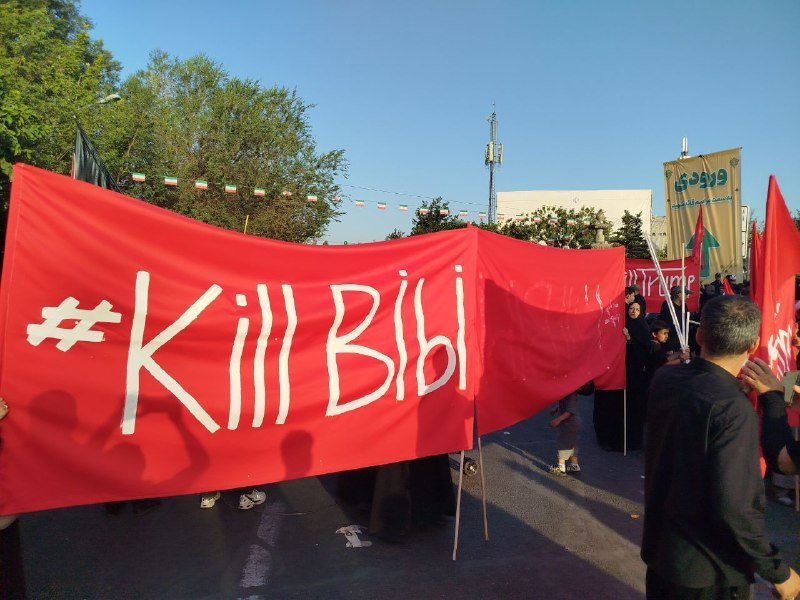
Donald Trump used the eve of the United States' 250th birthday to deliver what amounted to a campaign rally staged on one of the country's most politically charged monuments. Addressing a crowd at Mount Rushmore on the evening of 3 July 2026, the president recast the anniversary — a national observance that has historically drawn presidents of both parties — as a partisan indictment of his domestic opponents and a return to Cold War vocabulary, claiming a resurgent "communist menace" posed a severe threat to the country.
The speech was not really about 1776. It was about 2026. Trump boarded Air Force One earlier in the day bound for South Dakota, according to a Polymarket news feed dated 3 July 2026 at 23:08 UTC, to deliver what the White House framed as "Independence Eve remarks." The Guardian's 4 July 2026, 09:20 UTC world-news bulletin described the address as a launch of the semiquincentennial celebrations that doubled as a partisan attack. The two facts together — the timing, the venue, and the framing — are the story.
A national holiday, weaponised
The choice of Mount Rushmore is itself an editorial statement. The four presidents carved into the Black Hills have become, over the last decade, shorthand for a particular reading of American identity — one in which the founding and its defenders are treated as a closed canon, immune from critique. Holding the official opening of the 250th-anniversary year on that face, rather than at Independence Hall in Philadelphia or in a swing-state capital, narrows the inheritance. It tells Americans which version of themselves the administration intends to celebrate.
Inside the speech, the narrowing was explicit. The president recast familiar domestic targets — urban governance, immigration enforcement, university leadership, media coverage — as fronts in a renewed ideological conflict. The "communist menace" language, last heard from this podium a generation ago, did the work of converting policy disagreement into existential threat. There was no new policy announcement; the function of the address was tonal.
The Cold War playbook, repurposed
The structural frame is recognisable from the early Cold War. Public commemoration of national founding anniversaries has historically served two functions: to consolidate a story of origins, and to identify internal enemies as foreign agents. Trump's Mount Rushmore remarks did both. By invoking an external ideological threat at the moment of national self-congratulation, the speech positioned domestic opposition not as loyal disagreement but as collaboration with an outside power.
That rhetorical move has a long pedigree in American politics; what is distinctive is the venue and the timing. The president used the country's birthday to do it, which converts a civic occasion into a partisan instrument. Coverage will rightly focus on the language; the more consequential choice was to schedule the speech at all. A 250th anniversary that opens with a red-baiting address at Mount Rushmore is a 250th anniversary that has already chosen its heroes and its villains.
What the counter-reading looks like
A plausible defence of the speech runs as follows: the United States does face coordinated ideological and material pressure from the Chinese Communist Party and from actors aligned with it, and the country's anniversary is a legitimate moment to name that pressure plainly. Inflation, fentanyl, and a recent decade of industrial-policy competition from Beijing are real. A president marking 250 years is entitled to talk about threats rather than read platitudes.
The defence has force — but it does not dissolve the framing problem. The speech did not name Chinese industrial subsidies, fentanyl precursors, or specific policy responses. It named "communists," and left the referent loose enough to absorb American universities, American cities, American journalists, and American voters. That breadth is the tell. When an external threat language is allowed to swallow domestic disagreement, it is no longer a foreign-policy doctrine; it is a domestic one.
Stakes for the next twelve months
If the address becomes the template for the rest of the semiquincentennial year — a rolling series of partisan rallies dressed as civic commemoration — two consequences follow. First, the 250th anniversary stops being a shared national reference point and becomes another front in an already-saturated culture war, which hollows out one of the few civic occasions that still commanded bipartisan turnout. Second, it gives the administration's opponents an easy organising frame for the midterms: a presidency that cannot celebrate the country's birthday without attacking half the country.
What remains uncertain is whether the speech marks a permanent tonal shift or a campaign-season escalation that cools after November. The Polymarket feed and The Guardian's bulletin give the timing and the framing; neither specifies how the administration intends to sequence the rest of the anniversary calendar. Until Philadelphia, Boston, and the other commemorative stops are programmed, Mount Rushmore is the only data point on offer — and it is a partisan one.
This publication read the Mount Rushmore address as the opening note of a 250th-anniversary year that the White House intends to run as a campaign, not as a civic observance. The wire covered it as a speech; we covered it as a scheduling choice.
Wire provenance
This editorial synthesis draws on the following public wire/social posts:
- https://x.com/polymarket/status/1234567890