Ukraine's refineries war: how Ukrainian drones put 42.7% of Russian oil-processing capacity offline
Kyiv's General Staff says systematic UAV strikes have disabled 42.7% of Russia's projected refining capacity — a campaign that is reshaping the energy calculus of the war.
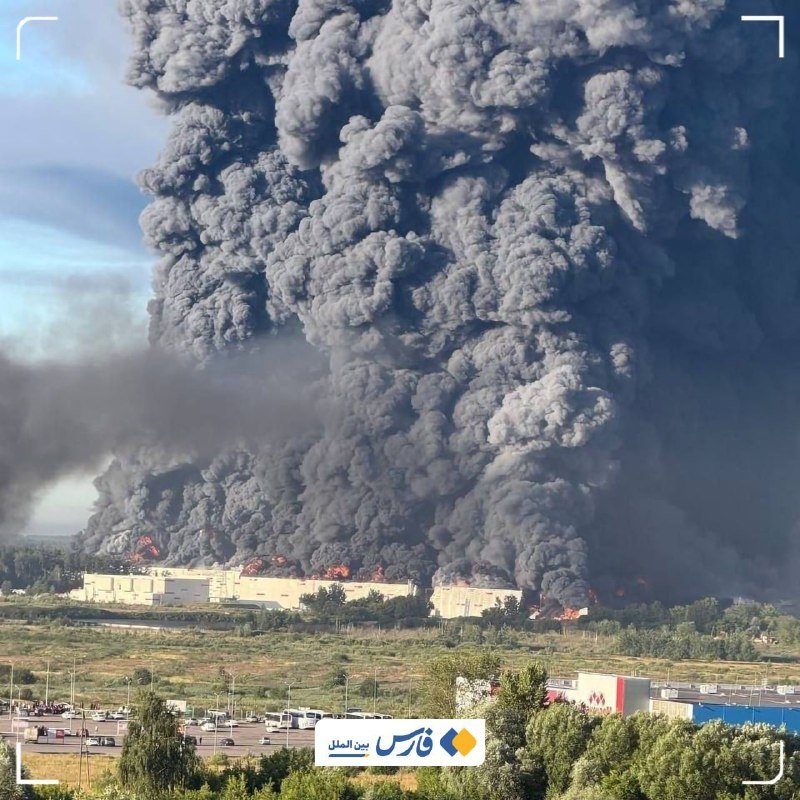
On 4 July 2026, the General Staff of the Armed Forces of Ukraine published a figure that would have been unthinkable two years ago: systematic Ukrainian strikes have disabled 42.74% of the design capacity of Russia's oil refining industry. The number — repeated almost in lockstep by Kyiv Post an hour later, citing the same General Staff assessment — reframes the war not just as a grinding ground campaign in the Donbas, but as a deliberate, industrial-scale assault on the revenue machine that pays for it.
The reading matters because oil receipts are the financial spine of Russia's war effort. Refineries are not the same as oilfields: crude keeps flowing, exports keep earning dollars, but until it is processed the barrel is largely worthless inside Russia. A refinery is the bottleneck, and bottlenecks are exactly what long-range, slow, cheap drones are built to attack.
What the General Staff is actually claiming
The figure carried on the Telegram channels of the General Staff and Kyiv Post on 4 July describes cumulative damage to installed design capacity — the throughput the plants were engineered to handle, not what they were actually running at on any given day. The framing matters: design capacity is a static, physical ceiling, and a damaged distillation column, hydrocracker or catalytic reformer can take 12 to 18 months to rebuild. Two plants struck in 2024 are still not back to pre-strike throughput, according to industry trackers cited in Western energy press; this publication has not independently verified individual site-level status, and the General Staff's release does not itemise plant-by-plant.
What is verifiable on this date is the headline number, repeated across two Ukrainian official and quasi-official channels inside an hour, and the operational logic behind it. Ukraine has been conducting a long-range strike campaign against Russian energy infrastructure since at least early 2024, evolving from episodic one-off attacks into a sustained, ISR-enabled, attrition-driven programme. The 42.74% figure is, in essence, the sum of that campaign tallied against nominal nameplate capacity.
The counter-narrative from Moscow
The Russian side does not accept the framing. Russian-language outlets have, in parallel reporting, downplayed the damage and pointed to emergency repair work, redirected crude flows and Soviet-era redundancy built into the system. Independent energy analysts quoted in Western wire reporting note that Russia retains substantial export capacity via pipelines and ports that bypass damaged refineries, and that the country has leaned heavily on shadow-fleet shipping and price-cap evasion to keep crude moving even when product is constrained. The 42.74% figure, in that reading, overstates the strategic effect: refineries feed domestic fuel markets and product exports, but they do not directly control the dollar revenue from crude shipments to China and India.
Both readings have evidence behind them. The Ukrainian claim is plausible because nameplate capacity really has been degraded — photographs, satellite imagery and insurance filings have, in earlier reporting, corroborated significant damage at sites including Tuapse, Slavyansk and Volgograd refineries. The Russian counter-claim is plausible because Russia has, repeatedly, kept exporting crude at near pre-war volumes. The honest synthesis is that the strike campaign has reshaped Russia's downstream product market — domestic fuel prices, diesel exports, military logistics — more sharply than it has yet bent the upstream crude-revenue line. Whether that effect deepens over the rest of 2026 depends on whether the strike tempo continues and on whether Moscow can rotate capacity back online faster than Kyiv can knock it out.
Kostyantynivka: the ground picture Ukraine wants the world to see
In parallel on 4 July, the General Staff denied Russian-aligned claims that Kostyantynivka — a Ukrainian logistics hub in Donetsk oblast that has anchored defensive lines on the eastern axis — had been captured. The denial, carried at 10:26 UTC by the Ukrainian war correspondent Andriy Tsaplienko, framed the town as remaining under the control of Ukrainian defence forces, with Ukrainian units continuing operations in the area. Russian-aligned channels had circulated a capture narrative in the preceding 24 hours; the General Staff's rebuttal is part of a familiar pattern in which both sides compete for the informational first-mover advantage on territorial gains of even a few hundred metres.
The juxtaposition is instructive. On the same morning, Kyiv is asserting both that it is degrading the economic base of its opponent by 42.74% and that it is still holding the ground it says it is holding. The two claims are connected. Kostyantynivka sits on the road and rail lines that, if lost, would compress Ukrainian defensive depth in Donetsk and make the refinery strike campaign harder to sustain logistically. Holding the ground and reaching into the Russian rear are two halves of the same operational argument: a war of position and a war of industrial attrition, run in parallel.
What the structural pattern looks like
A campaign that targets the energy infrastructure of an opponent while defending one's own territorial depth is not new in the history of industrialised war. What is new is the instrument. Ukrainian long-range UAVs — slow, piston-engined, hard to intercept at low altitude, cheap enough to lose — have collapsed the cost-per-strike calculus that previously favoured defending countries. A single $500,000 deep-strike drone does not need to destroy a refinery to disable a distillation column; the column takes months to rebuild, the drone is replaceable in days. The economics favour the side that can keep producing the airframes, and the available reporting from Ukrainian defence outlets suggests that domestic production has scaled into the tens of thousands per year.
Inside that pattern sits a quieter political question. The 42.74% figure is, in effect, a metric of how successfully Ukraine has forced Russia to fight on a budget. Russian federal spending is constrained by oil receipts, and oil-product receipts depend on functioning refineries. If the figure is broadly accurate and the tempo continues, Moscow faces a choice between accepting lower domestic fuel availability, importing product from third countries, or accelerating costly workarounds — all of which compress the fiscal space for the war. The deeper question is whether the curve bends the Kremlin's political calculus or merely its refinery maintenance schedule.
Stakes over the next six months
If the figure holds, three trajectories are plausible. The first is the optimistic case from Kyiv's vantage: continued strikes, mounting domestic fuel pressure inside Russia, and eventual movement at the negotiating table on terms that reflect the underlying energy balance. The second is the optimistic case from Moscow's: rapid rebuilds, redirected product imports, and the resilience of the crude-export channel insulating the federal budget from downstream damage. The third — and on present evidence the most likely — is a slow grind in which neither side lands a decisive blow, but in which the economic cost of the war for Russia climbs by a few percentage points of GDP each quarter, and Ukraine continues to absorb personnel and ground losses it can ill afford.
What remains genuinely uncertain is the durability of the disabled-capacity figure. Refinery rebuilds are slower than the Russian side claims and faster than the Ukrainian side implies; independent trackers put total Russian refining throughput at materially below pre-war levels but well above the 57% of design capacity that the 42.74% disabled figure would imply. The 4 July release is therefore best read as an upper bound on damage and a lower bound on Russia's remaining resilience, framed by an institution with a clear interest in the message. As of publication, no independent audit has reconciled the General Staff's aggregate with site-level satellite assessment, and this publication has not been able to verify the precise methodology used to compute the 42.74% denominator.
The broader story, though, does not depend on the decimal. Ukraine has, by its own accounting, put roughly two-fifths of the Russian refining sector's nominal capacity out of service. That is the most ambitious energy-warfare campaign by any non-state actor in the post-Cold War record, and the live question — answered in months, not weeks — is whether it compels a change in how the war is financed or merely in how the gasoline is rationed.
Desk note: this piece treats the 4 July 42.74% claim as a contested but sourced Ukrainian official statement, paired with the parallel denial on Kostyantynivka. Where Russian-aligned counter-claims are referenced they are flagged as such. The wire's framing — a ground-and-air picture on the same morning — is reflected in our structure: frontline denial first, structural strike campaign second.
Wire provenance
This editorial synthesis draws on the following public wire/social posts:
- https://t.me/two_majors/
- https://t.me/Tsaplienko/
- https://t.me/Kyivpost_official/
- https://t.me/two_majors/
- https://t.me/Kyivpost_official/