Zelensky's Odessa visit and the rhetorical heat of July 4
A Navy briefing in the south, a sharp turn of phrase on camera, and a reminder that Kyiv's messaging is calibrated for an audience that now includes a watching West and a restive home front.
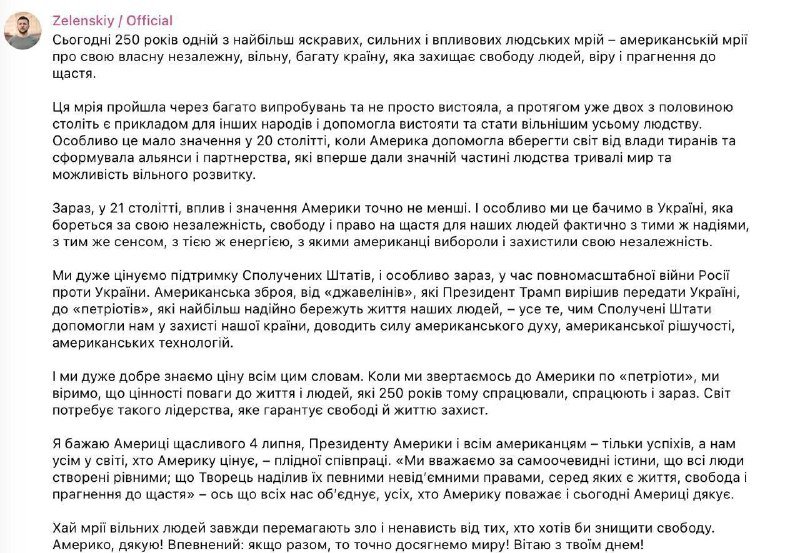
On 4 July 2026, two things happened in Ukraine that, on the surface, have nothing to do with each other. In the south, President Volodymyr Zelensky travelled to the Odesa region and sat down with the country's Navy command to discuss air defence, protection against drone and missile attacks, and the development of naval missile capabilities. On camera, the same president used language that no Western wire would put in a clean quote: the world, he said, is waiting for Ukraine to defeat Russia's "bastards," and "every pure heart in the world" expects Ukraine to win. Both moments are real. Both are from the same day. Read together, they tell you something about how Kyiv is now running the war, and about what it is asking of its allies.
The point of this publication's argument is straightforward: the operational story and the rhetorical story are no longer separable. Odessa is a port city under continuous pressure from Russian drone and missile salvos, and the Navy briefing is a real meeting with real agenda items. The bellicose phrasing is a real public posture aimed at a real audience. A reader who sees only the first will miss what the war has become; a reader who sees only the second will mistake discipline for bluster.
What happened in Odessa
The Odesa meeting, reported on 4 July 2026 at 13:30 UTC, is the kind of working visit Kyiv's presidential office runs on a near-weekly rhythm: the president on the ground, the relevant service command in the room, a tightly scoped agenda. Three items dominated — strengthening air defence, hardening the region against drone and missile attacks, and developing naval missile capabilities. The order matters. Air defence is the precondition for everything else; without it, neither port operations nor naval sorties survive their first hour. Drone and missile defence is the daily tax that the Odesa region now pays. Naval missile capability is the longer arc — the question of whether Ukraine can credibly contest the western Black Sea without a surface fleet to speak of.
The geography explains the politics. Odesa oblast is the corridor through which Ukrainian grain, metals, and container traffic still leave the country. Any sustained degradation of the port complex is a degradation of state revenue and of the wartime social contract. A Navy briefing in the south is, in that sense, a fiscal briefing as well as a military one.
The rhetoric, and what it is doing
Within two hours of the Odessa readout, Zelensky's own words were circulating on Telegram channels including Noel Reports (15:30 UTC) and Clash Report (15:03 UTC) in language that Western press pools tend to soften in translation. The English renderings vary — "Russian bastards," "Russian scum" — but the underlying message does not: Ukraine's victory is presented as a moral expectation that the world is failing to meet fast enough. The framing is explicitly civilian-moral rather than strategic. "Every pure heart," Zelensky said, "expects only one thing from Ukraine: that we defeat this Russian scum. And we certainly will. We will defend our state."
This is not the language of a leader managing expectations downward. It is the language of a leader who needs his audience — domestic, allied, and the broader attentive public — to stay locked in. The subtext is that the war is winnable, that delay is the only enemy, and that anything less than victory is a failure of will rather than of force.
The counter-read
The plausible alternative interpretation is also visible in the same record. A more sceptical reading treats the Odessa meeting as a fairly routine command-and-control moment and the rhetoric as a stress signal. Under that reading, the bellicose phrasing is what an embattled leadership reaches for when the air-defence question is unresolved, when allied deliveries of interceptors and surface-to-air systems are not arriving at the cadence Kyiv's planners would like, and when the home front is being asked to absorb another summer of attacks. The "scum" register is, in this telling, a way of converting a matériel shortfall into a morale asset.
Neither reading cancels the other. Zelensky can simultaneously be running a real Navy agenda and using sharper language to compensate for a political environment in which the operative constraint — allied air-defence throughput — has not loosened. The two stories are layered, not contradictory.
What is actually at stake
Strip away the phrasing, and the stakes are concrete. If air defence in the Odesa region holds, the port complex keeps functioning, export revenue continues, and the Ukrainian state retains the fiscal base to keep fighting. If it thins, the country faces a slow-burn degradation of the one lever — economic throughput — that has held its war effort together since 2022. The naval-missile item on the agenda is the longer bet: a Black Sea denial posture that does not depend on a fleet. The rhetoric is the shortest-term variable of the three, and the one that travels furthest per syllable.
The bigger structural point, stated plainly: wars of this duration run on a combination of three things — firepower, money, and consent. The Odessa meeting addresses firepower and, indirectly, money. The rhetoric is the consent line. When a wartime president uses the words he used on 4 July 2026, he is telling his audience that consent is non-negotiable and that he expects them to match it. Whether that is reassurance or pressure depends on which side of the microphone the listener is standing on.
What remains uncertain
The public record, as captured by the Telegram channels that carried the readout, does not specify which air-defence systems were discussed, whether new deliveries were confirmed, or what specific naval-missile programmes the command is prioritising. It also does not record the questions journalists put to the presidential office after the briefing. The bellicose phrasing is well documented in two independent Telegram reports within a thirty-minute window, which gives it reasonable provenance, but the substantive content of the meeting — what was actually decided — is not in the open source material this publication has seen. Readers should hold the operational picture more loosely than the rhetorical one.
Desk note: Monexus ran the Odessa and rhetoric stories together because they were published within two hours of each other and are clearly parts of the same day's communication strategy. The Telegram-channel sourcing is appropriate for a fast-moving presidential-visit readout; claims about what was decided in the room, rather than what was said on camera, would require a wire or official confirmation we have not seen in this thread.
Wire provenance
This editorial synthesis draws on the following public wire/social posts:
- https://t.me/noel_reports
- https://t.me/noel_reports
- https://t.me/ClashReport