Independence Day, the Mall, and the Question America Asked of Itself
On the National Mall, the President invoked empires, Cold War victory, and the flag as America marked 250 years. The spectacle said less about the past than about the present.
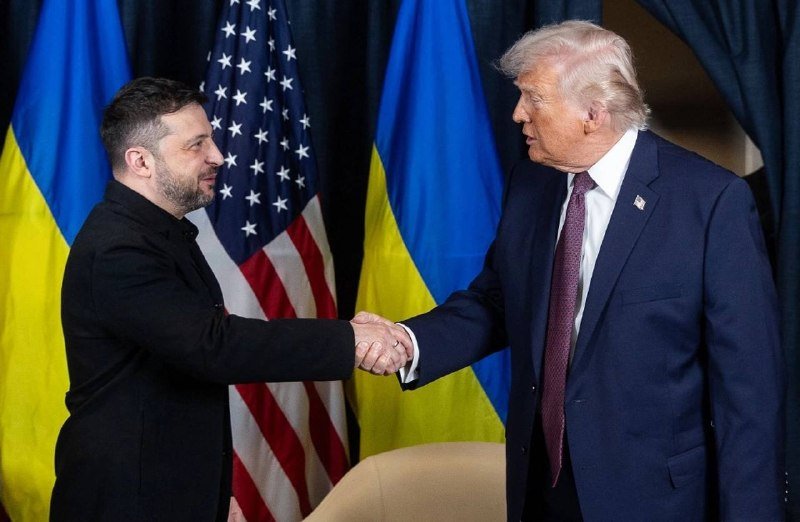
At one minute past midnight local time on 5 July 2026, the President of the United States walked off a stage on the National Mall to a soundtrack of fireworks. The crowd in front of him numbered, by his own telling, in the tens of thousands. The occasion was not the ordinary Fourth of July. It was the 250th anniversary of the Declaration of Independence, and the speech he had just delivered was less an annual address than a self-conscious inventory of what the country claims to be. The Stars and Stripes, he said, had "cast the hammer and sickle into oblivion." Empires, kingdoms and "terrible tyrants" had come and gone. America, in the telling, remained.
What is worth parsing is not whether the claim is true — it is mostly true, and the Cold War line about the Soviet flag is historically defensible — but what kind of speech the occasion demanded, and what the President chose to deliver instead. A 250th anniversary is a rare civic object. It permits a leader to address the country not as a partisan but as a temporary custodian of a longer story. Mr Trump used the slot the other way: as a victory lap, a brand extension, and a soft pitch for an aging national mythology that the surrounding world is no longer inclined to underwrite on autopilot.
The speech the Mall was given
The set pieces are by now familiar to anyone who has watched a Trump rally on cable. "Salute to America" is an established format, run annually in various forms since 2019. What was different on the night of 4 July 2026 was the staging and the guest list. The President welcomed the Artemis II astronauts to the platform, recognised the Apollo generation in the same breath, and used the line "everybody was watching… they became very famous" to fuse the two programmes into a single American narrative of exploration as spectacle.
Then came the historical sweep. "The world has seen the great empires, vast kingdoms, mighty nations, and terrible tyrants — they came and they" went, the President told the crowd on the Mall, the sentence left deliberately unfinished, the cadence borrowed from the pulpit rather than the podium. It is a line designed for a rally. It is also the line a writer's room would cut from a presidential address if the goal were to reassure allies that the United States sees itself as one power among others rather than the last one standing.
The Cold War line is the sharper example. "The Stars and Stripes cast the hammer and sickle into oblivion," the President said. That is closer to consensus history than to rhetoric: the Soviet flag was lowered over the Kremlin on 25 December 1991, and American pressure, alliance management, and an arms build-up that exhausted the Soviet economy were among the structural causes. But invoking that victory on a domestic stage in 2026 carries a freight it would not have carried in 1996. It tells a domestic audience that the country's central foreign-policy achievement is one of conquest rather than construction — that the measure of American power is the absence of rivals, not the architecture of the order it built in their place.
What the cameras did not pan to
The Mall is a stage that flatters its occupant. The fireworks, the orchestra, the astronauts, the President saluting the anthem at one minute past midnight — every shot was framed to make the moment feel like the centre of the world. Two things were conspicuously absent from the frame.
First, an honest accounting of the country being celebrated. A 250th anniversary is an ordinary occasion to acknowledge that the United States is a 250-year-old constitutional republic built, in part, on the displacement and enslavement of the peoples who were here first and the people who were brought here in chains. That is not a partisan claim; it is the position of the country's own museums, its own historians, and the National Archives' own public programming. The Mall has hosted that acknowledgement before. It did not on this night.
Second, the absence of the leaders who are meant to be the country's peers. A 250th anniversary is also a diplomatic occasion by convention. The guest list at the Lincoln Memorial on the night of 4 July 2026 would, in earlier decades, have included the heads of state or government of the principal allies. The sources available to this publication do not confirm which foreign leaders attended. The visual record from the Mall, as circulated through the channels this desk monitors, is one of an American audience watching an American President.
The structural read
There is a temptation, on nights like this one, to read the speech as the message. It is more honest to read it as one input among several. A 250th anniversary arrives at a moment when the dollar's reserve status, the country's industrial base, and the architecture of its alliances are all being re-priced at once. The order the President invoked — the Cold War settlement, the unipolar moment, the "end of history" framing — is the order that underwrote American predominance for the period the anniversary is being asked to commemorate.
A speech that frames the American project as a perpetual victory lap is therefore not just a piece of rhetoric. It is a posture. It tells the audience that the country's standing does not need to be re-earned, only re-asserted. That posture has costs. It reads, from outside the Mall, as either reassurance to a domestic base or as an unfriendly signal to allies who are themselves weighing how much of their own security to underwrite. It is harder to read it as both at once.
The counterpoint is fair. There is a case that what the country needed, on the night of its 250th birthday, was exactly the kind of unapologetic patriotism the President delivered — that the elite consensus of the last decade had become allergic to the country's founding claims, and that a corrective note was overdue. That case is real. It is also incomplete. Patriotism that names only the victories and not the costs tends, over a 250-year horizon, to lose the argument to the patriotism that names both.
What the next twelve months will tell
The useful question is not whether the speech was well delivered. By the standards of the format, it was. The useful question is what kind of country the speech assumes. The speech assumes an America that is still the indispensable power, whose flag is the only flag that needs to fly from every terminal, whose astronauts are the only ones the crowd has heard of, and whose triumph in the last great ideological contest is the only one worth invoking.
That is one possible America. It is also an America that is harder to share, and therefore harder to lead. The 250th anniversary will be remembered, if it is remembered for anything beyond the fireworks, for the gap between the country that was being celebrated and the country that exists on the morning of 5 July 2026. The sources available to this publication do not yet permit a confident read on which version wins. What the Mall saw, on the night, was a President who had already made his bet.
The Monexus desk framed this against the wire's parade-of-anchors coverage; the analytical move was to read the speech as a posture toward the country's own self-image, not as a daily news event.
Wire provenance
This editorial synthesis draws on the following public wire/social posts:
- https://t.me/BellumActaNews
- https://t.me/BellumActaNews
- https://t.me/BellumActaNews
- https://t.me/BellumActaNews
- https://t.me/WarMonitors