Ashura in Tehran: How a Sacred Calendar Doubles as a Political Stage
Farewell ceremonies in Tehran for figures branded 'martyr of Iran' show how the Islamic Republic fuses Shia ritual with state legitimacy — and why Western readers underestimate both at their peril.
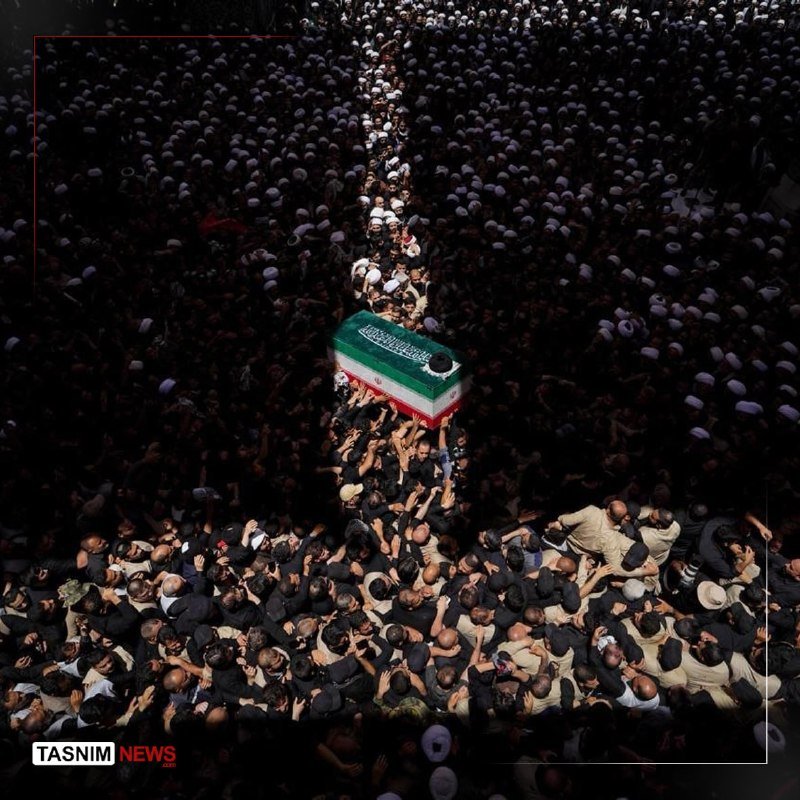
The procession began at the Mosque of Imam Khomeini in central Tehran before sunrise on 5 July 2026, with Seyyed Mahdi Hosseini — billed by Iranian state media as a reciter 'of Karbala' — leading the lamentations at a farewell ceremony for a figure Tasnim English branded the 'Martyr of Iran.' Hours earlier, in a different Tehran mosque, a second recitation by a reciter of the same patronymic had already been broadcast by Fars News, the outlet aligned with the Islamic Revolutionary Guard Corps. The two events, separated by minutes in real time and by nothing at all in symbolic register, illustrate the choreographic precision with which the Islamic Republic converts the Shia mourning calendar into a working instrument of state.
The point is not that Iranians grieve insincerely. The point is that the grief is being deliberately staged inside a ritual architecture that the regime has spent four decades perfecting, and that Western coverage — when it notices Ashura at all — tends to read the pageantry as exotic backdrop rather than as policy. This publication reads it as policy.
The grammar of a state funeral dressed as a religious one
Tasnim's framing is unambiguous. The hashtag accompanying its coverage — #Badarqa_Aghai_Shahid_Iran — elevates the deceased from mourner to national-martyr template, a vocabulary that fuses the Karbala paradigm (the third-century killing of Husayn ibn Ali at the hands of a tyrannical caliph) with the Republic's own martyrology of soldiers, nuclear scientists, and commanders killed in the long twilight war with Israel and the United States. Hosseini's recitation is therefore not entertainment but consecration: his voice performs the ritual act that, in the Republic's political theology, transfers the deceased into the sacred register.
The earlier Fars dispatch, broadcast from a mosque in Tehran roughly five hours earlier, performs the same function for a different audience — one closer to the IRGC's institutional base and one less interested in the cosmopolitan diplomatic register Tasnim sometimes adopts for foreign-language consumption. The dual platforming is itself the message: the ritual is not a Tehran monopoly but a national production with regional distribution.
The non-religious reader's blind spot
Western wire services rarely dispatch reporters to Ashura commemorations in Iran unless something visibly violent breaks out. The coverage that does exist leans on a small set of tropes: black-clad crowds, chest-beating, the occasional self-flagellation, all rendered as cultural colour rather than as a civic-military rehearsal. That framing is convenient and wrong. A ceremony that draws senior state figures, military-aligned media outlets, and reciters with explicit Karbala credentials is not a parish fête. It is one of the few remaining venues at which the Republic can display internal cohesion under sanctions and after the battering of last summer's twelve-day war.
The structural pattern is familiar: when conventional political theatre loses legitimacy, ritual fills the vacuum. The Soviet Union leaned on Victory Day once the ideological register frayed; Iran leans on Karbala because it remains the one register the regime cannot afford to lose control of.
The counter-read — and why it does not survive contact with the evidence
The charitable Western reading is that these ceremonies are genuine devotional expression organised by communities of believers, and that the state simply provides security and platform. There is real devotion in the room. But the framing fails on the specifics: Tasnim does not broadcast random parish commemorations in three languages; Fars does not dispatch crews to recitations by 'Hosseini of Karbala' unless the audience has been curated. The selection of reciters, the editing of the broadcast, and the labelling of the deceased as a national martyr are editorial decisions. They are policy by another name.
A second counter — that this is simply Iran's version of a state funeral, no more sinister than Washington's lying-in-honor at the Capitol — is closer to the truth but still understates the case. American state funerals are bounded by separation of church and state in a way the Iranian ceremony is constitutionally designed to refuse. The whole architecture of the Islamic Republic rests on the rejection of that separation.
What it costs to ignore the calendar
For European and American policymakers who treat Iran as a problem set to be managed through sanctions and intermittent negotiation, Ashura is invisible infrastructure. It is the medium through which the regime reproduces legitimacy at home, signals resolve abroad, and binds its security services to a martyrology that treats negotiators and warriors as members of the same caravan. Treaties signed in Geneva between Ashura cycles have a way of being tested against Karbala frames inside Iranian ministries. Investors pricing Iranian oil risk-premia into 2027 would do well to factor in the rhythm of the calendar they are not tracking.
The honest admission: the source material here is Iranian state-aligned outlets reporting on their own ceremonies, and a sceptic is entitled to ask how much of the framing is performance for Telegram's foreign-language feeds. The answer is: a great deal, and that is precisely the point. Performance aimed at an external audience is still a policy instrument. What the evidence does not yet resolve is whether the underlying political theology is deepening under sanctions or merely being broadcast more loudly. The difference matters for anyone pricing the next round.
Wire provenance
This editorial synthesis draws on the following public wire/social posts:
- https://t.me/farsna
- https://t.me/tasnimnews_en
- https://t.me/tasnimnews_en