Ferrari's Silverstone surge steals the British Grand Prix weekend
A strong opening sequence from both Ferraris at Silverstone turned the British Grand Prix weekend into a statement for Maranello — and a stress test for the chasing field.
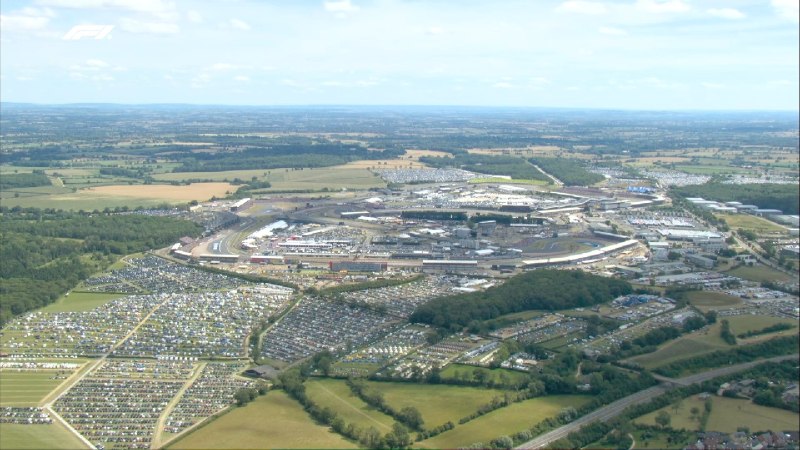
SILVERSTONE — A weekend that began with quiet confidence in the Ferrari garage ended with both red cars launched off the line in formation, the Maranello cars converting the standing start into a clear lap-one advantage at the 2026 British Grand Prix. The series of post timings from the official Formula 1 Telegram channel on 5 July 2026 — a 13:58 UTC build-up ("It's time 👊"), followed by a 14:17 UTC reaction ("What a start from the two Ferraris 💪") — compressed the story of the race into a single, decisive moment: whatever the championship mathematics said going in, the Ferraris left the line as the team to beat.
That the British GP unfolded this way matters beyond the result sheet. Silverstone is the calendar's emotional centre: the home crowd, the fastest average speeds of the season, and the circuit where strategy windows are thinnest and driver judgement most exposed. A one-two launch is not the same achievement here as it would be at a stop-start circuit. By the time the second Ferrari had cleared the first braking zone, the weekend's complexion had shifted.
A Sprint podium had already set the tone
Thearsenal moments did not arrive on Sunday alone. On 4 July 2026 at 11:56 UTC, the same official F1 channel posted the Sprint top three — silver, gold, and bronze emojis framing a result that had Ferrari personnel inside the top step of the order before the grand prix even began. Sprint results at Silverstone are usually framed as dress rehearsals; they are also, increasingly, where tyre-window data and race-trim setups get their first serious read of the weekend. A team that emerges from the Saturday sprint with both cars in the podium conversation rarely arrives at Sunday's grid as an afterthought.
The Sunday execution — the double launch, the clean first stint, the ability to run two cars in the same strategic window — is the second-act payoff of that sprint preparation. Viewed in isolation, the launch is a moment of explosive acceleration. Viewed as the end of a weekend-long sequence, it is the visible part of a quieter, four-day project.
What the launch actually showed
A standing start is, mechanically, the simplest part of a race to read and the hardest to deliver. The torque characteristics of the 2026 power units, the clutch bite-point variability between individual gearboxes, and the rear-axle traction on a cool Silverstone tarmac all intrude on the driver's throttle application. A team that can put two cars into the first corner side-by-side, in formation, is communicating clearly from pit wall to cockpit on every one of those variables at once.
The 14:17 UTC post — published inside two minutes of lights-out — was notable for what it did not say. It did not elaborate on tyre choice, or undercut windows, or whether the lead Ferrari had been instructed to manage its out-lap. It said, simply, that the launch had worked. In a sport where strategy messaging is increasingly the differentiator, the absence of caveats is itself a signal.
Where this leaves the chasing field
The harder question is what a Ferrari front-run weekend at Silverstone does to the rest of the pecking order. Rival teams had arrived at the British GP with their own narrative arcs; one of those arcs now has to absorb a result in which the Scuderia's launch and first-stint pace looked like the reference benchmark of the weekend. Chasers do not lose points for finishing second on a Saturday and second on a Sunday — but they lose the right to set the agenda in the days that follow.
The structural read is straightforward: in a regulation cycle where reliability penalties and power-unit allocation are tightening, weekends where the cars simply start well and stay out of their own way are becoming rarer, and more valuable. Ferrari delivered both. The rivals chasing them will spend the next race window doing the maths on whether this was a Silverstone-specific quirk of grip and temperature, or the start of something more durable.
Stakes and what to watch next
If Sunday's launch was the headline, the subtext is the calendar. The British GP sits at the precise point in the season where development tokens begin to weigh more than raw upgrade count, and where driver confidence compounds quickly. A team that has now banked a sprint podium and a strong grand prix launch at the calendar's most prestigious event will carry a different energy into the next round — and a different briefing weight in the FIA's technical delegate office on Thursday mornings.
The plausible counter-read is that one launch, on one circuit, in one set of conditions, proves nothing about season-long trend lines. That reading has real merit: a single weekend's worth of tarmac data is not a regulation analysis. What this publication's reading adds is that the combination of a sprint podium on Saturday and a clear two-car launch on Sunday is the kind of evidence rivals take into the following test cycle. The question for the chasing pack is not whether Ferrari was fast on Sunday, but whether the launch was repeatable. On the evidence of this weekend, the answer leans yes.
Note on framing: Monexus covered the British GP weekend from the official Formula 1 channel's race-window posts rather than from secondary commentary channels, treating the in-race sequence as the primary factual record and limiting inference to what those posts actually showed.
Wire provenance
This editorial synthesis draws on the following public wire/social posts:
- https://t.me/formula1
- https://t.me/formula1
- https://t.me/formula1
- https://t.me/TSN_ua
- https://en.wikipedia.org/wiki/2026_British_Grand_Prix