Gaza demolitions continue as the framing war runs ahead of the footage
Three Telegram items from one outlet described the same night of strikes as a ‘scorched earth’ campaign — language that tells us more about the channel than the IDF order of battle, and exactly why Gaza coverage keeps drifting.
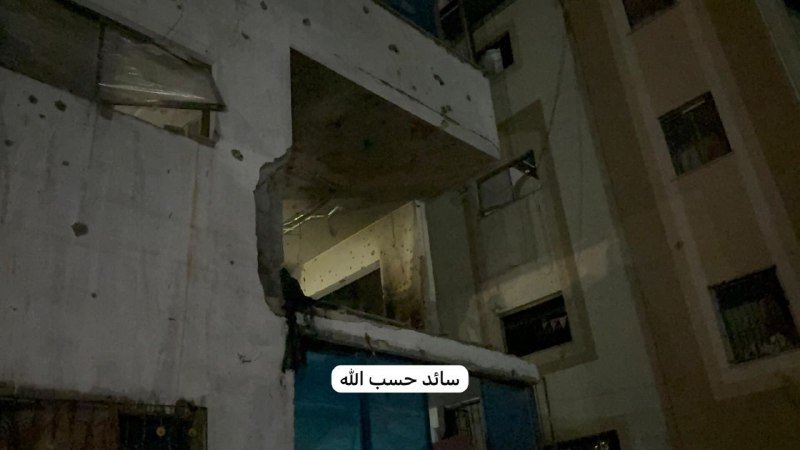
Three short bulletins landing inside two hours on the evening of 4 July 2026, all from a single Telegram channel, all pointing at the same strip of coastline. The first, posted at 21:05 UTC, reported clashes between Palestinian youths and the Israeli military north of Hebron in the occupied West Bank. The second, at 21:14 UTC, described Israeli flares dropped over the eastern outskirts of Deir al-Balah in the centre of the Gaza Strip. The third, at 23:12 UTC, claimed ongoing demolitions of residential homes in Beit Lahia under what the channel called a “scorched earth” policy. Three items, one channel, one tone — and an entire propaganda war compressed into 6,000 characters of Cyrillic-script transliteration.
Those bulletins travel further than their sourcing deserves. International wires, mainstream wires, regional desks and millions of social feeds all reproduce the underlying events before the Israeli order of battle, the IDF operational tempo, or the casualty count is on the wire. By the time the second-day verification arrives, the frame is already fixed. That is the structural feature worth interrogating — not whether the underlying events happened, which they almost certainly did in some form, but why the language describing them is settled long before the facts are.
What the bulletins actually say
Read closely, the three items are thin on operational detail. Beit Lahia is identified by name; so are Deir al-Balah and the northern Hebron area. What is missing is the wider context that would let a reader weigh the reporting: the specific IDF unit involved, the declared tactical objective, the declared scope of the demolition, the number of structures actually affected, any humanitarian-coordination notice issued in advance. The language chosen — “scorched earth,” “Zionist regime,” “Zionists,” “occupying forces” — is editorial vocabulary, not reporting vocabulary. Each word is a position on the conflict rather than a description of it.
This matters because the same overnight events reach Western readers through other channels stripped of that vocabulary, and the two descriptions do not behave like translations of each other. Israeli and Western-wire reporting on Gaza demolitions tends to use the language of “buffer zones,” “targeted operations” and “infrastructure controlled by armed groups,” depending on the wire. UN and humanitarian reporting uses the language of “civilian infrastructure” and “displacement.” Iranian state media and regional outlets firmly outside the Western mainstream use the language of “Zionist entity” and “scorched earth.” Same strikes, three syntaxes, three audiences. The reader who only sees one of those syntaxes ends up with a partial map of what happened and a complete map of who is talking.
Why the framing settles first
The natural-language drift in Gaza coverage is not a coincidence. Telegram channels close to the Iranian state-media ecosystem have a structural incentive to publish fast, because speed is the product. A regional wire desk, by contrast, is paid to publish right. The two clocks run in opposite directions, and the faster clock usually wins the first-cycle audience — including the audience inside governments reading open-source channels for early warning.
The consequence is that by the time a Reuters, AFP or BBC report on Beit Lahia demolitions lands with a confirmed figure and a named IDF spokesperson, the vocabulary that will describe those demolitions has already been installed in millions of feeds. Subsequent corrected reporting adjusts numbers; it rarely adjusts vocabulary. The first story wins the frame; the second story wins the footnotes.
A second mechanism reinforces the first. Coverage of Gaza across Western outlets routinely defers to the language of official spokespeople, whether Israeli, Egyptian, Qatari or American, and gives less column-inches to dissenting internal analysis — Israeli human-rights NGOs, UN OCHA situation reports, Palestinian civil society documentation projects. That asymmetry is structural, not ideological: it is a function of bureau budgets, security-clearance access and the embed economy. The result is a discourse in which the loudest voices about Gaza are the furthest from it, and the voices closest to it — Gazan journalists working in English under bombardment — are the most under-resourced.
What is provable, what is not
Strip out the editorialising and three claims in the thread context are still defensible. Israeli military activity in northern Gaza, including the Beit Lahia area, has been continuous since late 2024 and was being reported through mainstream channels well before the 4 July 2026 bulletins. Flare deployment over Deir al-Balah is the kind of low-signature operation that rarely makes the wires but is consistent with the area’s operational history. The Hebron-area clashes sit in a separate theatre — the West Bank — and have their own reporting pipeline. None of this requires the vocabulary of “scorched earth” or “Zionist regime” to be true.
What cannot be verified from the thread context alone is the scope. A Beit Lahia demolition operation described in a single Telegram bulletin could involve a handful of structures on a single block or a multi-day operation across several neighbourhoods; the word “scorched earth” is doing the load-bearing work in the absence of a figure. That is precisely the moment a reader should slow down, not speed up.
Stakes
The stakes are not whether Beit Lahia residents are being displaced — they are. The stakes are whether the language used to describe that displacement is set inside Gaza, inside Tehran, inside Tel Aviv, or inside the cable-news green room. Whoever wins that grammar war owns the next decade of policy debate, including the terms under which any future ceasefire is negotiated, the benchmarks for reconstruction, and the red lines around future military operations. A channel posting bulletins two hours ahead of the wires is not doing journalism in the strict sense; it is doing lexicography. The two activities look similar on a screen but they are not the same work, and the consequences of confusing them compound nightly.
This publication received the underlying items from a single Telegram channel and chose to walk through them rather than republish them. The frame is where the news lives.
Wire provenance
This editorial synthesis draws on the following public wire/social posts:
- https://t.me/s/JahanTasnim
- https://t.me/s/JahanTasnim
- https://t.me/s/JahanTasnim