Berlin says Ukraine no longer needs Taurus — Kyiv's long-range drones are already doing the job
Boris Pistorius argues Kyiv's indigenous strike drones have made a contested German cruise-missile transfer moot — a shift that speaks to where Europe's land war is actually being won.
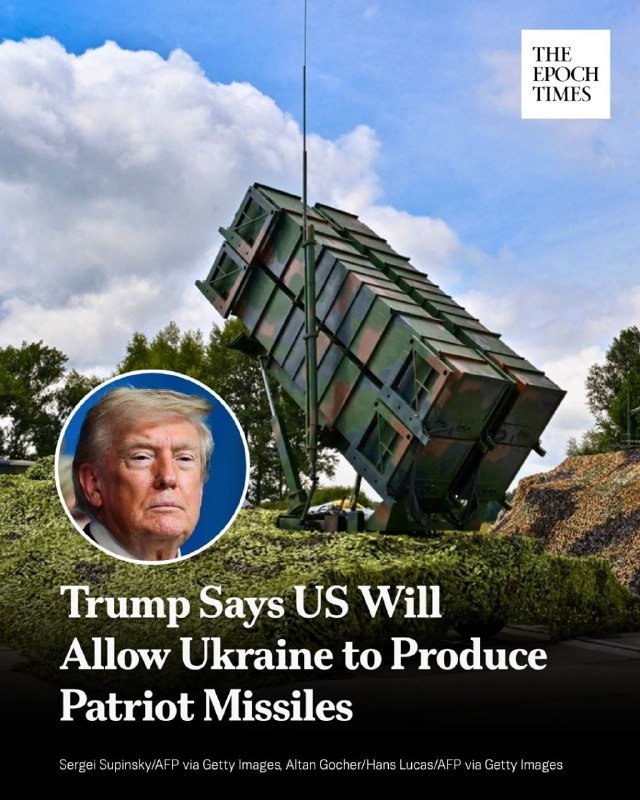
Germany's Defence Minister Boris Pistorius said on 5 July 2026 that he no longer believes Ukraine needs Taurus cruise missiles, because Kyiv's own long-range strike drones are already hitting Russian oil refineries and military logistics deep inside Russia. The remarks, reported across Telegram channels quoting the minister's 5 July appearance, mark the clearest statement yet from Berlin that a contested weapons transfer is being overtaken by an indigenous capability that did not exist at scale when Taurus was first debated.
The political headline is that a German defence minister has, in effect, declared a €-hundreds-of-millions weapons debate moot. The strategic story underneath is more uncomfortable: the weapon Ukraine was supposed to get is being outclassed, in some missions, by hardware Ukraine builds itself. That is a verdict on European industrial policy as much as on the battlefield.
What Pistorius actually said
According to the Kyiv Post channel and reporting circulated by Telegram outlet Clash Report on 5 July 2026, Pistorius argued that Ukraine's own loitering munitions and long-range one-way drones are already reaching targets such as Russian oil refineries and rear military logistics — the precise categories of target Taurus was meant to threaten. Kyiv Post's dispatch, timestamped 14:00 UTC, framed the minister's comments as a de facto downgrade of the Taurus case. Noel Reports, an independent journalist's channel that frequently covers European defence politics, summarised the same comments at 13:26 UTC the same day, with identical substance.
The framing matters. Pistorius did not say the Taurus transfer was undesirable on political grounds — the line Olaf Scholz's government had run through most of 2024 and into 2025, when the chancellor blocked the missile on escalation fears. The new line is operational: the capability gap Taurus was meant to close has narrowed, on Kyiv's side, to the point of marginal utility. That is a different kind of no, and one that will land differently in Kyiv and in Moscow.
The alternative read
There is a less generous reading, and Berlin-watchers will recognise it. Germany's Taurus debate was always as much about the chancellery's risk calculus as about the missile's specifications. Stating now that Ukraine's drones suffice gives the new government — and Pistorius, who has remained in post across the transition — political cover to keep saying no while appearing forward-leaning. Under that reading, the operational claim is also true, but it is doing political work.
A third reading, more flattering to Kyiv, is that Pistorius is reflecting reality. Ukraine's drone industry — a mixture of state programmes and a dense private-sector ecosystem running on rapid iteration cycles — has produced serial strike effects against Russian refining and fuel depots that the air-launched cruise-missile option could not match on cost-per-effect. If that is correct, then the German position is less a refusal and more an honest acknowledgement that the requirement has migrated.
The available sourcing does not let this publication adjudicate between the three. Pistorius's remarks are now public; whether they reflect a change in Berlin's underlying posture, or a description of a posture already in place, is something to watch in the next round of Bundestag defence-committee briefings.
What this says about the war
Beyond the German-specific controversy, the Pistorius comments point to a structural shift in how the war is being struck deep. For most of 2023 and 2024, Western thinking about strikes into Russia defaulted to a Western-munitions model: Storm Shadow, SCALP, ATACMS, and the German Taurus as the politically hardest case. Each transfer was a discrete political event, negotiated in public.
Ukraine's drone strikes against Russian refining, fuel storage, and rail nodes have progressively inverted that pattern. The strike is now produced by a domestic supply chain rather than imported; the political flag is carried by a Ukrainian operator rather than a foreign supplier. Western capitals still choose what they hand over, but the conversation is increasingly about the enablers — air defence interceptors, electronic-warfare kit, satellite connectivity, long-range engines — rather than the strike itself.
For Moscow, the implication is less comfortable than it looks. Pressing Western capitals to deny Taurus produced one outcome; an indigenous Ukrainian drone stack that hits the same categories of target produces a different one. The latter is harder to suppress, because it is not a transfer decision.
Stakes
In the near term, Kyiv loses a piece of paper — a formal German pledge it could have used as leverage in follow-on requests — but gains something arguably more durable: a domestic strike complex that does not depend on Berlin's coalition arithmetic. In the medium term, the European industrial story is the more consequential one. If indigenous drones have closed the long-range gap that Taurus was meant to fill, the question for European defence planners is what they are now for. The answer is unlikely to be a comfortable one for legacy cruise-missile procurement timelines.
Uncertainty remains. Public sourcing on Pistorius's exact wording is sourced via Telegram relays of his 5 July appearance; the full transcript is not in this publication's hands, and characterisation of his remarks as a flat dismissal of Taurus rests on those relay summaries rather than the primary record. Kyiv's effectiveness with long-range drones is established; the precise comparison to what Taurus would have added is not.
Desk note: this article draws on Telegram relay coverage of Pistorius's 5 July 2026 remarks from Kyiv Post, Clash Report, and Noel Reports. Where Berlin's full statement transcript is required for a deeper read, the wire record from Reuters or dpa will tighten the picture.
Wire provenance
This editorial synthesis draws on the following public wire/social posts:
- https://t.me/Kyivpost_official
- https://t.me/ClashReport
- https://t.me/noel_reports