A funeral in Tehran, and a story the regime wants you to read
State outlets coordinated a single image — a 14-month-old's funeral prayer — within minutes of each other on 5 July 2026. What that coordination reveals about how Iran's information apparatus is built.
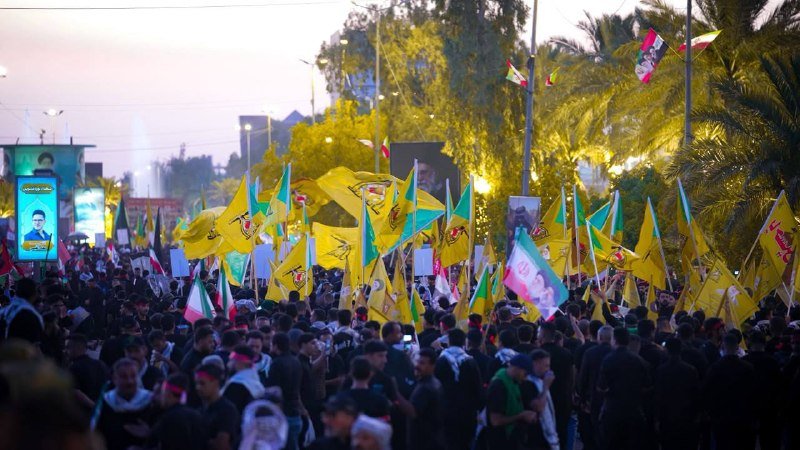
At 04:20 UTC on 5 July 2026, Tasnim News English posted footage of children arriving at a Tehran mosque for a prayer service. By 04:40 UTC, the same outlet was broadcasting the prayer itself — a rite for Zahra Mohammadi Golpayegani, identified as a fourteen-month-old granddaughter of the Islamic Republic's Supreme Leader. By 04:54 UTC, Tasnim had packaged the full recording. By 06:00 UTC, IRNA's English channel had carried its own version of the same prayer notice, using the same martyrdom vocabulary. Inside roughly two hours, a single domestic ceremony had become a synchronised, multi-outlet editorial event.
The story is not the ceremony. The story is the choreography — what it tells us about how Iran's state-aligned information system is wired, and how Western readers who never see Tasnim or IRNA in their feeds should nevertheless understand them as a single apparatus with many mouths.
Two outlets, one script
Tasnim and IRNA are formally distinct institutions. Tasnim is a quasi-official news agency closely tied to the Islamic Revolutionary Guard Corps; IRNA is the state broadcaster's wire service, sitting closer to the government's executive branch. They compete for foreign-language attention, and they occasionally publish different framings of the same event.
On 5 July they did not compete. Tasnim published the "beginning of prayer" notice at 04:40 UTC. It published the full recording at 04:54 UTC, using hashtags including #Badarqa_Aghai_Shahid_Iran — "the Lady of the Martyrs of Iran" — and the explicit prompt #must_rise, designed to be picked up across Persian-language networks. Less than ninety minutes later, IRNA's English channel ran its own notice, using the martyrdom vocabulary almost verbatim: "A funeral prayer was conducted for martyr Zahra Mohammadi Golpayegani, the granddaughter of Iran's martyred Leader."
The cadence, the wording and the hashtags are not coincidental. They are how a coordinated message is built for two different audiences: domestic Persian speakers, who receive the martyrdom framing inside the country; and foreign-language readers, who receive the same frame in translation. Each outlet reinforces the other. Neither can be dismissed as a single rogue voice; neither can be treated as the whole.
What the framing is doing
The language matters. "Martyr" in this context is not a religious courtesy. In Iranian state usage it is a category with legal, financial and ceremonial consequences — the families of those designated martyrs receive pensions, priority access to services and, crucially, their deaths are entered into the official national narrative as sacrifices for the system. Calling a fourteen-month-old a martyr before the prayer service has even finished is not an observation; it is an act of state. It closes the interpretive space in advance.
The decision to push the footage to English-language channels on a coordinated schedule suggests the audience is not only domestic. Western embassies, diaspora outlets, opposition monitors and journalists all watch Tasnim and IRNA's English feeds precisely because the regime uses them to seed its preferred frame before critics can construct an alternative. By the time an opposition account on X or a diaspora outlet has translated a different version of the event, the martyrdom framing is already several hours old and circulating in press clips abroad.
There is also a media-economy point that the Western wire services tend to under-cover. Tasnim and IRNA's English channels exist in part because the regime has learned that domestic censorship does not travel; foreign-language audiences need their own dedicated channels if the frame is to survive the round trip. The two outlets are the public face of a much larger domestic system that includes state television, Friday sermon guidance, seminary networks and the messaging of the Supreme Leader's office itself.
What the Western reader sees, and does not
The corollary is uncomfortable for readers who get their Iran coverage from Western wires. A Reuters or AFP brief about "an event in Tehran" may rely, often without naming it, on the same Tasnim and IRNA framing — because those are the only cameras at the mosque, because the family is not giving interviews to foreign press, and because Western wire stringers in Tehran operate under accreditation rules that make confrontation with state outlets costly. The result is a coverage ecosystem in which the regime's preferred language travels far further than the alternative readings that exist in Persian-language diaspora and opposition media.
This is not a conspiracy. It is the ordinary operation of an information environment in which one side controls the cameras and the other side controls the commentary. The asymmetry is structural, and it survives every change of government in Washington or Brussels.
The stakes
The pattern matters for any future episode in which Iran wants the outside world to read a domestic event in a particular way — from leadership succession questions, to the framing of casualties in any external conflict, to the management of protest cycles. Each of those episodes will arrive pre-narrated. Western readers who treat Tasnim and IRNA as exotic curiosities rather than as a coordinated information system will keep absorbing the regime's framing by default, even when they think they are being sceptical.
What remains uncertain is how durable the system is. Domestic Iranian audiences, especially younger ones, increasingly receive their information through circumvention tools, diaspora networks and peer-to-peer channels that bypass state outlets entirely. The English-language choreography still works on foreign readers; whether it still works on Iranians themselves is a question the regime's own pollsters are watching more closely than any outside analyst.
This publication treats coordinated state-media outputs as a single editorial event rather than as competing reports. The wire-provance record below names the two outlets and the timestamps we read.
Wire provenance
This editorial synthesis draws on the following public wire/social posts:
- https://t.me/Irna_en
- https://t.me/tasnimnews_en
- https://t.me/tasnimnews_en
- https://t.me/tasnimnews_en