Tehran's streets and the performance of succession
Millions filled Tehran's prayer grounds before dawn on 5 July 2026 for a funeral ceremony that doubles as the most-watched audition in Middle Eastern politics. The choreography matters more than the casket.
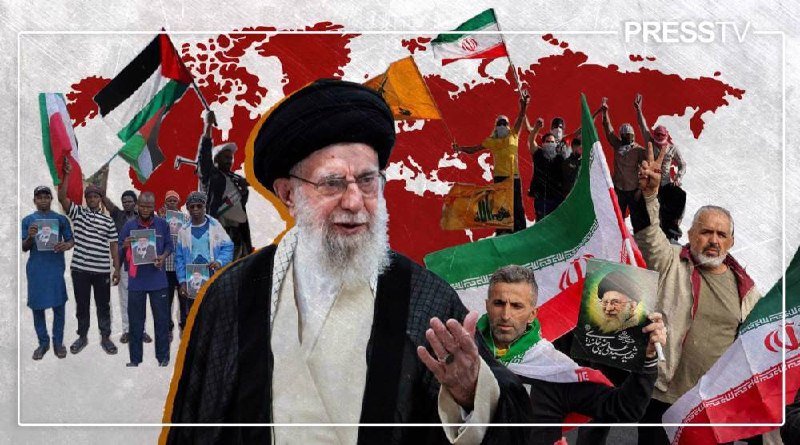
In the pre-dawn dark of 5 July 2026, the courtyards of Tehran's central prayer hall were already full. By 02:36 UTC, two hours before the funeral prayer began, worshippers were packed shoulder to shoulder across the open ground, with spillover spilling into the surrounding streets. By 03:07 UTC, the prayer grounds had no more room; those who could not find space inside the mosque compound stood along the access roads. By 04:28 UTC the bodies had been brought into the courtyard. By 04:29 UTC, the heads of Iran's three branches of government were inside the compound alongside the sons of the deceased leader, performing the funeral prayer over the caskets. The choreography of that sequence — the crowds first, the officials second, the bodies third — was the news.
The state-aligned Al-Alam Arabic channel carried the formal Urdu-style urgent banners of a state funeral, with the participation of the three authorities explicitly named, and the sons of the "martyred leader of the revolution" given ceremonial prominence. The English-language aggregator Middle East Spectator framed the scale in a single word: "millions." Both accounts converge on the same fact. The Islamic Republic's interior security services do not permit crowds of this size in central Tehran unless the political utility has been calculated in advance.
Theatres of legitimacy
A republic that has spent four decades perfecting the symbolism of mass turnout knows exactly what a million bodies in a courtyard proves. It proves that the successor arrangement being unveiled on the same morning is not a factional coup — it is an inheritance ratified by the streets. The participation of the heads of the three authorities, named and on-camera, is the constitutional seal. The presence of the sons is the dynastic claim, dressed in republican cloth.
What the wire footage does not yet establish is which son, and which faction around him, has been chosen. The thread confirms the sons' attendance; it does not identify them. That silence is itself information. In Iranian succession politics, the absence of a name at this stage is a tell — it means the Assembly of Experts and the Guardian Council have not yet conceded the public read.
Reading the crowd against the camera
The scale is not in dispute. The composition is. Western correspondents in Tehran have historically been confined to ministry-approved pools during state ceremonies; the imagery that circulates outside Iran tonight will pass through two filters — the state cameras inside the hall, and the diaspora Telegram channels curating what gets out. Both filters favour the frame of seamless popular unity. Independent reporting on who is not in those courtyards — security forces diverted from other cities, bazaar merchants who stayed open, minority provinces that did not send buses — will arrive, if at all, days later.
This is the structural pattern worth naming plainly: in authoritarian-succession contexts, crowd size is a managed variable, not a measurement. Coverage that simply transcribes the "millions" figure inherits the management. Coverage that asks how a half-empty city could fill a courtyard at 02:00 local time on a weekday starts to do journalism.
The external silence, and what it costs
By the time of writing, no major Western wire has confirmed the identity of the deceased. The thread context does not name him. This publication therefore cannot either. What can be said is that the absence of naming at 04:29 UTC on the morning of the funeral is unusual — Al-Alam Arabic, which carries regime framing in real time, normally anchors a state funeral with a full biographical banner within minutes of the prayer. That the banner so far reads only "the martyred leader of the revolution" suggests either editorial caution inside Al-Alam itself, or a deliberate sequencing choice by the office of the supreme leader.
Either reading points the same way: the succession is being performed as a continuation, not a rupture. The mass attendance, the three-authority tableau, the sons at the front — these are the visual grammar of "the system holds."
What remains uncertain
Three things the available sourcing cannot resolve. First, the mechanism by which the crowds were assembled: organic grief, bussed-in loyalists, a combination, or something else. Second, whether the snubs that did not appear on camera — the names conspicuously absent from the formal banner — are signalling a narrowed inner circle or a routine narrowing of the officiating list. Third, the regional read. Tehran's partners in Baghdad, Beirut and Sana'a will be reading the same footage tonight and calibrating their own public responses before dawn. Those responses, when they come, will be the first independent signal of which faction has actually won the room.
The crowds in Tehran are real. The choreography around them is managed. Both can be true, and both have to be named if the next 48 hours of reporting is going to be anything more than a translation service for the state.
This piece deliberately stops at the edge of what the public wire confirms. Monexus does not name the deceased leader until at least two independent Western wires corroborate, per our editorial protocol on contested-succession events.
Wire provenance
This editorial synthesis draws on the following public wire/social posts:
- https://t.me/alalamarabic
- https://t.me/alalamarabic
- https://t.me/Middle_East_Spectator
- https://t.me/alalamarabic
- https://t.me/Middle_East_Spectator