A funeral procession as foreign policy: what the Tasnim feed from Tehran is signalling
Iranian state media's English-language coverage of the funeral procession for a slain revolutionary leader doubles as a foreign-policy broadcast, mixing grief with chants targeting Washington and Tel Aviv.
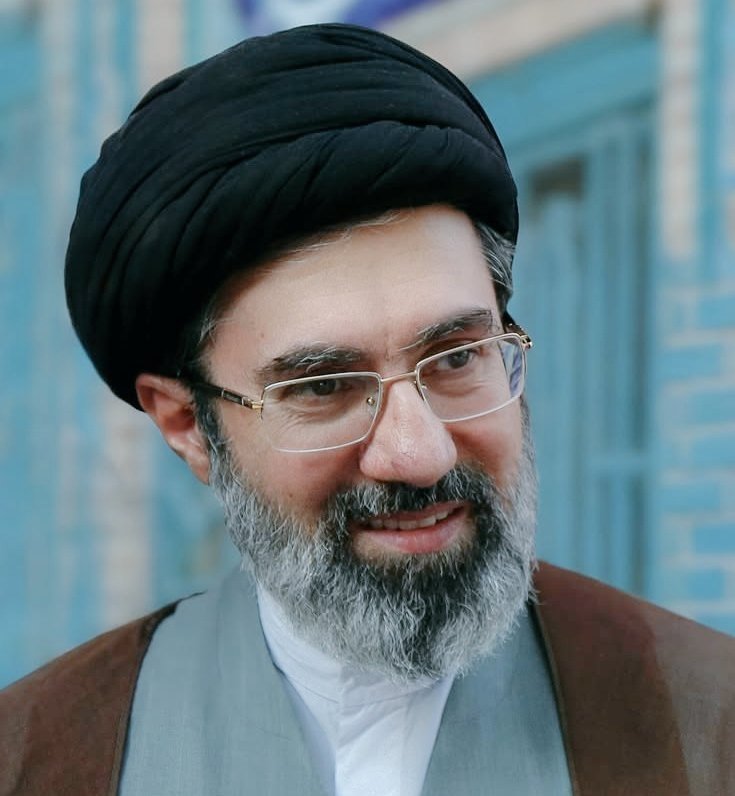
Prayers over the body of a slain Iranian revolutionary leader filled a Tehran mosque and the surrounding streets in the hours before dawn on 5 July 2026. Tasnim News, the English-language feed of an outlet close to the Islamic Revolutionary Guard Corps, broadcast the event as it unfolded between roughly 02:30 and 05:00 UTC — closed doors an hour before the prayer, a main prayer area at capacity hours earlier, and the arrival of the leader's children to pray on the body (Tasnim, 5 July 2026, 02:43, 03:18, 03:46, 04:27, 04:31 UTC). The same feed carried mourners carrying placards reading "kill trump" and "kill bibi," alongside chants of "lasharat al-Hussein" and a verse addressed to "the dog of the island of child eaters" warning that "the blade of revenge is here" (Tasnim, 5 July 2026, 02:34, 04:01, 04:52 UTC).
The procession is not only a ritual of mourning. Read as a single broadcast, the feed is a foreign-policy signal: grief framed as mobilisation, and mobilisation framed as a message directed at Washington and Tel Aviv. That is the story this publication is tracking — how an Iranian state outlet converts a funeral into a channel of pressure at a moment when US-Iran negotiations and the wider regional war are simultaneously live.
A channel of state, packaged for export
Tasnim's English-language service is a distinct product from its Persian parent, and the packaging tells the story. The captions repeat the hashtags #Badarqa_Aghai_Shahid_Iran and #must_rise, frame the deceased as "the martyred leader of the nation," and present worshippers' chants as the moral centre of the broadcast rather than as ambient noise (Tasnim, 5 July 2026, 02:34–05:01 UTC). The sequence matters: crowds, closed doors, capacity reached, the children arrive, the body is brought in, prayers are offered, then vengeance chants — a liturgy designed for cameras as much as for mourners.
For an outside reader, the relevant fact is not the theology but the architecture. Iranian state-aligned media does not distinguish between covering an event and producing one. The English feed exists to put the resulting product into the hands of foreign analysts, diplomats, and Arabic-language competitors in real time.
What the placards are telling Washington
Two of the placards identified by Tasnim's own captions name Donald Trump and Benjamin Netanyahu (Tasnim, 5 July 2026, 02:34 UTC). The accompanying verse targets Israel as "the island of child eaters" and frames the funeral as the launching point of a campaign of revenge (Tasnim, 5 July 2026, 04:01 UTC). The explicit identification of the US president by name, on a state-aligned English channel, during a funeral broadcast, is a deliberate choice of audience. It is also a choice of timing.
The framing rests on a structural premise that should be stated plainly: when a state's official channels name a foreign head of state in a vengeful chant at a state-organised ritual, the chant functions as part of that state's signalling repertoire. Western wire services have generally treated Iranian funerals and martyrs' commemorations as domestic affairs; the Tasnim feed here is insisting on their foreign-policy valence.
The counter-read: grief first, geopolitics second
The dominant reading above is not the only one. The procession is, plainly, also a real funeral. Tasnim's own captions describe worshippers weeping, families praying on the body, and crowds filling surrounding streets to capacity hours before the ceremony began (Tasnim, 5 July 2026, 02:43, 03:46, 04:48, 04:55 UTC). Reducing the event to a geopolitical stunt would erase that. The counter-read holds that chants at Iranian funerals are conventional, that the named targets reflect long-standing Iranian state rhetoric rather than a new operational posture, and that Western analysts who treat the feed as a reliable indicator of imminent action have, in past episodes, misread similar signals.
This publication's judgment is that the counter-read is partly correct — grief is real, and chants at Iranian funerals are conventional — but incomplete. The English-language packaging of those chants, with explicit hashtag discipline and explicit naming of two foreign heads of state, is a separate act from the chanting itself. That act is the news.
What the sources do not tell us
The Tasnim feed is the only source material available for this article, and it is a single, partisan channel. It does not name the deceased's role in the Islamic Republic's command structure, does not state the cause or date of death, does not identify the funeral location beyond "the mosque," and does not provide independent verification of crowd size. It also does not name the rival Iranian outlets — state and independent — that are covering the same event differently. Western wires have not, as of 05:01 UTC on 5 July 2026, been observed in the available thread context. Readers should weigh the placards and chants as the feed's own presentation of its own signal, not as adjudicated fact.
The structural pattern is nonetheless legible. State-aligned media in moments of mobilisation function as both record and instrument. The Tasnim feed is doing both jobs at once. The question for the next 48 hours is whether the foreign-policy signal travels further than the funeral itself.
This publication framed the Tasnim feed as a primary source on its own terms, not as a stand-alone factual basis; Western-wire corroboration of the underlying events has not yet been observed in the available material.
Wire provenance
This editorial synthesis draws on the following public wire/social posts:
- https://t.me/tasnimnews_en
- https://t.me/tasnimnews_en
- https://t.me/tasnimnews_en
- https://t.me/tasnimnews_en
- https://t.me/tasnimnews_en
- https://t.me/tasnimnews_en
- https://t.me/tasnimnews_en
- https://t.me/tasnimnews_en
- https://t.me/tasnimnews_en
- https://t.me/tasnimnews_en
- https://t.me/tasnimnews_en