Tehran's funeral theatre and the price of a martyr
Iranian state media has spent three days broadcasting funeral rites for a slain Pakistani cleric. The broadcast itself — not the killing — is the story.
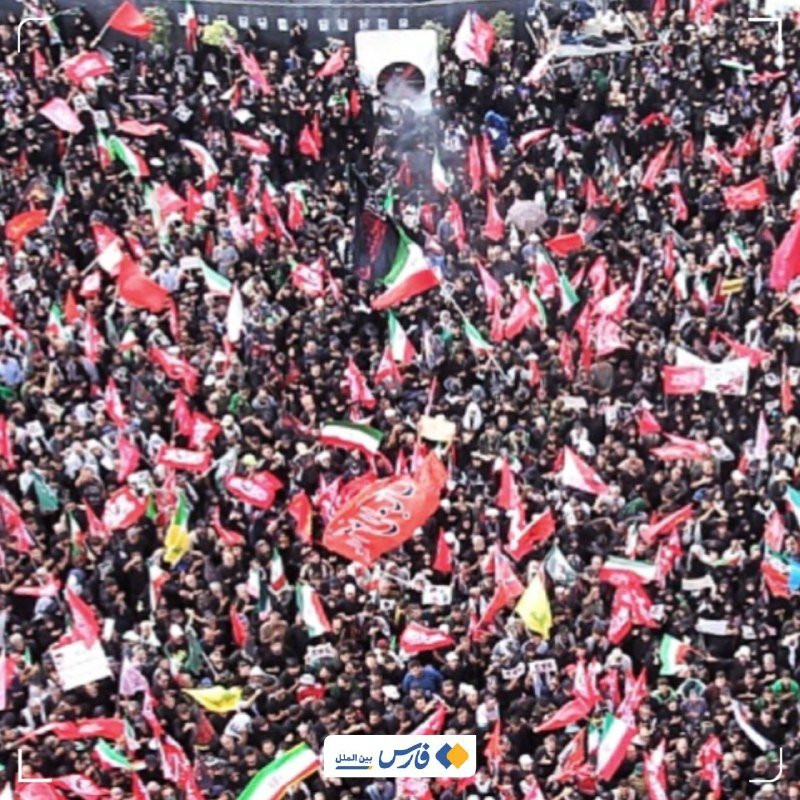
Iranian state broadcaster Mehr News carried live prayer services for a slain cleric across its channels and website on 5 July 2026, lifting footage directly from Pakistani news networks between roughly 04:58 and 06:36 UTC. The clips — captioned "our heart is gone" and "your way continues" — show crowds reciting over a coffin draped in religious cloth. No name, no office and no cause of death are given in the broadcast material itself. That absence is the lead.
What we are watching is not a news event. It is the staging of one. The killing — wherever, whenever and by whomever it occurred — has already been processed into devotional imagery before any independent outlet has filed a verified account. Mehr's editorial decision to import raw Pakistani broadcast footage and frame it inside an Iranian-language devotional grammar tells the reader what the Iranian state wants the death to mean: continuity, grievance, and the transfer of a martyr's charisma across a border that Tehran's regional policy has spent decades trying to soften.
The framing is the story
Mehr's choice matters because of what is missing. There is no dateline identifying the city where the cleric was killed, no institutional affiliation, no organigram of the organisation he led, and no sourced account of who fired the shot. The wire is operating as devotional television, not journalism. That is its own category of fact. A reader watching the loop on 5 July 2026 is being enrolled in a meaning-making exercise before any contested claim has been tested.
The pattern is familiar from Iranian coverage of cross-border Shia clergy in Pakistan and Iraq: the state media apparatus does not so much report the death as produce the ritual around it. The repetition — Mehr running the same clip three times in roughly ninety minutes on a Sunday morning — is the technique. Grief is broadcast until it becomes the available interpretation.
A counter-narrative the wires have not filed
Iranian opposition outlets and Sindhi-language Pakistani press have, in past incidents, contested the official Pakistani account of sectarian killings in cities such as Quetta, Karachi and Peshawar, alleging that the Pakistani state has an interest in either undercounting Shia clergy or overstating external involvement depending on the diplomatic season. None of that record is visible in the Mehr package on 5 July. A reader relying on Mehr alone has no purchase on which framing of the cleric — state ally, state victim, or independent religious figure with transnational reach — is in play.
The honest summary is that the source material in circulation does not yet disclose: (a) the cleric's name and organisation, (b) the city and date of the killing, (c) the claimed perpetrator, or (d) the Pakistani state's official response. The two Polymarket URLs circulating in the same window reference active forecast markets without specifying which event is being priced, and Mehr does not link to any. The cleric's biography is, for now, whatever the camera is willing to say it is.
The structural picture in plain prose
Regional media systems increasingly function as instruments of their patrons' grief. Iran's Press TV, Tasnim and Mehr apparatus, Saudi-funded pan-Arab outlets, and Qatari Al Jazeera each operate rituals around killing — naming, blaming, canonising — that travel faster than any independent forensic account. The Pakistani broadcast upstreamed into Mehr on 5 July is one node in that infrastructure. It is the same architecture that has carried images of Palestinian children in Gaza, Israeli hostages, and Houthi drone footage, with the editorial voice changing at each handoff but the production logic holding.
A reader who treats devotional television as documentary will draw the conclusion the broadcaster wants. A reader who treats it as primary source — asking what is omitted, who benefits from the framing, and where the counter-narrative lives — is doing the work the wire is not.
Stakes and what to watch
If the cleric killed was a transnational organiser with ties to Iran's Islamic Revolution Guards Corps or to Shia militias operating in Syria, Iraq or Yemen, the funeral coverage is the opening move of a retaliation cycle, and the broadcast grammar is being calibrated now to maximise domestic Iranian consent for whatever comes next. If he was a local Pakistani figure with no operational link to Tehran, the imported footage is still being put to work — for solidarity, for positioning against Pakistan's domestic sectarian policy, or simply for audience share inside Iran. The source material on 5 July 2026 does not let us distinguish between those two readings, and that is itself the most important fact on the page.
What to watch for in the next 72 hours: a named claim of responsibility; a Pakistani Interior Ministry statement; a Tasnim or IRNA wire attributing the killing to a specific group; and any change in Iran's diplomatic posture towards Islamabad. Until one of those lands, the funeral is the only sentence the system has agreed on.
Monexus framed this as a study of broadcast ritual rather than as a report on the killing itself — because the broadcast is the only verifiable material on the wire, and the killing is not.