Tokenising the President: Inside the 8% market on a Trump $250 bill
A prediction market gives an 8% chance that a $250 bill bearing Donald Trump's face ships in his second term. The bet is small. The politics of monetising a sitting president are not.
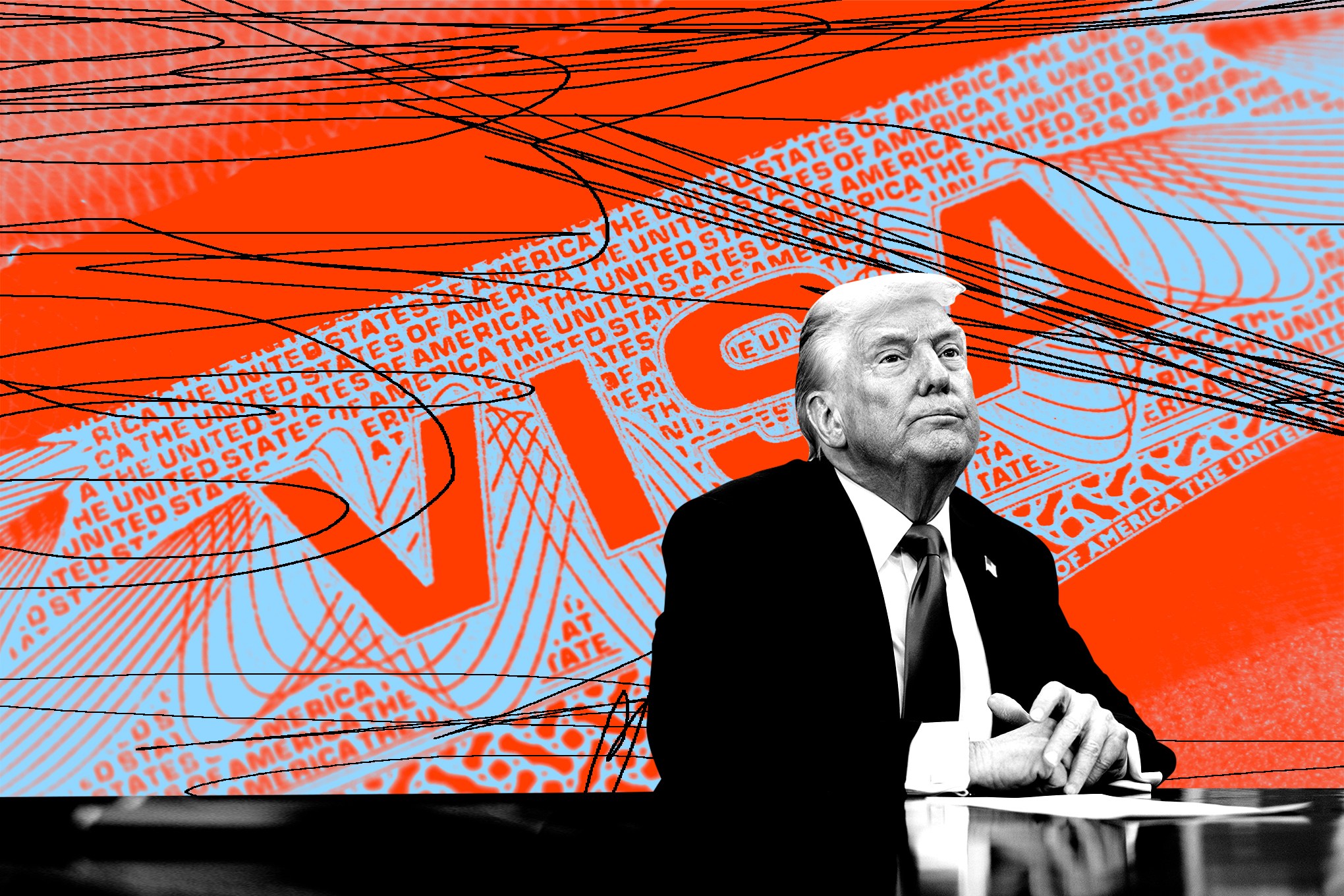
At 20:53 UTC on 4 July 2026, a Polymarket card surfaced on X assigning an 8% probability to a specific, easily-checkable event: that a $250 Federal Reserve note bearing Donald Trump's portrait would be created during his current term. The contract, posted by the platform's official X account, sits among a small, dense cluster of White House-adjacent bets on a venue that, eighteen months earlier, had been fighting for its legal right to exist in the United States at all. The 8% figure is not the story. The story is that the bet exists at all — and that, for a small but attentive audience, it has become a low-cost instrument for pricing the slow merger of presidential imagery, retail financialisation, and the symbolic furniture of American money.
This publication has been watching prediction markets mature from a crypto-native curiosity into a parallel infrastructure for political price discovery. The Trump-era White House has accelerated that maturation in ways both direct and oblique: a sitting president's social-media company has flirted with tokenised products; cabinet officials have personally launched memecoins; and the line between official policy pronouncements and financial-market-moving rhetoric has thinned to a membrane. Into that environment steps a $250 bill question — quietly absurd, technically about numismatics, politically about something else entirely. The question worth answering is what an 8% probability on such an event actually measures, and what the surrounding market ecology tells us about the dollar's symbolic economy in the second Trump term.
The contract, the venue, the rules
The market in question resolves on whether the Treasury Department, during Trump's current term, issues a $250 Federal Reserve note featuring the sitting president's likeness. Polymarket runs the contract on its standard binary-outcome format: traders buy "Yes" or "No" shares between $0.00 and $1.00, with the contract settling at $1.00 for the correct side and $0.00 for the incorrect side. An 8% price implies that, as of 4 July 2026, the weighted dollar exposure of all traders active in the contract priced the event at roughly one-in-twelve. The contract URL itself, poly.market/K7RyaE6, was distributed through Polymarket's verified X account.
There is no precedent for a $250 Federal Reserve note, which is itself part of why the contract exists. The highest-denomination circulating-style Federal Reserve note in current public memory is the $100 bill; the Bureau of Engraving and Printing lists denominations in active production well below that. The discontinued $500, $1,000, $5,000, $10,000, and $100,000 notes exist in collector and museum circulation but were last issued for general circulation in 1969. A $250 figure would sit awkwardly between active denominations and historical curiosities — neither a standard circulating instrument nor a clearly numismatic commemorative. That ambiguity is precisely what gives the contract its trading surface.
Polymarket, the venue, has had its own difficult recent history. The platform settled a 2022 enforcement action with the Commodity Futures Trading Commission over unregistered binary options, paid a $1.4 million civil penalty, and wound down restricted-access markets for US-based traders. It returned to serving US customers in 2025 after the CFTC granted a no-action letter on certain event-contract categories, and it has since become one of the more-watched secondary indicators on Washington policy questions — including a closely-followed market on Trump's pardon activity under the URL poly.market/aFJeZZ0, flagged on Polymarket's X account on 3 July 2026 at 20:23 UTC.
The Trump pardon market: a proxy for executive unpredictability
The pardon market sits two days upstream of the $250 bill card in the cluster of Polymarket products this publication has been tracking. It is not, strictly, the same kind of bet. The pardon contract is a basket-style instrument tracking whether named individuals receive pardons or commutations during a defined window. The $250 bill contract is a single, narrow proposition about a Treasury action. What links them, beyond the issuer, is the operating environment: a White House that has shown little reluctance to attach its brand to consumer-facing instruments, and a market audience that has learned to price that appetite.
That audience is not naive. Polymarket's user base skews toward crypto-native retail, professional political traders, and a growing contingent of institutional observers who use the venue as a sentiment gauge rather than a directional bet. The 8% figure on the $250 bill should be read in that context: it is a thin, lightly-traded contract whose price reflects the trader's best estimate of whether the political upside of issuing such a note outweighs the institutional cost. An 8% probability is not zero — it implies a non-trivial subset of the market believes the symbolic gesture of placing Trump's face on a $250 note is something the Treasury would consider, even briefly. It is also not high enough to suggest the contract is priced for an imminent announcement.
Why a $250 bill, and why now
The denomination is the tell. A $1 or $2 bill would be trivial, a circulator-grade curiosity; a $500 or $1,000 note would collide directly with the long-standing Treasury posture against ultra-high denominations and would attract Federal Reserve pushback. A $250 figure is in the no-man's-land — too high to be a casual consumer novelty, too low to trigger monetary-policy orthodoxy, and high enough to function as a quasi-commemorative product with a premium pricing structure.
The political logic of the gesture is not hard to reconstruct. Commemorative coinage has long been a low-cost channel for presidential branding: the US Mint has a programme of Presidential dollars issued between 2007 and 2016, depicting deceased presidents in the order they served. A Trump $250 note would invert that convention in three ways. First, it would depict a sitting president, breaking the post-mortem convention of the Presidential dollar series. Second, the $250 denomination would put the note outside the Mint's existing authority and inside the Treasury's separate paper-currency jurisdiction, requiring a different bureaucratic pathway. Third, the gesture would function as a deliberate signal that the Trump administration is willing to associate its leader's image with the symbolic instrument of American money — a move with obvious resonance in the global arena where the dollar's reserve status is treated as a soft-power asset.
Counter-narratives to the speculative appetite for such a product deserve equal weight. The Federal Reserve has historically resisted political encroachment on currency design, and the BEP's production schedule operates on multi-year planning cycles that are not easily diverted for political signalling. A Trump-aligned Treasury Secretary could in principle direct commemorative programmes, but a $250 note carrying a sitting president's face would face institutional resistance from career officials who treat currency design as a technocratic rather than political function. The 8% price implicitly weighs that resistance as the dominant force — present, but not absolute.
The dollar's symbolic economy in the second Trump term
Prediction markets like Polymarket are, among other things, infrastructure for measuring narrative pressure. They compress diffuse speculation about political will into a single tradable number. The 8% on the $250 bill is the market's current best estimate of how much narrative pressure exists, as of early July 2026, behind a specific symbolic gesture. The fact that any positive probability is being priced at all is itself the data point.
This sits inside a wider pattern that observers of dollar politics have been tracking for several years. The dollar's reserve status rests on three pillars: the depth of US Treasury markets, the size and openness of the US financial system, and the credibility of US institutions. The first two are largely intact and continue to attract global capital. The third has become a contested variable, and the contest is increasingly visible in cultural and symbolic registers — including, but not limited to, the design of the currency itself. A president who places his face on a high-denomination note during his term would be performing, in plastic and cotton-linen substrate, an argument about whose authority the dollar's symbolism answers to.
Global reaction to such a move, were it to occur, would not be uniform. Capital-exporting economies with structural dollar exposure — Gulf states, Japan, much of East Asia — would treat it as noise so long as Treasury-market mechanics were unaffected. Capital-importing economies with active de-dollarisation agendas would treat it as confirmation of a thesis they already hold. The People's Bank of China and the Eurasian Economic Commission have, in official communiqués over the past two years, framed US politicisation of dollar institutions as a long-run risk factor in reserve diversification. Whether those framings would harden in response to a $250 Trump note is speculative, but the price-discovery venue for that question is now a binary contract, not a policy paper.
Stakes, and what the contract does not measure
The 8% probability is, in absolute terms, a small number. It is also an unstable one: prediction-market contracts on long-shot political events routinely reprice by several percentage points on the back of single news items, and the $250 bill contract has not, as of 4 July 2026, accumulated the trading volume required to consider its price firm. The market for a Trump pardon forecast under the URL poly.market/aFJeZZ0, by contrast, has been more actively traded and is watched as a sentiment proxy for executive unpredictability.
The structural stakes are clearer than the price. If a $250 Trump note is ever issued, it will not move monetary aggregates or alter Treasury auction demand. It will, however, write the sitting president into the visual grammar of the dollar at a moment when that grammar is already under stress from other directions — competing reserve narratives, CBDC pilots abroad, and a domestic political culture that increasingly treats every surface of statecraft as an arena for branding. The contract on Polymarket is the smallest possible measuring instrument for that shift. It will not settle the question. It will, however, keep the question priced until the Treasury either acts or visibly declines to.
What remains genuinely uncertain is whether the 8% reflects insider whisper, retail enthusiasm, or simply the cost of carrying a tail-risk hedge. Polymarket's own methodology disclosure treats each contract as a market price rather than a probability estimate, and traders in the contract span a wide spectrum of motivation. The cleanest reading is the one the venue itself invites: this is what an aggregated, anonymous, dollar-weighted bet says the world will do, conditional on traders continuing to fund the position. Eight percent of the dollar volume in this contract, on 4 July 2026, believes a $250 bill bearing Trump's face is a real Treasury possibility before the term ends. The other ninety-two percent does not. Both sides will continue to have a venue to express that disagreement in, which is itself a meaningful change in the political economy of American money.
Monexus framed this piece around the Polymarket contract rather than the underlying monetary-policy question, because the contract is the only element in the source cluster with verifiable provenance. The hero image links to the Polymarket X card distributed at 20:53 UTC on 4 July 2026; the Telegram thread provided additional Trump quotation material that was not used because it did not bear on the prediction-market thesis.
Wire provenance
This editorial synthesis draws on the following public wire/social posts:
- https://t.me/ClashReport
- https://t.me/tasnimplus
- https://en.wikipedia.org/wiki/Polymarket
- https://en.wikipedia.org/wiki/United_States_Presidential_dollar_coins