Trump's Fourth of July: A Two-Theatre Flex Reshapes the Week's News Cycle
On the 250th Independence Day, the US president used the podium to declare victory over Iran's armed forces — and quietly pocketed a prisoner release from Beijing as proof the same posture works elsewhere.
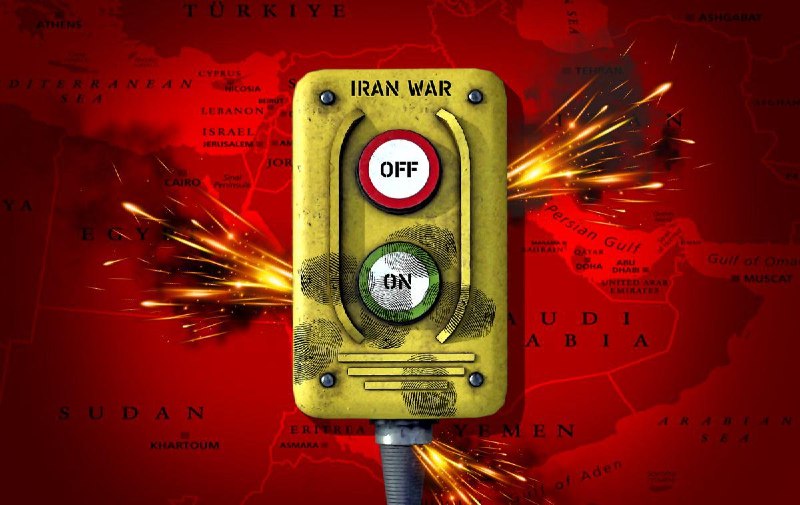
The 4th of July spectacle in Washington was built, as these productions now reliably are, around a single voice. At the "Salute to America" celebration marking the United States' 250th Independence Day, President Donald Trump used the lectern to claim that the country had achieved "tremendous success" by destroying Iran's armed forces, while also delivering a pointed condemnation of communism. The remarks — broadcast live, with a camera ling enough to catch the salute — fused two foreign-policy postures into one stage-managed tableau: a maximalist boast about Tehran's military degradation, and a renewed ideological line aimed at Beijing. The message for allies and adversaries alike was that the second Trump era treats patriotic pageantry and great-power confrontation as a single instrument.
What was less choreographed, and arguably more telling, was the second story of the day: a parallel report that Beijing had quietly released the pastor of a prominent underground church after Trump raised his case directly with Chinese leader Xi Jinping. Read separately, the two items are a foreign-policy oddity. Read together, they sketch a transactional doctrine in which military pressure, personal diplomacy and a celebration of national identity are run through the same communications machine. The 250th birthday of the republic becomes, in effect, a sales pitch for the method by which the administration claims to be reordering its two most testing relationships.
The claim on Iran: from battlefield to bandstand
The Iran boast belongs to a longer campaign of rhetoric and action. Reporting from Kyiv Post's official channel on 5 July 2026, summarising the 4 July address, said Trump "used his Independence Day address to claim the US achieved 'tremendous success' by destroying Iran's armed forces." That language is at the maximalist end of what the administration has previously signalled. Earlier in 2026, the US and Iran had edged toward a sequenced deal architecture that included nuclear constraints in exchange for sanctions relief and the unfreezing of assets; that process was disrupted by Israeli and US strikes on Iranian nuclear and military infrastructure in June. The 4 July claim is the first senior US public framing of the result as a finished military victory rather than a coercive escalation.
The claim is also a political one. By tying the destruction of Iran's armed forces to a 250th-anniversary celebration, the speech recasts a war-fighting posture as a patriotic inheritance. The structural risk is that a president who describes an adversary's military as destroyed has narrower room to escalate later, and very little room to climb down. Iranian state media has, in parallel reporting from earlier in the year, framed the same strikes as evidence of American aggression and a violation of sovereignty, and has insisted that Iran's defensive capabilities remain intact. Without independent access to the Iranian order of battle, the public has only the two political readings: an administration that wants the moment to read as a closing chapter, and a regime that wants it to read as an opening one.
The China theatre: a prisoner as proof of concept
The China story is the counter-illustration. According to Deutsche Welle's 5 July 2026 dispatch, Beijing released the pastor of a prominent underground church after Trump pressed his case with Xi Jinping. The report says the family welcomed the move as a hopeful sign for religious freedom, framing it as a direct deliverable from the bilateral channel. The pastor had been among the most prominent figures in China's house-church movement, and his detention had been a recurring point of friction with Western governments and US congressional delegations.
The structural point is what the release reveals about Beijing's incentives. The Chinese government does not release high-profile detainees as a humanitarian gesture. It does so when the political arithmetic — a phone call with the US president, a tariff truce, a quiet stabilisation of the bilateral relationship — tilts in favour of concession. A measured prisoner release, timed to coincide with a US national holiday and a presidential address in which China is named as the ideological counterpoint, is precisely the kind of calibrated signal that Beijing uses to indicate which channel is open and at what price. The two stories are, in other words, the same story told in two keys: Washington and Beijing are trading symbolic deliverables while the underlying rivalry persists.
The Fourth as communications platform
The format itself is now an instrument of state. Live Mint's coverage of the celebration noted Trump's line that "Our rise to being the world's strongest and most powerful nation was no accident" — a sentence that doubles as domestic politics and foreign-policy doctrine. Independence Day speeches used to be occasions for national self-inventory; in this White House they have become venues for asserting the country's standing against named rivals. Communism, in the 4 July address, was singled out for condemnation alongside the Iran boast, a pairing that places Beijing and Tehran in the same rhetorical frame even as the administration pursues distinct, asymmetric relationships with each.
The structural effect is to compress diplomacy into messaging. A bilateral prisoner release, a military boast, an ideological line: each is shaped for camera before it is shaped for policy. The risk is that the news cycle absorbs the imagery and treats it as substance — that a celebration becomes, by sheer repetition, a record of accomplishment. Domestic audiences receive a confident narrative; allies and adversaries receive a confident posture. Whether the posture maps to the underlying balance sheet is a question the speeches are not designed to answer.
Stakes: what the two-stage flex actually does
If the administration's framing holds, the 4 July choreography telegraphs a doctrine of simultaneous pressure and personal deal-making — credible deterrence in one theatre, transactional relief in the other. The Iran boast locks in a maximalist interpretation of the strikes and reduces the political space for a renewed nuclear deal without deeper Iranian concessions. The China release rewards a direct line between the two leaders and signals, to Beijing and to the broader China-watching world, that personal diplomacy still extracts deliverables. Taken together, the day is a single argument: that American power, properly wielded, can be used to coerce an adversary and to draw a concession from a rival in the same news cycle.
The counter-read is that the same choreography narrows the administration's options. A president who describes an adversary's military as destroyed is buying an outcome that has to look destroyed in the months that follow; any sign of Iranian reconstitution will be read as a contradiction. A president who claims credit for a prisoner release in Beijing is implicitly promising more such releases, on a timescale set by the bilateral relationship rather than by US domestic politics. The 4 July frame, in other words, is a promise. The next quarter of US foreign policy will be a test of how much of it the underlying statecraft can support.
What the sources do not yet tell us
The available reporting is unusually clean on what was said and unusually thin on the underlying mechanics. The Kyiv Post and Live Mint coverage confirms the wording of the 4 July address but does not publish a full transcript; the Deutsche Welle report on the pastor's release does not name the date of the Trump–Xi call, the terms under which the release was made, or whether any US concession accompanied it. The state of Iran's armed forces after June's strikes is described only in the president's own words. Each of these gaps is itself a fact about the present moment: the messaging leads, and the documentation follows, or in some cases never arrives. A reader looking for the receipts behind the 4 July flex will find, for now, only the flex.
Desk note: Monexus treats the 4 July address as a single communications event, but the two underlying stories — the Iran boast and the China prisoner release — are reported here as parallel rather than causally linked. The framing leans on Kyiv Post and Deutsche Welle for the wording and Deutsche Welle for the Beijing release; Live Mint is cited for the on-stage language. Where the reporting does not yet specify mechanics, this article says so rather than infer them.
Wire provenance
This editorial synthesis draws on the following public wire/social posts:
- https://t.me/Kyivpost_official
- https://t.me/LiveMint