The Mall Speech Was a State Funeral for an Idea — and the Idea Was Pax Americana
From the National Mall on the 4th of July, the President did not celebrate a republic. He declared its monopoly on civilisational meaning — and in doing so made explicit the worldview the post-1945 order only whispered.
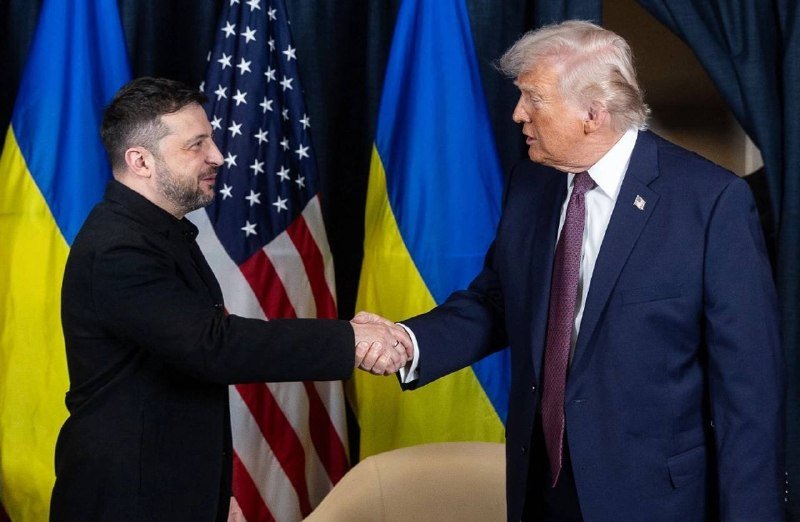
There were no protesters in frame and no reporters in the back row of the cable shot. From the National Mall, in front of the Washington Monument, on the evening of 4 July 2026, the President of the United States delivered a speech that was not, by any honest reading, an Independence Day address. It was a creed. Donald Trump welcomed the Artemis II crew, honoured the so-called "Golden families," displayed an early Stars and Stripes relic, declared that "America will never be a communist country," and described the Cold War as an American victory in which "the Stars and Stripes cast the hammer and sickle into oblivion." The remarks, carried in fragments by Telegram channels including BellumActaNews between roughly 03:34 and 04:32 UTC on 5 July, were punctuated by a single recurring image: a flag, held aloft, older than anyone alive. The performance was the message.
What makes the speech worth analysing is not its content — every line was telegraphed — but its form. The American presidency has, for eighty years, used the 4th of July to project an open, pluralist, invitation-to-the-world vision of the United States. This year, the genre was inverted. The Mall speech was inward-facing, blood-and-soil in register, and explicit in its claim that the American project is a civilisational rather than constitutional one. The shift is not cosmetic. It is a public declaration that the postwar idea of the United States as the anchor of a rules-based international order has been retired in favour of an older, narrower, and frankly more familiar idea: the United States as the indispensable nation, defined against its enemies rather than by its founding documents.
The Cold War as theological claim
The Cold War, in the version the President narrated from the Mall on 4 July 2026, is not history. It is a continuing event. The hammer and sickle has not been cast into oblivion; it has been rebranded, redistributed among whatever the speech's producers define as the present threat — and the speech's own framing invites the listener to supply the name. Communism, China, Russia, "the globalists," domestic political opposition: the targets of the rhetorical hammer are fluid because the hammer is the point. The Cold War, in this telling, is a permanent condition of American identity. A peace settlement would dissolve the national self-conception.
This is the giveaway. When a head of state speaks of a concluded conflict in the present tense, the audience is being asked to understand current politics as the continuation of an existential one. The Mall speech performed exactly that move, in front of a domestic audience, on the country's most freighted civic date. The choice was deliberate, and the implications for foreign policy are concrete: an American presidency that reads the world through a permanent-Cold-War lens will treat the dollar architecture, the alliance system, and the rules-based order not as commons to be maintained, but as instruments to be re-mobilised against whatever the speech calls the current hammer and sickle.
Nationalism, performed as religion
The flag held aloft in the early minutes of the address was not a prop. It was a relic. The speech framed the United States in a vocabulary borrowed almost word for word from older nationalisms: one people, one family, one flag, an inheritance of blood and sacrifice, an enemy that recedes but never dies. The register is not republican. It is confessional. The United States, in this telling, is not a constitutional project open to amendment and immigration. It is a communion.
For the post-1945 order, that distinction mattered enormously. The Pax Americana that the United States built in 1945 was justified, when it was justified at all, in constitutional and institutional terms: the UN, the Bretton Woods institutions, the GATT, the alliance system, the rhetoric of "free peoples." The Pax Americana that the Mall speech gestured toward on 4 July 2026 is justified in civilisational terms: the United States is exceptional because it is the United States, and the rest of the world is owed deference because of what it is, not because of any bargain it has signed. The two are not the same. One is a hegemonic order; the other is an imperial claim. The speech, read carefully, made the transition explicit.
What the speech did not say
The omission list is more revealing than the address itself. There was no reference to NATO, no mention of the Indo-Pacific, no framing of the dollar's role in the world economy, no acknowledgement of the war in Ukraine beyond a perfunctory Cold War gesture, and no mention of the United States' obligations under any treaty it has signed. The Pax Americana that the postwar presidents — both Democratic and Republican — used to describe was a project of institutions. The Pax Americana that the Mall speech described is a project of belief. The institutions are still there. They are simply no longer being justified in the speech text.
That matters for everyone outside the United States, and not just the usual suspects. A United States that justifies its alliance system in civilisational rather than institutional terms is a United States that retains the right to redefine who counts as part of the civilisation. For Europe, that means the alliance is now conditional on a shared self-conception rather than a shared treaty. For the Global South, it means the offer on the table is not partnership but affiliation. For the dollar's centrality, it means the privileged position of the US currency is now underwritten by an explicit civilisational claim rather than a tacit institutional bargain — a distinction that some reserve managers have been quietly pricing for several years.
The stakes, stated plainly
A state can survive the retirement of a constitutional self-conception. It has happened before, in other capitals, in other centuries. What it cannot survive is the simultaneous retirement of the institutional architecture that the old self-conception built. The Mall speech did not abolish NATO, the IMF, the World Bank, or the dollar's reserve status. It did, however, reframe their justification. The next time a foreign capital asks why it should defer to the United States, the answer the speech offers is not "because we signed a treaty" or "because the system we built is good for you too." The answer is "because we are who we are, and you are not." That is a much harder thing to govern a world on, and a much easier thing to walk away from.
The serious point, the one this publication wants to leave on the page: speeches are cheap, but the ones delivered on the 4th of July from the National Mall, in front of the cameras, are not. They are read. They are recorded. They are quoted back, eventually, by the officials of a future administration — including the present one's successors — when those officials need a precedent for treating the world as a confession rather than a customer base. The Mall speech was, in that sense, a state funeral. The deceased was the idea that the United States leads by consent. The mourners were the people who, on the evidence of the 4th of July 2026, no longer believe that idea is the one to lead with.
Desk note: this publication frames the Mall speech as a civilisational turn inside a continuing Pax Americana debate, not as a one-day news hook. The wire services carried the event as pageantry; we treat the rhetoric as policy signal.
Wire provenance
This editorial synthesis draws on the following public wire/social posts:
- https://t.me/BellumActaNews
- https://t.me/BellumActaNews
- https://t.me/BellumActaNews
- https://t.me/BellumActaNews
- https://t.me/BellumActaNews