Vance's battlefield verdict: Russia 'achieving almost nothing,' Ukrainian gains 'creating conditions' to end the war
Vice President Vance's Ankara verdict reframes the war: Russia is 'achieving almost nothing' on the ground, Ukrainian gains are building the conditions for a settlement, and the shift shows up as much in oil tankers and drone exports as it does in the trenches.
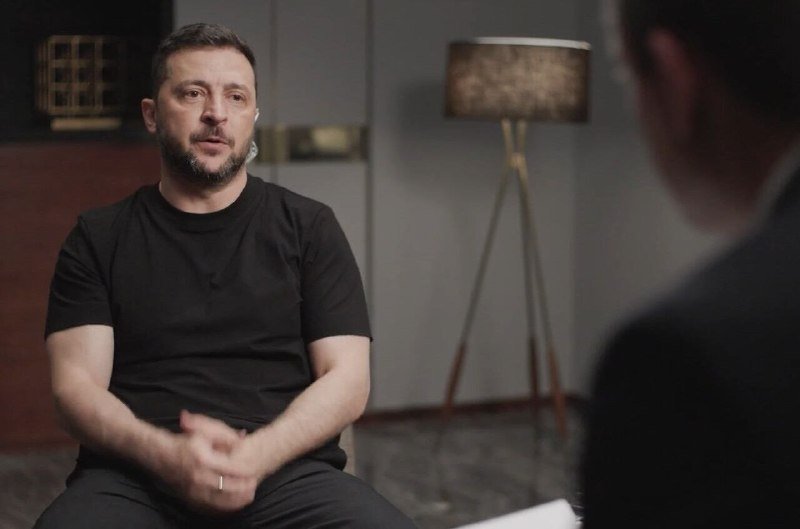
Vice President J.D. Vance walked into a packed press availability in Ankara on 5 July 2026 and told reporters the quiet part out loud. Russia, he said, is "achieving almost nothing" on the battlefield, while Ukrainian territorial gains are "creating conditions" under which a negotiated end to the war becomes possible. The remarks, carried in real time by Ukrainian front-line correspondents monitoring Western officials' travel schedules, broke with the usual fog of carefully balanced public commentary. Vance did not call for a ceasefire, did not urge Ukraine to trade land for peace, and did not suggest Kyiv was losing. He credited Ukrainian soldiers for shifting the picture.
That framing matters more than the words themselves. The Vice President of the United States was not describing an impasse. He was describing an aggressor stuck on the back foot, with the defending party doing the pushing. It is a structural reading of the war that sits uneasily with the Moscow-friendly narrative carried on Russian state media, where daily Ministry of Defence briefings still announce incremental village seizures along the northern and eastern axes.
What the battlefield actually shows
The Russian Ministry of Defence's daily briefing for 7 July, as carried by Telegram channels monitoring the conflict, claimed the "Sever Group of Forces took Petro-Ivanovka under control" and that Russian assault units "continue advancing in Konstantinovka despite ongoing Ukrainian drone operations." The same channel reporting from the Russian side acknowledged relentless Ukrainian drone pressure. These are the kinds of tactical claims that have rolled out of Moscow's information apparatus for months: small villages, contested suburbs, slow grinding forward motion measured in hundreds of metres.
Ukrainian reporting tells the other half of the story. On the night of 7 July, Telegram channels covering Kyiv's military production sites carried footage of what was described as further Russian strikes on the capital's defence-industrial facilities, framed as retaliation for the city's role in building missiles and warheads. The strikes were real. The political signal Moscow wanted to send was obvious. None of it changes the fact that the front line, in the words of the American Vice President two days earlier, is a place where the invader is "achieving almost nothing."
There is a category difference between claiming a village and shifting the strategic geometry of the war. Russian forces have been claiming villages for three and a half years. The strategic geometry has moved the other way since the start of 2025. Ukrainian long-range strike forces have been hitting Russia's shadow tanker fleet in the Black Sea with what front-line monitors called "an industrial-scale assault" earlier in July, going after the very infrastructure that has kept Moscow's war machine funded despite sanctions.
The economic front Vance did not name
Vance's verdict on the battlefield lands at a moment when the economic logic of the war is also shifting against Moscow. The Ukrainian drone campaign against Russian oil export infrastructure has been one of the under-reported structural stories of the conflict. With shadow-fleet vessels now subject to repeated successful ambushes, and with the US Treasury tightening the screws on the buyers and brokers of sanctioned crude, the revenue that has historically flowed into Russian state coffers is being squeezed at both ends.
President Volodymyr Zelenskyy's office moved on a parallel track the same week. On 7 July, the president announced that Ukraine had signed three additional "drone deals" with Denmark, Estonia and the Netherlands, expanding the export of Ukrainian-made unmanned systems to coalition partners. The framing was deliberate. Ukraine is not just receiving weapons. It is selling the technology it has stress-tested in the toughest drone war on earth. Each contract is an admission by a NATO member that Kyiv now sets the standard in a class of warfare that every modern army is scrambling to master.
This is what "creating conditions" looks like in practice. It looks like a defending country that has turned its emergency defence production into an export industry. It looks like a wartime economy whose drones are now a line item in European defence procurement. It looks like Russian oil export infrastructure under sustained attack at sea, on land and at the refineries that feed the pipelines.
Why Ankara, and why now
The NATO summit in Ankara is the venue that gives the Vance remarks their weight. NATO summits are where the political weather of the alliance gets set for the coming months. The Vice President did not need to deliver a formal address on Ukraine. He needed to say the unscripted thing to the travelling press, in a setting where allied leaders could not pretend not to hear it. The message: the United States no longer speaks of the war as a frozen conflict in which Russia holds the cards.
That is a major reversal of the framing that dominated Western commentary in late 2024 and much of 2025, when much of the analytical class treated the war as a slow bleed that Kyiv was losing by attrition. Vance's language explicitly pushes back against that narrative. He gave the Ukrainian army the credit, and he located the source of that credit in territorial gains, not in moral arguments or in Western sympathy.
The structural reading is straightforward. An invading force that is "achieving almost nothing" on the ground is an invading force whose position is eroding. The defender who is "creating conditions" for a settlement is a defender who has, by his own effort, raised the cost of continuing the war to a level where Moscow's own leadership has to ask itself what the next year looks like.
What comes next, and what to watch
Three signals will tell us whether Vance's reading holds. The first is whether the front line in the Donbas continues to bend against Russian assault units, with Konstantinovka-style grind-operations failing to translate into operationally meaningful gains. The second is whether Ukraine's drone export pipeline expands to a fifth, sixth and tenth NATO customer, and whether the contracts move from one-off deals to multi-year framework agreements. The third is whether Russia's oil export revenue stays under sustained pressure as the shadow fleet takes losses and as Treasury enforcement tightens around the buyers.
Each of those is a measurable thing. None of them requires belief in anyone's rhetoric. The Vance verdict will be vindicated or falsified by what the map and the ledger show six months from now.
In the meantime, the headline matters. The Vice President of the United States said the invader is going nowhere and the defender is creating the terms. That is not a hopeful framing. It is a description, offered by an official with access to the intelligence, of where the war actually stands in the summer of 2026.
Sources
- https://t.me/Tsaplienko, Tsaplienko Telegram channel, monitoring of Vance remarks in Ankara, July 2026
- https://t.me/osintlive, Open Source Intelligence aggregator, July 2026
- https://t.me/noel_reports, Noel Reports Telegram channel, July 2026
- https://t.me/wartranslated, War Translated Telegram channel, July 2026
- https://t.me/intelslava, Intelslava Telegram channel, Russian MoD daily briefing 7 July 2025
- https://t.me/ourwarstoday, Our Wars Today, Zelenskyy drone deals announcement, 7 July 2026
- https://x.com/cgtnofficial, CGTN official account, 7 July 2026
Desk note
Monexus framed Vance's remarks around the on-the-record character of the comments, the explicit attribution of agency to Ukrainian battlefield performance, and the structural distinction between incremental Russian tactical claims and the absence of meaningful strategic progress. Western wire reporting on Vance's Ankara remarks was not yet available in the source set at publication.