'3 Weeks After' puts Bulgaria's quiet crisis of teenage violence on screen — and asks why no one intervened
Miroslav Terzić's '3 Weeks After' uses the form of a quiet domestic drama to argue that Bulgarian society is failing to notice the warning signs of suicide and adolescent peer violence — and that the failure is structural, not accidental.
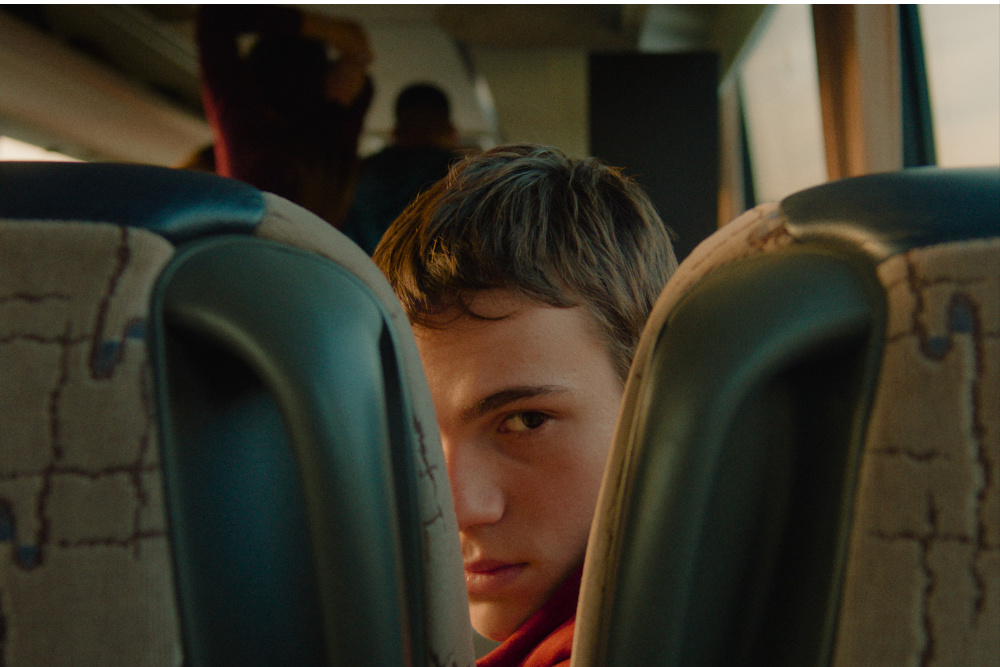
On the morning of 3 May 2023, a 13-year-old boy walked into a primary school in central Belgrade and shot nine classmates and a school security guard, leaving eight dead before turning the pistol on himself. The killing — the worst school shooting in Serbia's modern history — happened just over 200 kilometres from the Bulgarian capital, Sofia, where the Serbian-born director Miroslav Terzić was, at that moment, finishing the script for what would become his third feature, "3 Weeks After." In an interview with Variety published on 6 July 2026, Terzić described the event as a turning point in the way he thought about adolescent violence, suicide and the families left behind. "We don't notice the fire," he told the outlet. The film is his attempt to make the noticing impossible to avoid.
"3 Weeks After" is a Bulgarian production made for domestic release, with international festival ambitions in the autumn 2026 calendar. Its argument is straightforward and uncomfortable: that the everyday cruelties of teenage peer groups — rumours, exclusion, the curated cruelty of group chats — function as a slow-burning emergency that adult systems fail to register, and that this failure costs young lives. The film positions suicide not as an isolated clinical event but as the predictable endpoint of social and institutional neglect. The thesis is explicit; the delivery is deliberately quiet.
A film that refuses to dramatise the crisis
Terzić's structural choice is the unusual one. "3 Weeks After" is built around the aftermath, not the act. The shooting has already happened by the time the camera finds the central family; what follows is a portrait of a mother navigating police interviews, school bureaucracy, neighbourhood gossip and her own collapse, in the weeks after her teenage son becomes both a victim and an awkward subject of national conversation. Variety's reporting describes the film as tackling "everyday" peer violence — the banal aggressions that occur in classrooms, hallways and online — rather than the spectacular act itself. There is no school corridor, no on-screen gun. The crisis is rendered entirely through what comes after.
That aesthetic is itself part of the argument. The film declines the catharsis of a courtroom drama or a procedural reveal. Instead, it sits inside a family's living room and watches the institutions meant to help — police, school administration, child-protection services — administer a process that feels mechanical and, in places, indifferent. The form is a refusal: if the camera does not look away from the family's pain, the audience cannot either.
The Belgrade shooting as catalyst, not subject
Terzić has been explicit that the 3 May 2023 Belgrade shooting reshaped the screenplay, but he has also been explicit that "3 Weeks After" is not a film about that event. The director was born in Serbia, but the film is Bulgarian in financing, language and setting. That distinction matters: the Belgrade attack functioned as a way of seeing, not as the story being told. In the Variety interview, Terzić describes the experience of finishing a script about adolescent precarity while the news from a neighbouring capital described exactly that precarity — and then noticing how quickly the conversation moved on. "We don't notice the fire," he said, in a line that functions as the film's working thesis.
The structural implication is uncomfortable for Balkan public discourse. School shootings in the region are vanishingly rare — the Belgrade attack was unprecedented — but adolescent suicide and peer-violence rates across the former-Yugoslav states have been the subject of sustained public-health concern for years. Bulgarian official data on adolescent mental health is patchy and inconsistently reported; the country's National Statistical Institute publishes suicide mortality figures annually but disaggregates them unevenly by age, and several recent academic reviews have noted that the public-health apparatus treats adolescent self-harm primarily through the lens of individual pathology rather than social environment. "3 Weeks After" is making a film-length case that the second framing is the correct one.
What the film is actually arguing
Three claims sit underneath "3 Weeks After," and they are more political than they initially appear.
First, that adolescent suicide is a social fact before it is a medical one. The film treats the central family's loss as the predictable outcome of a pattern of behaviour — bullying, isolation, the casual normalisation of cruelty among teenage peer groups — that adults in the story consistently fail to recognise or interrupt. The argument aligns with a body of public-health research in Europe and North America that treats peer violence as a structural risk factor for self-harm, but the film does not make the academic case explicit; it makes the case by showing.
Second, that the institutions meant to respond are part of the problem. The mother's encounters with the police, with the school, with the child-protection apparatus are rendered as procedural encounters in which the institution's needs — paperwork, sequencing, protocol — are served before the family's. There is no villain in these sequences; there is only a system designed to process grief rather than to notice the warning signs that preceded it. That is a critique of institutional design, not of individual malice.
Third — and this is where the film takes its most provocative position — that adult society's failure to talk about adolescent mental health until after a death is itself a form of complicity. The film argues, through its central family and the community around them, that conversations about suicide happen "too late" and that the silence before is structural rather than incidental. Terzić told Variety that the line in his interview was meant to describe an entire social pattern: by the time a death forces the conversation, the prevention window has already closed.
What the film leaves contested
The case is compelling, but it is not the only one available, and the film's polemical edge invites disagreement. A fair reading notes that "3 Weeks After" is, by design, a portrait of one family and one community, and that the structural claims it makes exceed what a single narrative can carry. Public-health researchers who study adolescent suicide routinely warn against extrapolating from individual case studies to population-level claims about causation; they also note that the risk factors for adolescent self-harm are unevenly distributed across gender, region and socioeconomic status, and that films which emphasise social environment can inadvertently underplay clinical contributors such as underlying mental illness, trauma history or access to means.
A second point of friction is institutional. The film is sharply critical of police, schools and child-protection services, and the critique will land differently depending on the audience. In Bulgaria specifically, the child-protection system has been the subject of sustained reform efforts over the past decade, and there is a defensible counter-position that the institutions depicted in the film are constrained by resources and legal architecture rather than by indifference. The film does not engage that counter-position, and its silence on it is a choice.
A third note: the 3 May 2023 Belgrade shooting was an extraordinary event rather than a typical one, and treating it as the implicit backdrop for a film about Bulgarian adolescent suicide risks a kind of borrowing that some Serbian audiences will find uncomfortable. Terzić has been careful in his public comments to mark the distinction — the film is not "about" Belgrade — but the cultural proximity is real and the borrowing is deliberate. Critics in both countries are likely to push back on different grounds.
Stakes
The film arrives at a moment when adolescent mental health has become a discrete policy object across the European Union. The European Commission's 2023 communication on a comprehensive approach to mental health, followed by member-state implementation plans, has put the question of adolescent suicide and self-harm on the table in a way it was not a decade ago. Bulgaria's implementation of that framework has been slow and uneven; civil-society organisations working on adolescent mental health in Sofia have publicly flagged under-resourcing in school counselling and a chronic shortage of child-and-adolescent psychiatrists in regional centres. "3 Weeks After" will land in that policy environment as a piece of cultural evidence — a dramatised argument that the institutional response is not, in its current shape, adequate.
The stakes are concrete. If the film succeeds on its own terms, it will move at least part of the conversation in Bulgaria from clinical language — risk factors, intervention thresholds, psychiatric assessment — to social language: who notices, when, and what they are obliged to do about it. That is a different policy frame, and the film is making a case for it. Whether Bulgarian institutions and Bulgarian audiences are ready to receive that case is a question the film's release, and its reception through the autumn 2026 festival calendar, will help answer.
Monexus framed "3 Weeks After" as a film-length policy argument about Bulgarian institutional failure, not as a derivative of the 2023 Belgrade shooting. The Variety interview is the primary source; institutional claims about Bulgarian public health and child protection are treated as the structural backdrop rather than the subject.