Ankara's stage: Trump heads to a NATO summit that Erdoğan is already scripting
A NATO summit in Ankara is being framed by the host as a personal coronation for Erdoğan — and the US president has agreed to play the role. The optics matter more than the communiqué.
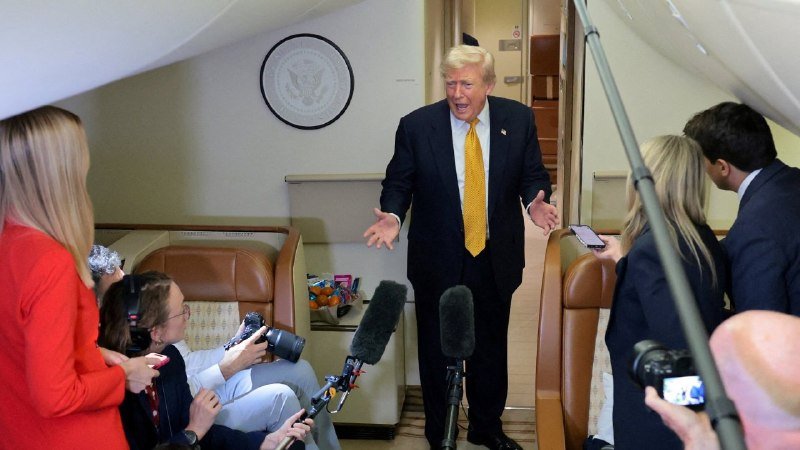
The NATO summit opens in Ankara on 7 July 2026, and the framing has already been written — not in Brussels, where the alliance's headquarters still sits, but in the Turkish capital that is hosting the gathering. Per reporting circulated on 6 July 2026 via the Telegram channels @abualiexpress and @englishabuali, the event is being staged as a personal tribute to President Recep Tayyip Erdoğan, with US President Donald Trump travelling to attend "in order to honour Erdoğan with his presence." The wording — a host performing deference to a guest — inverts the usual choreography of transatlantic summits, where Ankara would normally be a peripheral stop and Washington the centre of gravity.
A summit that begins before it begins
The pattern is well established. In recent years the host of a NATO summit has used the venue to project domestic political theatre onto an alliance stage — Vilnius presented itself as a Lithuania-at-the-frontier moment, Madrid as a strategic-concept reset, Washington as a victory lap. Ankara's framing goes further: the summit is being sold, in advance, as an act of personal homage by the leader of the alliance's most powerful member toward the Turkish president. That recasts a multilateral security meeting as a bilateral coronation.
There is nothing inherently illegitimate about a Turkish host making the summit into a showcase. Turkey has been a NATO member since 1952, fields the alliance's second-largest military, and controls the Black Sea Straits that any eastern-Mediterranean contingency eventually runs through. It is reasonable that Ankara would want a summit that reflects that weight. What is unusual is the optics chosen, and the readiness of the US side to perform inside them.
The counter-read: this is just hosting
The most charitable framing is also the simplest — summits require hosts, hosts get to choose the stagecraft, and Trump's willingness to fly in is a normal act of alliance maintenance, not a concession. Read this way, the "honour" language is the boilerplate of diplomatic hospitality, and the choice of Ankara over Brussels is a logistical fact, not a political signal.
That reading strains under contact with the specifics. NATO summits are routinely held in Brussels precisely because the alliance's permanent staff and decision-making apparatus sit there; moving a summit elsewhere is itself a political statement. A hosting chair who chooses to package the event around the personal stature of the Turkish president, rather than around a strategic-concept update or a capability pledge, is choosing symbolism over substance. The accompanying decision to skip Brussels tells you the same thing the framing does: this meeting is meant to be read as much as to be worked.
What the structural pattern looks like
Across the past several alliance gatherings, the centre of gravity inside NATO has been drifting away from the Brussels institutions — the permanent secretariat, the military committees, the integrated command structure — and toward the bilateral relationships that the US president chooses to maintain. When the leader of the alliance's indispensable power treats summits as venues for one-on-one theatre with selected counterparts, the multilateral machinery hollows out by default. The communiqué still gets drafted. The communiqués always do. What doesn't happen is the slow grind of policy convergence that smaller allies rely on.
For Turkey specifically, this is also a structural opening. Ankara has spent much of the past decade in an awkward relationship with the alliance — buying Russian S-400s, drilling in Cypriot-claimed waters, sitting out sanctions packages on Moscow. A summit framed around Erdoğan personally hands Ankara something it has rarely enjoyed: the position of venue-and-protagonist rather than peripheral actor.
Stakes, plainly stated
If the trajectory continues, the practical losers are the smaller alliance members — the Baltics, the Nordics, the Benelux countries — whose influence in NATO has always rested on the slow, bureaucratic, Brussels-based conversation that turns shared threat assessments into shared commitments. The practical winner is the model of alliance politics as presidential summitry: bilateral, transactional, photogenic, and far easier for a host to steer.
What remains genuinely uncertain is the substance underneath the staging. The Telegram-sourced reporting surfaced in advance of the summit does not specify whether a strategic-concept update, a defence-spending target, or a specific commitment on Black Sea or eastern Mediterranean posture is on the agenda. Until the leaders actually meet, the Ankara summit is, in effect, a stage set with no published script.
Desk note: This piece is published on 6 July 2026, ahead of the Ankara summit's opening. The Telegram-channel framing quoted above is treated as evidence of how the host is publicly positioning the event, not as a description of any closed-door US–Turkey understanding. Monexus has worked only from the available Telegram reporting; the cited channels recorded identical wording on the same day, which strengthens the framing as a coordinated message but is not, on its own, evidence of specific policy outcomes from the summit itself.
Wire provenance
This editorial synthesis draws on the following public wire/social posts:
- https://t.me/abualiexpress
- https://t.me/englishabuali
- https://t.me/abualiexpress/1234