When the White House calls FIFA: the Balogun red card and the new politics of refereeing
A US striker's overturned red card, a Belgian appeal, and a reported call from Washington to FIFA's president have turned a group-stage fixture into a stress test of how political power reaches into the running of the world's most-watched sport.
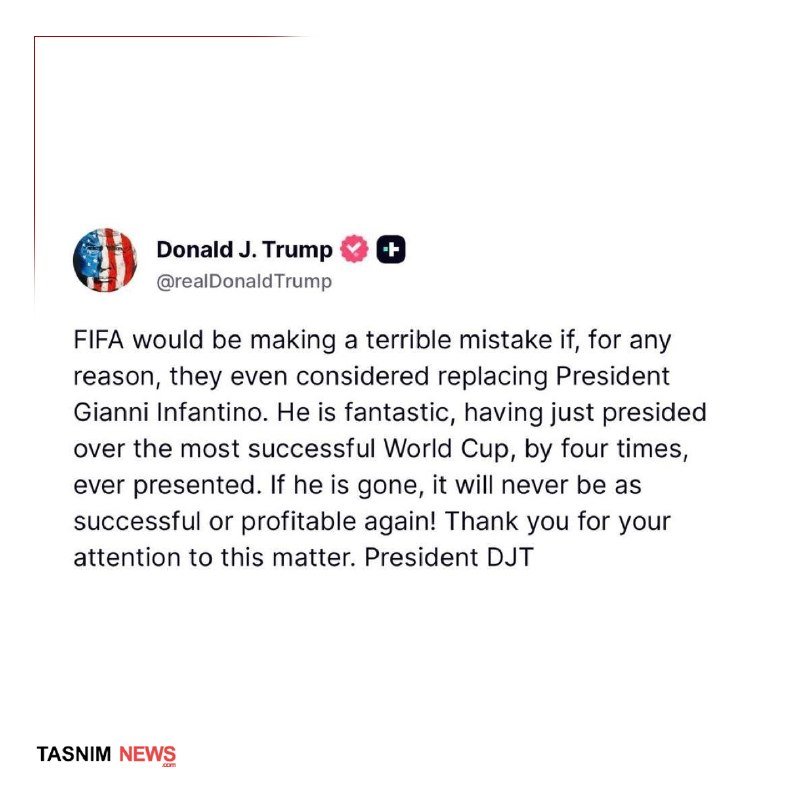
At 21:08 UTC on 5 July 2026, news broke that the White House and Donald Trump had personally called FIFA president Gianni Infantino to review Team USA striker Folarin Balogun's red card. Hours later, the card was overturned. By 15:06 UTC on 6 July, the prediction market Polymarket put the United States' chances of advancing past Belgium at 54%, with Belgium described as "astonished" and weighing legal options; by 15:49 UTC the same day, The Athletic reported Belgium had been granted the right to appeal FIFA's decision. A group-stage fixture has become a referendum on who, exactly, governs the rules of the global game.
The dispute is no longer about a single tackle. It is about whether a head of state can pick up a telephone, reach the head of a Zurich-based federation, and walk away with a reversal that alters the shape of a tournament bracket. If that is the precedent, the next caller is already on the line.
What the sequence actually looks like
The chain of events is short and unusually well-documented. The Athletic reported, via AFP, that the White House and Trump contacted Infantino to revisit Balogun's sending-off; the sanction was then lifted. Polymarket's markets moved in real time, with the United States' implied probability of advancing against Belgium jumping once the suspension was reversed. Belgium, per Polymarket's framing, reacted with disbelief and began exploring legal recourse. By Sunday afternoon, that recourse had formalised: Belgium had been granted leave to appeal.
That is the bare chronology. What is interesting — and what will outlast tonight's kick-off — is the institutional layer underneath it.
The Infantino problem
Gianni Infantino has spent the last decade consolidating personal authority over FIFA in a way his predecessors did not. The federation's disciplinary processes were already opaque; under his presidency they have grown more so. Independent appeal bodies exist, but the political gravity around major decisions has visibly tilted toward the presidency. When a head of state rings that office, the question is no longer whether a player will play. It is whether the office itself still belongs to its members, or has been absorbed into the diplomatic circuit of powerful host nations.
The 2026 World Cup is being staged across the United States, Canada and Mexico. Infantino has invested enormous personal capital in a frictionless tournament. The last thing the federation needs, three weeks into the event, is a story in which its disciplinary function reads as a hotline to the Oval Office. Belgium's lawyers will not need to argue the tackle. They will argue the system.
When sport becomes a corridor
This is what it looks like when a domain that used to be governed by its own guild starts behaving like an extension of state power. The dollar already sits at the centre of football's commercial architecture: broadcast rights, sponsorship inventory, prize money. The tournament itself is co-hosted by the United States. A call from Washington is not, in that sense, a breach of protocol so much as a confirmation of an arrangement that has been visible for years and is only now being named out loud.
The same dynamic shows up elsewhere. Gulf state ownership of European clubs has reshaped transfer markets and Champions League politics. Saudi Arabia's 2034 World Cup hosting rights were decided in a process that left most of the membership on the outside of the room. The throughline is the same: federation governance is increasingly downstream of geopolitical weight, not upstream of it. Belgium is appealing not just a red card. It is appealing an arrangement.
What is genuinely uncertain
The facts that are solid: the call reportedly happened, per AFP via The Athletic; the card was overturned; Belgium has the right to appeal. The facts that are not: who precisely initiated the contact, what was communicated, and whether FIFA's Disciplinary Committee acted on its own review or under instruction. Polymarket's 54% probability is a market signal, not a verdict. The Athletic has not, on the basis of what is currently on the wire, published the underlying FIFA reasoning. Until that document is public — and it may never be — the optics will do the work the facts cannot.
The bigger risk for FIFA is procedural. If Belgium's appeal succeeds, Infantino will have to admit the system is broken. If it fails, the federation will have endorsed a process in which political access produces sporting outcomes. Neither outcome is comfortable. The United States plays Belgium on the evening of 6 July 2026. Whatever the scoreline, the score that matters was settled in a phone call the night before.
This publication treats the Balogun reversal as a governance story first and a sports story second. The wires have led with the football; the underlying question is who answers the phone when Washington rings Zurich.
Wire provenance
This editorial synthesis draws on the following public wire/social posts:
- https://x.com/unusual_whales/status/194272000000000000
- https://x.com/unusual_whales/status/194290000000000000
- https://x.com/polymarket/status/194285000000000000
- https://x.com/polymarket/status/194288000000000000